
Short answer: an 8-weight, wire, and a big sparse fly
If you want a setup in one sentence: a 9-foot, 8-weight rod, a floating line with a heavy-fly taper, a leader that ends in a short wire bite tippet, and a 5 to 7 inch streamer. That is the middle of the two sources I opened. Outdoor Life's writer fishes an 8-weight for pike whether the fish average 20 to 25 inches locally or run to 50 inches in Saskatchewan, and says a 10-weight, or the custom 15-weights some muskie anglers use, is not needed for pike. Thomas & Thomas, writing about Northwestern Ontario, lists 8-, 9- and 10-weight fast-action rods at 9 feet.
Pike are not delicate, which makes the gear list short. They are toothy, which is why the one detail that cannot be skipped is the bite tippet.
Choosing the rod
The rod weight question comes down to the fly and the size of the fish you expect. A bigger fly needs a stiffer rod to throw it, and a bigger fish needs backbone to turn. An 8-weight covers both for most pike water. Go to a 9 or 10 if you expect very large fish, a lot of wind, or you need to haul fish out of weeds. The Thomas & Thomas author uses a fast-action, four-piece, 9-foot rod, and that is a reasonable template: travel-friendly and quick enough to push a wind-resistant fly.
Our 8-weight fly rods page shows what is on Amazon US with the maker's length, pieces and action where stated. Most pike gear is shared with other big-fly fishing, and our saltwater fly rods page is worth a look for the same reason: those rods are built for heavy lines, large flies and corrosion, and some people like them for freshwater toothy fish too. I am not saying you need saltwater gear. I am saying the build priorities overlap, so the data is useful. As always, a spec on our tables is marked maker, claimed, listing or a dash, and a dash means not confirmed anywhere.
The line
For 8 to 10 weight rods, Thomas & Thomas suggests a floating line with a power taper, one designed to turn over heavy flies. For deeper water it suggests a full sink line of 250 to 350 grains. Grains are the weight of the line's first section and a rough way to compare sinking heads. If you only buy one line, the floating one is the safer start. Check the grain weight on a sinking line against what your rod is meant to cast; our fly lines page has the data we could confirm.
Reel and backing
The reel is not where this setup gets expensive. Thomas & Thomas recommends a large-arbor reel with a smooth drag that holds at least 100 yards of gel-spun backing in addition to the fly line. A large arbor takes up line faster and keeps coils from getting tight. See fly reels for arbor and drag figures where makers publish them, and backing for what holds the line on the spool.
The leader and the wire
Here the two sources disagree in useful ways. Outdoor Life prefers thin, nylon-coated stainless wire (Cortland's tie-able material, in his case), using about 10 to 12 inches on the end of the leader, no crimps and no swivel. His reasoning is that thin wire keeps the action of a smaller fly, and heavy bite wire dampens it. He says no pike has cut through the 20-pound wire for him, though it is made up to 50-pound breaking strength. He ties a small snap to the wire end so a chewed fly can be swapped fast.
Thomas & Thomas takes a different line. It recommends wire rather than a snap, because snaps can break, and suggests a do-it-yourself leader of 5 to 7 feet of 25 to 40 pound mono or fluorocarbon joined to 1 to 2 feet of 40-pound wire, with an Albright or surgeon's knot and a drop of super glue. A ready-made tapered leader in the 20 to 45 pound range is its other option. Use a shorter leader with a sink line and a longer one with a floating line.
Which is right? Both. The common thread: use something toothproof between fly and mono, keep it short enough not to ruin the cast, and tie secure knots, because a pike's teeth are a good reason not to trust a thin tippet. If you want the Albright knot in your toolbox for other jobs too, our fly line backing knot guide covers it.
Flies
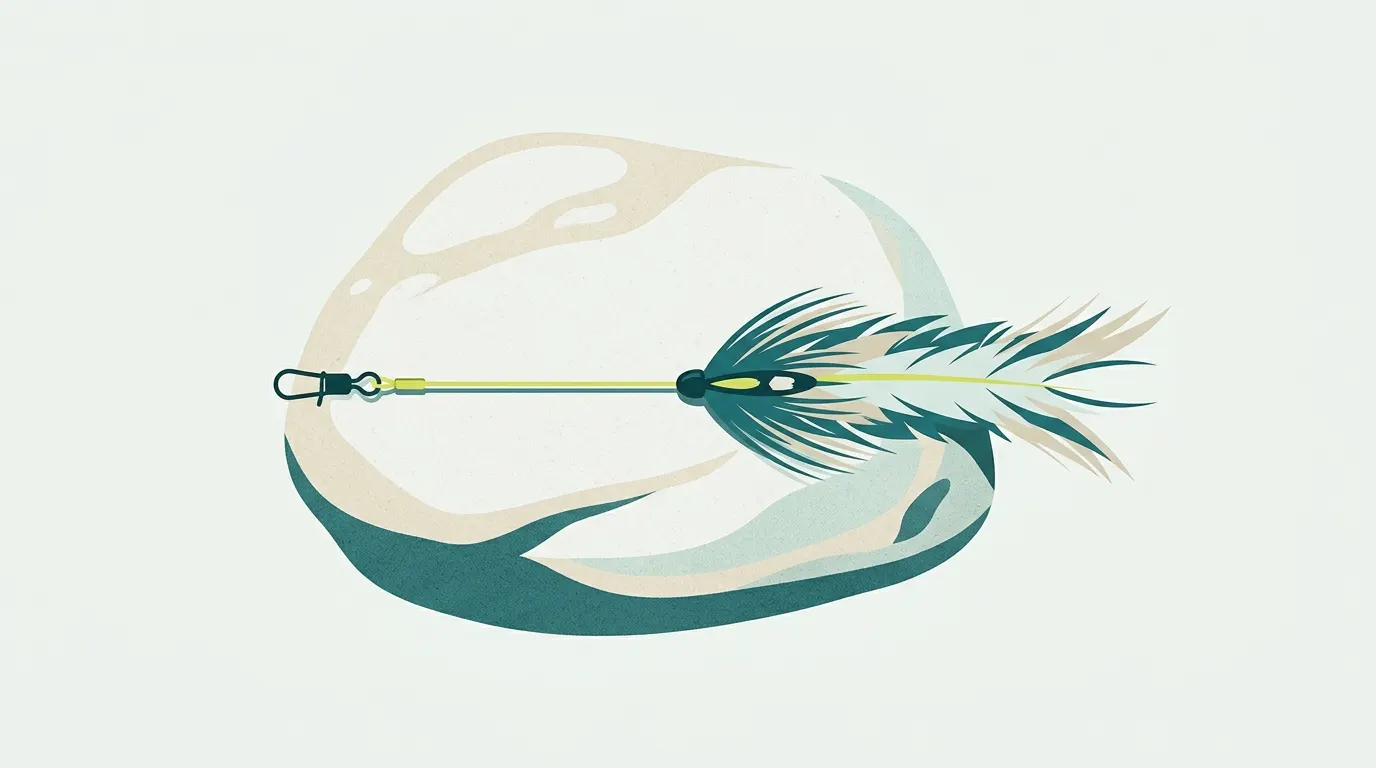
Think big, think sparse. Outdoor Life prefers a 5 to 7 inch streamer with some flash and a tail that has action, tied lightly so it casts well on an 8-weight. Thomas & Thomas lists 1/0 to 6/0 hooks and flies 3 to 8 inches long, and says to match the local forage: if pike feed on perch, use a perch pattern. For some waters it also lists poppers, divers and leeches.
Expect to destroy flies. Outdoor Life's writer says he expects one or two fish per fly before it is ruined. A pike pattern that costs a lot to buy is a pattern you will hesitate to throw into weeds, so many people tie their own or buy simple synthetic baitfish patterns. (The pike is not charging by the fly, but the fly box feels it.)
Fishing it and handling the fish
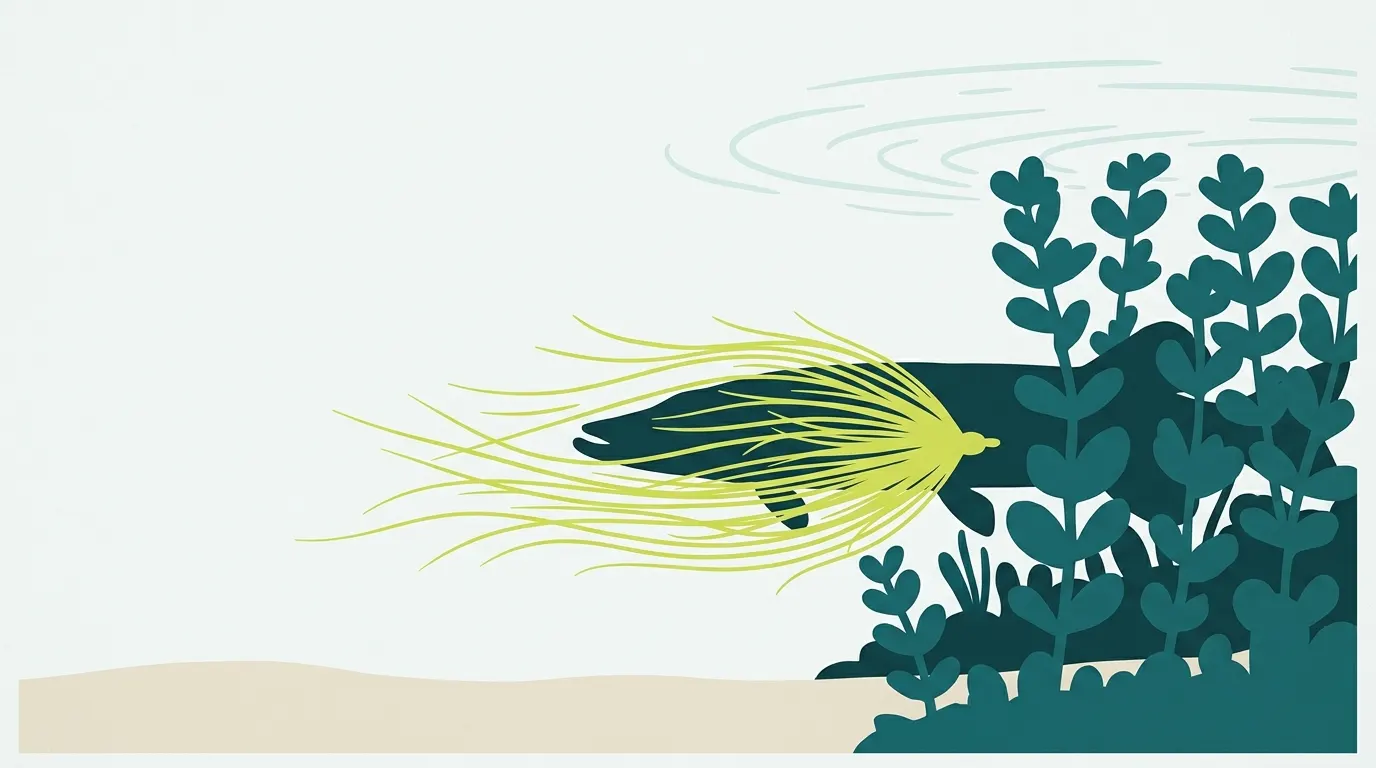
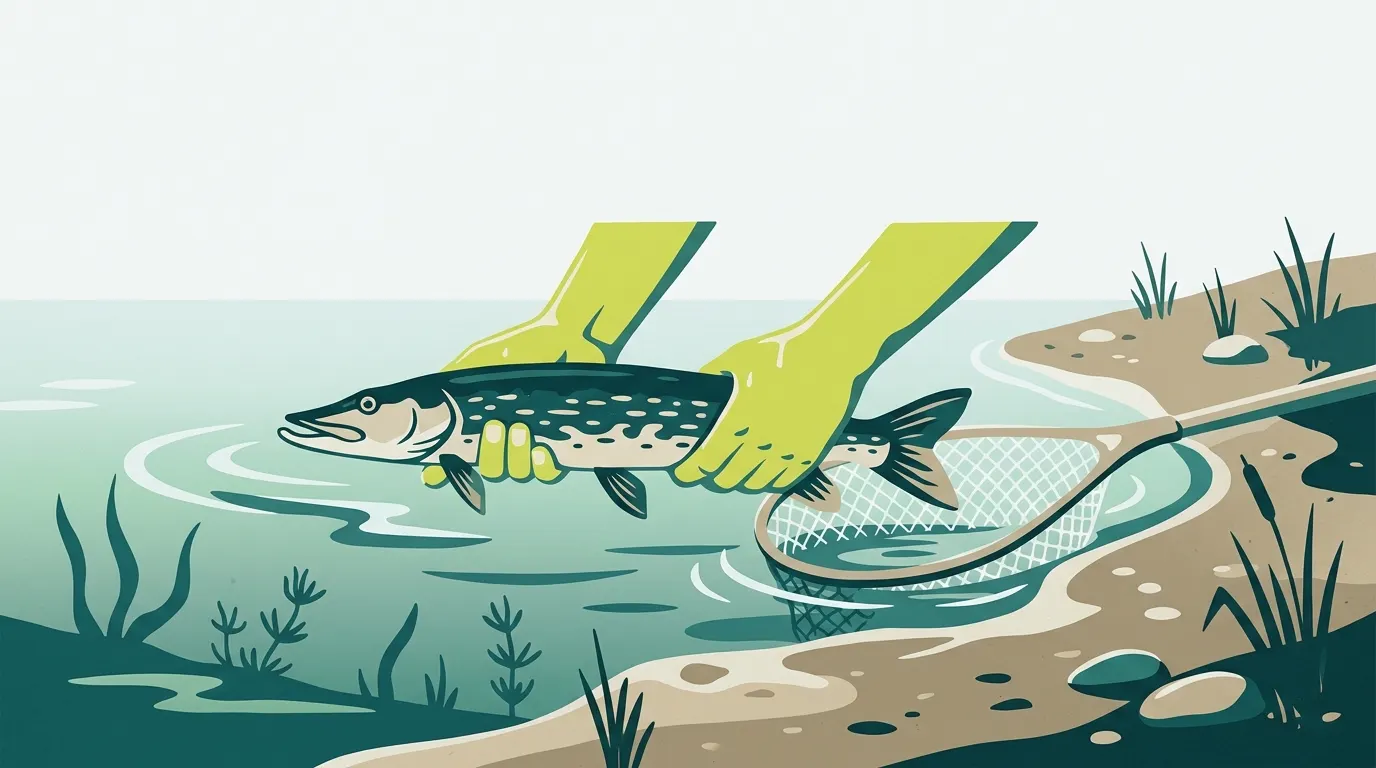
Thomas & Thomas recommends a strip set rather than the trout-style lift when a pike takes the fly, and barbless hooks to protect the fish. It suggests looking for structure: weed lines, rock piles, boulders and creek inlets. Outdoor Life says that knowing how to fight a large fish on a fly rod matters more than a heavier rod, and that you will lose the odd fish because pike offer many shots in a day.
Check your state or provincial regulations on pike, as rules vary by water and I did not open any agency page for this guide.
Where the rest of your gear fits
If you wade for pike, the usual wading rules apply: a wading belt and a wading staff matter more on soft or weedy bottoms than the fly choice does. Pike gear and trout gear share very little, but waders, boots and packs are the same whatever you are throwing.
Questions people ask
What weight fly rod for pike?
An 8-weight is the common answer. Outdoor Life's writer argues an 8-weight is enough for pike from local waters up to a fish he describes at 46 inches. Thomas & Thomas lists 8, 9 or 10 weight in a 9-foot, fast-action rod. Muskie anglers go heavier, but the Outdoor Life piece says that is not needed for pike.
Do I need a wire leader for pike?
Pike have teeth, so most of the guides I read use some wire between the fly and the leader. Outdoor Life uses 10 to 12 inches of thin stainless wire and says no pike has bitten through 20-pound wire for him. Thomas & Thomas suggests 1 to 2 feet of 40-pound wire. Wire length and strength are personal preference, so treat the numbers as starting points.
What flies work for pike?
Streamers in roughly the 3 to 8 inch range are the usual answer. Thomas & Thomas gives hook sizes 1/0 to 6/0 and also lists poppers, divers and leeches for some waters. Outdoor Life prefers a 5 to 7 inch streamer with flash and a tail that moves. Both say to match the local forage.
Should I use a floating or sinking line for pike?
Thomas & Thomas suggests a floating line with a power taper, built to turn over heavy flies, for 8 to 10 weight rods. For deeper water it suggests a full sinking line of 250 to 350 grains. Which one you need depends on where the pike are holding.
Is a fly reel with a good drag necessary for pike?
Thomas & Thomas recommends a large-arbor reel with a smooth drag that holds at least 100 yards of gel-spun backing plus the line. Our fly reels page shows drag and arbor data where makers publish it.
Save this guide for later
Sources
- Outdoor Life: Fly fishing for pike — accessed 2026-10-15
- Thomas & Thomas: Pike fishing with T&T advisor Rebekka Redd — accessed 2026-10-15