We earn a commission if you buy through our links, at no cost to you. Disclosure
| Model | Line weight | Taper | Floating / sinking | Length | Core | Amazon |
|---|---|---|---|---|---|---|
| 2 wt | Weight forwardmaker | Floatingmaker | 82 ftmaker | Braid, 15 lbmaker | See it on Amazon | |
| 2 wt | Weight forwardmaker | Floatingmaker | 82 ftmaker | Braid, 15 lbmaker | See it on Amazon | |
Cortland Headwater WF2FFly line | 2 wt | Weight forwardmaker | Floatingmaker | 80 ftmaker | Braided Nylon Multifilamentmaker | See it on Amazon |
| 2 wt | Weight forwardlisting | Floatinglisting | — | PVC-coated braided corelisting | See it on Amazon | |
Maxcatch Double Taper FloatingFly line More specs
| 2 wt | Double tapermaker | Floatingmaker | 100 ftmaker | braided multifilamentmaker | See it on Amazon |
Maxcatch Floating Line Combo WF2FFly line More specs
| 2 wt | Weight forwardmaker | Floatingmaker | 100 ftmaker | braidedmaker | See it on Amazon |
| 2 wt | Weight forwardmaker | Floatingmaker | — | — | See it on Amazon | |
| 2 wt | Weight forwardlisting | Floatinglisting | — | Low-stretch, memory-free braided corelisting | See it on Amazon | |
Aventik Floating Line 100ft (trout / single-hand spey)Fly line More specs
| 3 wt | — | Floatinglisting | — | — | See it on Amazon |
Cortland 444 Peach DT3FFly line More specs
| 3 wt | Double tapermaker | Floatingmaker | 90 ftmaker | Braided Nylon Multifilamentmaker | See it on Amazon |
HERCULES Floating WF Fly Line WF3F 90FTFly line More specs
| 3 wt | Weight forwardlisting | Floatinglisting | — | braided multifilamentlisting | See it on Amazon |
Maxcatch Floating Line Combo WF3FFly line More specs
| 3 wt | Weight forwardmaker | Floatingmaker | 100 ftmaker | braidedmaker | See it on Amazon |
Piscifun Sword Fly Fishing Line with Welded LoopFly line More specs
| 3 wt | Weight forwardlisting | Floatinglisting | — | braidedlisting | See it on Amazon |
RIO Premier Creek WF3FFly line | 3 wt | Weight forwardlisting | Floatinglisting | — | — | See it on Amazon |
RIO Premier Gold WF3FFly line | 3 wt | Weight forwardlisting | Floatinglisting | — | — | See it on Amazon |
Royal Wulff Bamboo Special Weight Forward 3FFly line More specs
| 3 wt | Weight forwardmaker | Floatingmaker | 100 ftmaker | — | See it on Amazon |
Royal Wulff Long Belly Classic 3FFly line More specs
| 3 wt | — | Floatingmaker | 100 ftmaker | — | See it on Amazon |
Royal Wulff Triangle Taper Classic Floating 3FFly line More specs
| 3 wt | — | Floatingmaker | 90 ftmaker | — | See it on Amazon |
Royal Wulff Triangle Taper Short Nymph 3FFly line More specs
| 3 wt | — | Floatingmaker | 90 ftmaker | — | See it on Amazon |
Royal Wulff Triangle Taper Signature 3FFly line More specs
| 3 wt | — | Floatingmaker | 90 ftmaker | — | See it on Amazon |
| 4 wt | Weight forwardmaker | Floatingmaker | 90 ftmaker | Braid, 15 lbmaker | See it on Amazon | |
| 4 wt | Weight forwardmaker | Floatingmaker | 90 ftmaker | Braid, 15 lbmaker | See it on Amazon | |
| 4 wt | Weight forwardmaker | Floatingmaker | 90 ftmaker | Braid, 15 lbmaker | See it on Amazon | |
Aventik Intermediate WF 1.5 IPSFly line More specs
| 4 wt | Weight forwardlisting | Intermediatelisting | — | PVC-coated braided core, low stretchlisting | See it on Amazon |
Aventik Sinking Tip / Diving Head WFFly line More specs
| 4 wt | Weight forwardlisting | Sink tiplisting | — | braided core, low stretchlisting | See it on Amazon |
| 4 wt | Weight forwardmaker | Floatingmaker | 90 ftmaker | Braided Nylon Multifilamentmaker | See it on Amazon | |
Moonlit Fly Fishing Floating Intermediate Sink Tip S1Fly line More specs
| 4 wt | — | Sink tipmaker | — | 25 lb low-stretch braided core, PVC coatedmaker | See it on Amazon |
RIO Avid Trout Gold WF4FFly line | 4 wt | Weight forwardlisting | Floatinglisting | — | — | See it on Amazon |
RIO Mainstream Trout DT 4Fly line | 4 wt | Double taperlisting | Floatinglisting | — | — | See it on Amazon |
RIO Mainstream Trout WF4FFly line More specs
| 4 wt | Weight forwardlisting | Floatinglisting | — | — | See it on Amazon |
Royal Wulff Ambush Floating 4FFly line | 4 wt | — | Floatingmaker | 90 ftmaker | — | See it on Amazon |
Royal Wulff Long Belly Classic 4FFly line More specs
| 4 wt | — | Floatingmaker | 100 ftmaker | — | See it on Amazon |
| 4 wt | — | Floatinglisting | — | — | See it on Amazon | |
Royal Wulff Triangle Taper Signature Plus Textured 4FFly line More specs
| 4 wt | — | Floatingmaker | 90 ftmaker | — | See it on Amazon |
| 4 wt | Weight forwardlisting | Floatinglisting | — | Braided multifilamentlisting | See it on Amazon | |
SF WF4S Full Sinking 90FTFly line More specs
| 4 wt | Weight forwardlisting | Full sinkinglisting | — | braidedlisting | See it on Amazon |
| 5 wt | Weight forwardmaker | Floatingmaker | 90 ftmaker | Braid, 20 lbmaker | See it on Amazon | |
Aventik Sure Cast Double Taper 85ftFly line More specs
| 5 wt | Double tapermaker | Floatingmaker | 85 ftmaker | ultra-low stretch coremaker | See it on Amazon |
Cortland 333 Double Taper DT5FFly line | 5 wt | Double tapermaker | Floatingmaker | 90 ftmaker | Braided Nylon Multifilamentmaker | See it on Amazon |
Cortland Bass WF5FFly line | 5 wt | Weight forwardmaker | Floatingmaker | 100 ftmaker | Braided Nylon Multifilamentmaker | See it on Amazon |






Cortland Finesse Trout II WF5FFly line More specs
| 5 wt | Weight forwardmaker | Floatingmaker | 90 ftmaker | Braided Nylon Multifilamentmaker | See it on Amazon |
Cortland Full Sinking Type 6 WF5SFly line More specs
| 5 wt | Weight forwardmaker | Full sinkingmaker | 90 ftmaker | Braided Nylon Multifilamentmaker | See it on Amazon |
Echo Boost Fly Line 5Fly line | 5 wt | — | Floatinglisting | — | — | See it on Amazon |
Maxcatch All-Purpose TroutFly line More specs
| 5 wt | Weight forwardlisting | Floatinglisting | — | — | See it on Amazon |
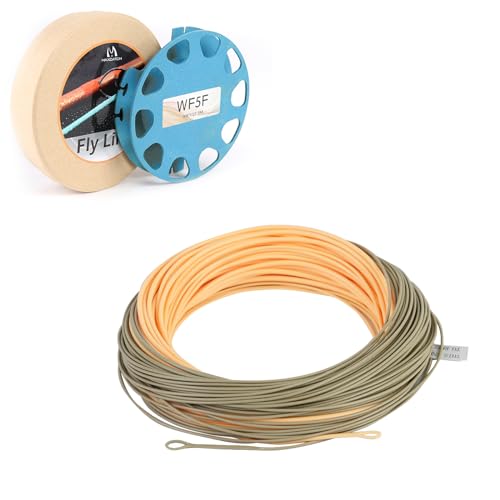
Maxcatch Floating Line Combo WF5FFly line More specs
| 5 wt | Weight forwardmaker | Floatingmaker | 100 ftmaker | braidedmaker | See it on Amazon |
Maxcatch Troutlite Double TaperFly line More specs
| 5 wt | Double taperlisting | Floatinglisting | — | braidedmaker | See it on Amazon |
Moonlit Fly Fishing Floating Fast Sink Tip S5Fly line More specs
| 5 wt | — | Sink tipmaker | 100 ftmaker | 25 lb low-stretch braided core, PVC coatedmaker | See it on Amazon |
Moonlit Fly Fishing Floating Medium Sink Tip S3Fly line More specs
| 5 wt | — | Sink tipmaker | 100 ftmaker | 25 lb low-stretch braided core, PVC coatedmaker | See it on Amazon |
RIO Elite Indicator WF5FFly line | 5 wt | — | Floatinglisting | — | ConnectCore Plusmaker | See it on Amazon |
Royal Wulff Midstream TT Full Sink 3 - 5SFly line More specs
| 5 wt | — | Full sinkingmaker | 90 ftmaker | — | See it on Amazon |
Royal Wulff Triangle Taper TT5FFly line | 5 wt | — | Floatinglisting | — | — | See it on Amazon |
| 5 wt | Weight forwardlisting | Floatinglisting | — | — | See it on Amazon | |
| 5 wt | Weight forwardlisting | Floatinglisting | — | Braided multifilamentlisting | See it on Amazon | |
| 5 wt | Weight forwardmaker | Floatinglisting | 90 ftmaker | Braided multifilamentmaker | See it on Amazon | |
| 5 wt | Weight forwardmaker | Floatinglisting | 85 ftmaker | Braided multifilamentmaker | See it on Amazon | |
Scientific Anglers Frequency Sink Tip WF-5-F/SFly line More specs
| 5 wt | Weight forwardmaker | Sink tiplisting | 85 ftmaker | Braided multifilamentmaker | See it on Amazon |
| 5 wt | Weight forwardmaker | Floatinglisting | 90 ftmaker | Braided multifilamentmaker | See it on Amazon | |
SF Hi-Viz WF5F/S 100FTFly line More specs
| 5 wt | Weight forwardlisting | Sink tiplisting | — | — | See it on Amazon |
SF WF5F 100FTFly line More specs
| 5 wt | Weight forwardlisting | Floatinglisting | — | — | See it on Amazon |
SF WF5F 90FTFly line More specs
| 5 wt | Weight forwardlisting | Floatinglisting | — | PE wireline core, PVC jacketlisting | See it on Amazon |
SF WF5F Floating Line Starter Kit 90FTFly line More specs
| 5 wt | Weight forwardlisting | Floatinglisting | — | — | See it on Amazon |
| 6 wt | Weight forwardmaker | Floatingmaker | 82 ftmaker | Braid, 20 lbmaker | See it on Amazon | |
Aventik Trout WF Floating 85ftFly line | 6 wt | Weight forwardmaker | Floatingmaker | 85 ftmaker | braided, ultra-low stretch coremaker | See it on Amazon |
Cortland Streamer WF6FFly line | 6 wt | Weight forwardmaker | Floatingmaker | 100 ftmaker | Braided Nylon Multifilamentmaker | See it on Amazon |
Echo Boost Fly Line 6Fly line | 6 wt | — | Floatinglisting | — | — | See it on Amazon |
Echo Dry Fly Line WF6FFly line | 6 wt | Weight forwardlisting | Floatinglisting | — | — | See it on Amazon |
Maxcatch Floating Line Combo WF6FFly line More specs
| 6 wt | Weight forwardmaker | Floatingmaker | 100 ftmaker | braidedmaker | See it on Amazon |
Maxcatch Weight Forward Floating WF1F-WF9FFly line More specs
| 6 wt | Weight forwardlisting | Floatinglisting | — | — | See it on Amazon |
RIO Elite Gold WF6FFly line | 6 wt | Weight forwardlisting | Floatinglisting | — | ConnectCore Plusmaker | See it on Amazon |
| 6 wt | Weight forwardlisting | Multi-densitylisting | — | — | See it on Amazon | |
Royal Wulff Ambush Hover 6IFly line More specs
| 6 wt | — | Sink tipmaker | 90 ftmaker | — | See it on Amazon |
| 6 wt | Weight forwardmaker | Floatinglisting | 80 ftmaker | Braided multifilamentmaker | See it on Amazon | |
| 6 wt | Weight forwardmaker | Floatinglisting | 100 ftmaker | Braided multifilamentmaker | See it on Amazon | |
| 6 wt | Weight forwardlisting | Floatinglisting | — | — | See it on Amazon | |
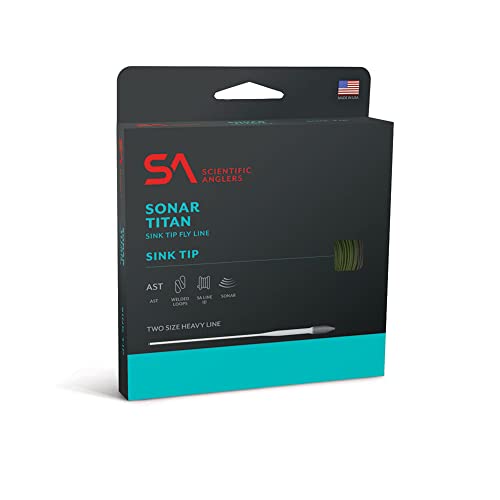
Scientific Anglers Sonar Titan Sink Tip WF-6-F/S3Fly line More specs
| 6 wt | Weight forwardlisting | Sink tiplisting | — | — | See it on Amazon |
Snowbee Spectre Pro Sinking Countdown 7 #6Fly line More specs
| 6 wt | Weight forwardlisting | Full sinkinglisting | — | Low-stretch, memory-free braided corelisting | See it on Amazon |
| 7 wt | Weight forwardmaker | Floatingmaker | 120 ftmaker | Braid, 20 lbmaker | See it on Amazon | |
| 7 wt | Weight forwardmaker | Floatingmaker | 90 ftmaker | Braid, 20 lbmaker | See it on Amazon | |
| 7 wt | Weight forwardmaker | Floatingmaker | 100 ftmaker | Braid, 32 lbmaker | See it on Amazon | |
| 7 wt | Weight forwardmaker | Floatingmaker | 90 ftmaker | Braid, 20 lbmaker | See it on Amazon | |
Aventik Sinking WF 3 IPS / 5 IPSFly line More specs
| 7 wt | Weight forwardlisting | Full sinkinglisting | — | — | See it on Amazon |
Cortland Big Shot WF7FFly line More specs
| 7 wt | Weight forwardmaker | Floatingmaker | 90 ftmaker | Braided Nylon Multifilamentmaker | See it on Amazon |
Cortland Kelly Galloup Dungeon 30 WF7/8S/IFly line More specs
| 7 wt | Weight forwardlisting | Multi-densitymaker | — | — | See it on Amazon |
| 7 wt | Weight forwardlisting | Floatingmaker | — | — | See it on Amazon | |
Cortland Salmon Steelhead Olive / White WF7FFly line More specs
| 7 wt | Weight forwardmaker | Floatingmaker | 100 ftmaker | Braided Nylon Multifilamentmaker | See it on Amazon |
Cortland Streamer WF7FFly line | 7 wt | Weight forwardmaker | Floatingmaker | 100 ftmaker | Braided Nylon Multifilamentmaker | See it on Amazon |
| 7 wt | Weight forwardlisting | Floatinglisting | — | — | See it on Amazon | |
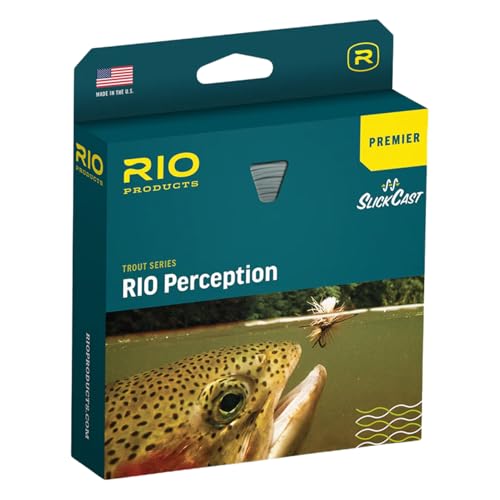
RIO Premier Perception WF7FFly line | 7 wt | Weight forwardlisting | Floatinglisting | — | — | See it on Amazon |
Royal Wulff Ambush Short Floating 250 grFly line More specs
| 7 wt | — | Floatingmaker | 90 ftmaker | — | See it on Amazon |
| 7 wt | — | Floatingmaker | 120 ftmaker | — | See it on Amazon | |
Royal Wulff Triangle Taper Short Nymph 7FFly line More specs
| 7 wt | — | Floatingmaker | 90 ftmaker | — | See it on Amazon |
Royal Wulff Triangle Taper Signature Plus 7FFly line More specs
| 7 wt | — | Floatingmaker | 90 ftmaker | — | See it on Amazon |
| 7 wt | Weight forwardmaker | Floatinglisting | 90 ftmaker | Braided multifilamentmaker | See it on Amazon | |
Scientific Anglers MPX Taper WF-7-FFly line More specs
| 7 wt | Weight forwardlisting | Floatinglisting | — | Braided multifilamentlisting | See it on Amazon |
SF WF7F Floating Line Starter Kit 90FTFly line More specs
| 7 wt | Weight forwardlisting | Floatinglisting | — | — | See it on Amazon |
| 7 wt | Weight forwardlisting | Floatinglisting | — | Low-stretch, memory-free braided corelisting | See it on Amazon | |
| 7 wt | Weight forwardlisting | Full sinkinglisting | — | Low-stretch, memory-free braided corelisting | See it on Amazon | |
Snowbee XS Floating WF7Fly line | 7 wt | Weight forwardlisting | Floatinglisting | — | — | See it on Amazon |
| 7 wt | Weight forwardlisting | Full sinkinglisting | — | — | See it on Amazon | |
| 7 wt | — | Floatinglisting | — | — | See it on Amazon | |
| 7 wt | Weight forwardlisting | Floatinglisting | — | — | See it on Amazon | |
Airflo Superflo Max Bomber WF8FFly line | 8 wt | Weight forwardmaker | Floatingmaker | 90 ftmaker | Braid, 30 lbmaker | See it on Amazon |
Airflo Superflo Power Taper WF8FFly line | 8 wt | Weight forwardmaker | Floatingmaker | 90 ftmaker | Braid, 20 lbmaker | See it on Amazon |
Aventik ProWeight WF FloatingFly line | 8 wt | Weight forwardlisting | Floatinglisting | — | low-stretch corelisting | See it on Amazon |
Cortland 444 SL WF8FFly line More specs
| 8 wt | Weight forwardmaker | Floatingmaker | 105 ftmaker | Braided Nylon Multifilamentmaker | See it on Amazon |
Cortland Hi-Vis Flip WF8FFly line | 8 wt | Weight forwardmaker | Floatingmaker | 100 ftmaker | Monofilamentmaker | See it on Amazon |
Echo Boost Fly Line 8Fly line | 8 wt | — | Floatinglisting | — | — | See it on Amazon |
Maxcatch ECO FloatingFly line | 8 wt | Weight forwardmaker | Floatingmaker | 100 ftmaker | — | See it on Amazon |
Maxcatch Outbound SaltwaterFly line More specs
| 8 wt | Weight forwardmaker | Floatinglisting | — | braidedmaker | See it on Amazon |
Maxcatch Single-Handed Spey LineFly line More specs
| 8 wt | Weight forwardlisting | Floatingmaker | 90 ftmaker | braided nylon multifilamentmaker | See it on Amazon |
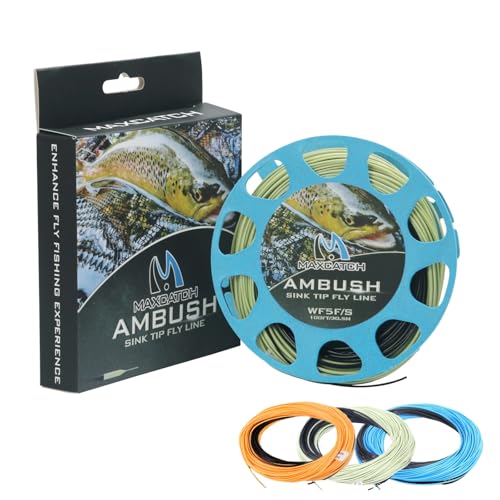
Maxcatch Sinking Tip Fly LineFly line More specs
| 8 wt | Weight forwardlisting | Sink tipmaker | 100 ftmaker | braided multifilamentmaker | See it on Amazon |
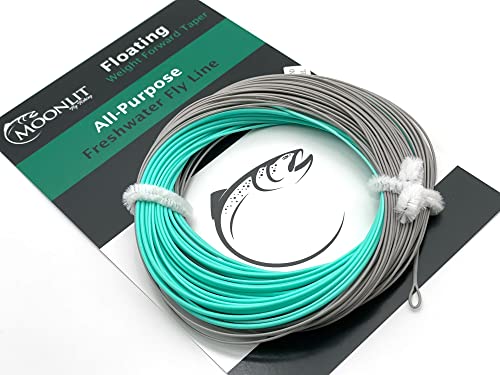
Moonlit Fly Fishing All-Purpose WF FloatingFly line More specs
| 8 wt | Weight forwardmaker | Floatingmaker | 85 ftmaker | braided multifilament nylonmaker | See it on Amazon |
RIO Elite Predator WF8FFly line | 8 wt | Weight forwardlisting | Floatinglisting | — | ConnectCore Plusmaker | See it on Amazon |
Royal Wulff Bermuda Triangle Taper Floating 8FFly line More specs
| 8 wt | — | Floatingmaker | 105 ftmaker | Braided monofilamentmaker | See it on Amazon |
Royal Wulff Bermuda Triangle Taper Lost Tip 8Fly line More specs
| 8 wt | — | Sink tipmaker | 105 ftmaker | Braided monofilamentmaker | See it on Amazon |
Royal Wulff Midstream TT Floating 8FFly line More specs
| 8 wt | — | Floatingmaker | 90 ftmaker | — | See it on Amazon |
Royal Wulff Triangle Taper Classic Floating 8FFly line More specs
| 8 wt | — | Floatingmaker | 90 ftmaker | — | See it on Amazon |
Royal Wulff Triangle Taper Short Bass 8FFly line More specs
| 8 wt | — | Floatingmaker | 90 ftmaker | — | See it on Amazon |
| 8 wt | Weight forwardlisting | Floatinglisting | — | — | See it on Amazon | |
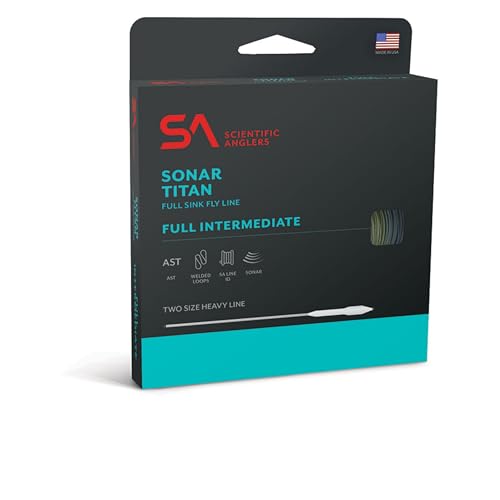
Scientific Anglers Sonar Titan Intermediate WF-8-IFly line More specs
| 8 wt | Weight forwardlisting | Intermediatelisting | — | Braided multifilamentlisting | See it on Amazon |
SF WF8F Floating Line Starter Kit 90FTFly line More specs
| 8 wt | Weight forwardlisting | Floatinglisting | — | — | See it on Amazon |
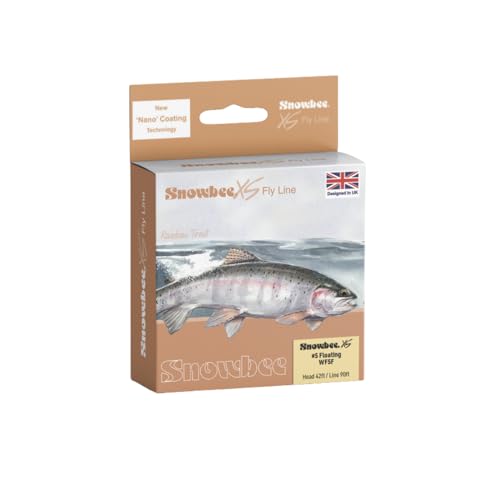
Snowbee Spectre Pro 6ft Sink Tip #8Fly line More specs
| 8 wt | Weight forwardlisting | Sink tiplisting | — | Low-stretch, memory-free braided corelisting | See it on Amazon |
Snowbee Spectre Pro Big Fly Fast Sink #8/9Fly line More specs
| 8 wt | Weight forwardlisting | Full sinkinglisting | — | Low-stretch, low-memory corelisting | See it on Amazon |
Snowbee Spectre Pro Floating #8Fly line | 8 wt | Weight forwardlisting | Floatinglisting | — | Low-stretch, memory-free braided corelisting | See it on Amazon |
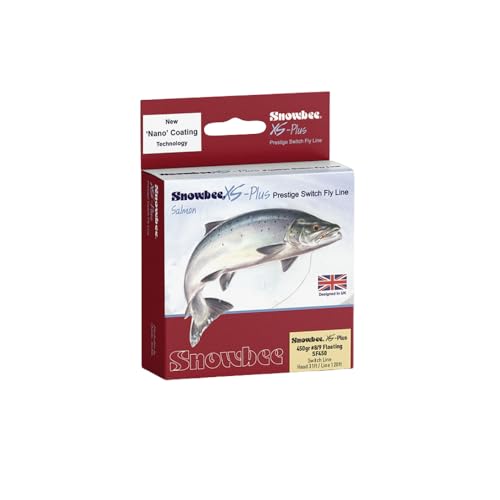
Snowbee XS-Plus Spectre Distance Sink-Tip WF8Fly line More specs
| 8 wt | Weight forwardlisting | Sink tiplisting | — | — | See it on Amazon |
Aventik Two-Tone Floating WFFly line | 9 wt | Weight forwardlisting | Floatinglisting | — | low-stretch corelisting | See it on Amazon |
Cortland 333 Salmon WF9FFly line | 9 wt | Weight forwardmaker | Floatingmaker | 90 ftmaker | Braided Nylon Multifilamentmaker | See it on Amazon |
Cortland Salmon Steelhead Olive / White WF9FFly line More specs
| 9 wt | Weight forwardmaker | Floatingmaker | 100 ftmaker | Braided Nylon Multifilamentmaker | See it on Amazon |
| 9 wt | Weight forwardmaker | Floatingmaker | 100 ftmaker | Monofilamentmaker | See it on Amazon | |
Maxcatch Full Sinking Fly LineFly line More specs
| 9 wt | Weight forwardmaker | Full sinkingmaker | 100 ftmaker | braided multifilamentmaker | See it on Amazon |
Royal Wulff Sea Wulff Triangle Taper Intermediate Monoclear 9IFly line More specs
| 9 wt | — | Intermediatemaker | 105 ftmaker | — | See it on Amazon |
Scientific Anglers Amplitude Smooth Grand Slam WF-9-FFly line More specs
| 9 wt | Weight forwardmaker | Floatinglisting | 100 ftmaker | Tropi-Coremaker | See it on Amazon |
Snowbee Spectre Pro Big Fly Floating #9/10Fly line More specs
| 9 wt | Weight forwardlisting | Floatinglisting | — | Low-stretch, memory-free corelisting | See it on Amazon |
Snowbee Spectre Pro Big Fly Mid Sink #9/10Fly line More specs
| 9 wt | Weight forwardlisting | Full sinkinglisting | — | Low-stretch, memory-free corelisting | See it on Amazon |
| 10 wt | Weight forwardmaker | Floatingmaker | 100 ftmaker | Braided Nylon Multifilamentmaker | See it on Amazon | |
Maxcatch AVID SaltwaterFly line More specs
| 10 wt | Weight forwardmaker | Floatingmaker | 90 ftmaker | ultra-low stretch braided multifilamentmaker | See it on Amazon |
Maxcatch General Purpose SaltwaterFly line More specs
| 10 wt | Weight forwardmaker | Floatinglisting | — | braided multifilamentmaker | See it on Amazon |
RIO Elite Flats Pro 10Fly line | 10 wt | — | Floatinglisting | — | DirectCoremaker | See it on Amazon |
RIO Elite Salmon/Steelhead WF10FFly line | 10 wt | Weight forwardlisting | Floatinglisting | — | ConnectCore Pluslisting | See it on Amazon |
RIO Mainstream Saltwater 10Fly line | 10 wt | — | Floatinglisting | — | — | See it on Amazon |
RIO Mainstream Striper WF10IFly line | 10 wt | Weight forwardlisting | Intermediatelisting | — | — | See it on Amazon |
Royal Wulff Sea Wulff Triangle Taper Float 10FFly line More specs
| 10 wt | — | Floatingmaker | 105 ftmaker | — | See it on Amazon |
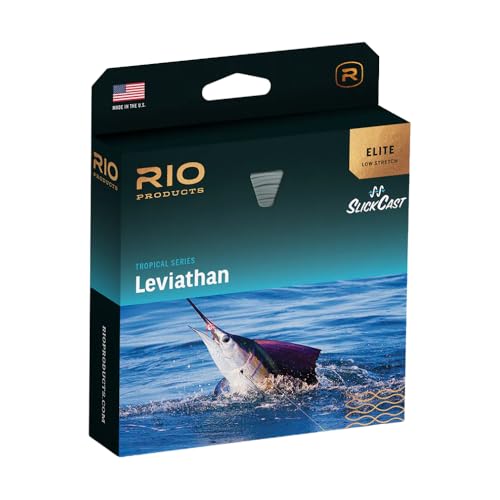
RIO Elite Leviathan 12/13Fly line | 12 wt | — | — | — | DirectCorelisting | See it on Amazon |
Royal Wulff Ambush Floating Shooting Head 12FFly line More specs
| 12 wt | Shooting headmaker | Floatingmaker | 25 ftmaker | — | See it on Amazon |
Royal Wulff Spey Floating 12FFly line | 12 wt | — | Floatingmaker | 120 ftmaker | — | See it on Amazon |
Royal Wulff Bermuda Triangle Taper GIANTS Floating 15FFly line More specs
| 15 wt | — | Floatingmaker | 100 ftmaker | Braided monofilament, 55 lb break strengthmaker | See it on Amazon |
8 Fans Fly Fishing Line Combo (WF Floating Line, Backing, Leader)Fly line More specs
| 3–8 wt | Weight forwardmaker | Floatingmaker | — | PVC line; 8-strand braided polyester backing; nylon tapered leadermaker | See it on Amazon |
| — | — | Floatingmaker | 82 ftmaker | Braid, 12 lbmaker | See it on Amazon | |
| — | — | — | 22 ftmaker | Braid, 12 lbmaker | See it on Amazon | |
| — | Running linemaker | Floatingmaker | 90 ftmaker | Braid, 30 lbmaker | See it on Amazon | |
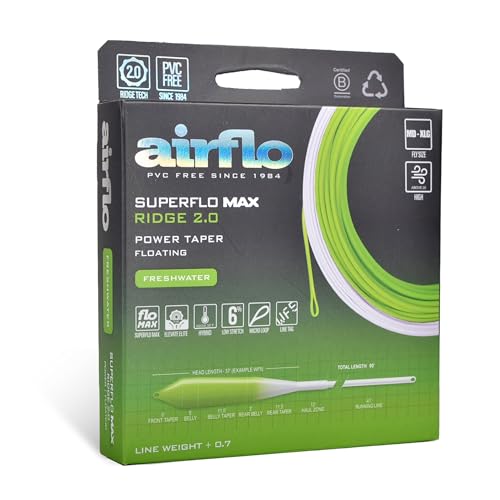
Airflo Superflo Max Ridge 2.0 Running Line 30 lbFly line More specs
| — | Running linemaker | Floatingmaker | 90 ftmaker | Braid, 30 lbmaker | See it on Amazon |
| — | Levellisting | Floatinglisting | — | — | See it on Amazon | |
Aventik Floating Level Line 100ft (.030" / 15 lb)Fly line More specs
| — | Levellisting | Floatinglisting | — | — | See it on Amazon |
| — | Levelmaker | Full sinkinglisting | 100 ftmaker | braided, ultra-low stretch corelisting | See it on Amazon | |
| — | — | Floatinglisting | — | stiff braided core, low stretchlisting | See it on Amazon | |
Cortland Running Line .035" LevelFly line More specs
| — | Running linemaker | Floatingmaker | — | — | See it on Amazon |
| — | Double tapermaker | Floatingmaker | 90 ftmaker | Braided Nylon Multifilamentmaker | See it on Amazon | |
| — | Levellisting | Floatinglisting | — | Nylon monofilament, PVC coatedlisting | See it on Amazon | |
DRAGONtail Tenkara Level LineFly line | — | Levelmaker | — | 98.4 ftmaker | 100% fluorocarbonmaker | See it on Amazon |
| — | — | — | — | nylonlisting | See it on Amazon | |
| — | — | — | — | furled, fluorocarbon tip sectionmaker | See it on Amazon | |
| — | Weight forwardmaker | — | — | furledmaker | See it on Amazon | |
| — | — | — | — | furled (three-leg)maker | See it on Amazon | |
| — | — | Floatingmaker | — | PVC over mono coremaker | See it on Amazon | |
Fenwick World Class Scandia Shooting Head 480 grain (WCFLSS480)Fly line More specs
| — | Shooting headlisting | — | — | — | See it on Amazon |
Fenwick World Class Scandia Shooting Head 540 grain (WCFLSS540)Fly line More specs
| — | Shooting headlisting | — | — | — | See it on Amazon |
Kylebooker WF01Fly line More specs
| 3–8 wt | Weight forwardmaker | Floatingmaker | 100 ftmaker | braidedmaker | See it on Amazon |
Kylebooker WF02 GoldFly line More specs
| 3–8 wt | Weight forwardmaker | Floatingmaker | 100 ftmaker | Dacron braidedlisting | See it on Amazon |
| — | — | — | — | — | See it on Amazon | |
| — | — | — | — | — | See it on Amazon | |
| — | — | — | — | — | See it on Amazon | |
| — | — | — | — | — | See it on Amazon | |
MAVRK Tracer 62Fly line | — | Levelmaker | — | 50 ftmaker | Braided coremaker | See it on Amazon |
Maxcatch Shooting / Running LineFly line More specs
| — | Running linemaker | Floatingmaker | 100 ftmaker | braidedmaker | See it on Amazon |
Maxcatch Skagit Shooting HeadFly line More specs
| — | Skagitmaker | Floatingmaker | — | braidedmaker | See it on Amazon |
| — | Skagitlisting | — | — | — | See it on Amazon | |
| — | Skagitlisting | — | — | — | See it on Amazon | |
OPST Micro Skagit D2 8 ft Tip, Dual Density T8 (DD8-2)Fly line More specs
| — | — | Multi-densitylisting | — | low-stretch corelisting | See it on Amazon |
| — | Running linelisting | — | — | monofilamentlisting | See it on Amazon | |
OPST Pure Skagit Commando Head 200 grainFly line More specs
| — | Skagitlisting | — | — | — | See it on Amazon |
Orvis Clearwater Fly LineFly line More specs
| 3–9 wt | Weight forwardmaker | — | 90 ftmaker | Multifilamentmaker | See it on Amazon |
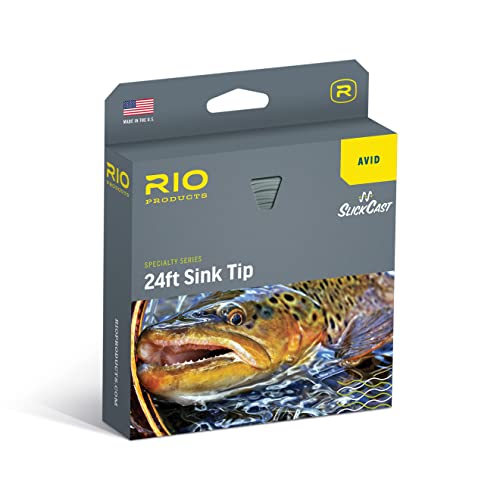
RIO Avid 24ft Sinking TipFly line More specs
| — | — | Sink tiplisting | — | — | See it on Amazon |
RIO Euro Nymph ShortyFly line | 2–5 wt | — | Floatinglisting | — | — | See it on Amazon |
RIO FIPS Euro NymphFly line | 2–5 wt | — | Floatinglisting | — | — | See it on Amazon |
RIO SlickShooter 25 lbFly line | — | Running linelisting | — | — | — | See it on Amazon |
| — | Running linemaker | Floatingmaker | 100 ftmaker | Braided multifilamentmaker | See it on Amazon | |
Tenkara USA Tapered Furled LineFly line | — | — | — | — | furledmaker | See it on Amazon |
Tenkara USA Tapered Nylon LineFly line | — | — | — | — | nylonmaker | See it on Amazon |
Winston Trout EnergyFly line More specs
| 2–6 wt | Weight forwardlisting | Floatinglisting | — | Supple core designed for freshwatermaker | See it on Amazon |



































What's in this tableFly lines we track on Amazon US; one row per line model, with the weights it comes in.
What a fly line does
A fly is almost weightless. A spinning lure carries its own mass, but a fly needs something heavy to pull it through the air, and that is the fly line. When you cast, the rod loads against the weight of the line, and the line carries the leader, tippet and fly out with it. So the line is the part of your outfit that does the casting, and it is worth getting right.
The table above lists the fly lines we track on Amazon US, one row per line model, with the weights each is sold in. Behind the line on your reel sits backing, and in front of it sits a leader. Lines come in several tapers, densities and weights, and the choice is mostly mechanical: match the number to the rod, then pick the taper and the sink rate for the fishing.
The weight number
Fly lines are numbered from 1 up to 15, with 1 the lightest. The number follows a standard, which Wikipedia dates to 1960 and credits to AFFTA, and it is based on the weight of the first 30 feet of the line, in grains, not counting any level tip. A 5-weight line, for example, has a target of 140 grains with a range of 134 to 146. The point is simple: a heavier number means a heavier line, and a rod is built to cast a given weight.
Two cautions. First, the standard measures only the first 30 feet, so it does not tell you how the rest of the line behaves. A writer on the Sexyloops site, which discusses line ratings, makes the point that anything beyond 30 feet adds weight and that the rating therefore does not describe the total head weight. Second, some lines run heavier than their label. The same writer says many lines run a full rating or more over, and credits one maker for being open about it. So a 5-weight label does not always guarantee a good match with a 5-weight rod. If a rod feels sluggish with a line, the line may be heavy for its label.
In the table, the Line weight column shows a small gauge, a ruler from 1 to 12. The number shown comes from the Amazon listing for the variant we track, and the mark under it says so. Many lines are sold in a range of weights, and where the maker states the range, it is in the More specs toggle. For the matching rod, our fly line weight chart guide lists the common pairings, and the pages for 3-weight, 5-weight and 8-weight rods list the rods built for each number.
How to read the code on the box
Most makers print a code. WF5F reads like a licence plate, and once you can decode it you can decode most of the table.
- The first letters are the taper. WF is weight forward, DT is double taper, L is level, and ST or SH is a shooting taper or shooting head.
- The number is the line weight.
- The last letter is the density. F is floating, S is sinking and I is intermediate, which sinks slowly.
So WF5F is a weight-forward 5-weight floating line, and DT3F is a double-taper 3-weight floater. Wikipedia gives the example WF-5-F in the same way. The pattern is a convention, and not every maker follows it. Sinking and sink-tip lines in particular are sometimes labeled by grain weight or by a maker's own sink-rate system. For the code on a given product, use the maker's page.
Taper: weight forward, double taper and the rest
Weight forward lines put the bulk of the weight toward the front and then thin to a running line. That makes them easier to cast at a distance and to shoot line. Of the lines in the table where the taper is stated, most are weight forward.
Double taper lines are symmetrical, with a level belly and a taper at each end. Some anglers like them for short, delicate presentations, and and some anglers like that you can reverse the line on the reel when one end wears. In our table, the Cortland 333 Double Taper DT5F, the Cortland 444 Peach DT3F, the RIO Mainstream Trout DT 4 and the Aventik Sure Cast Double Taper are examples.
Level and running lines appear on the floating lines page. A level line has the same diameter along its length, and a running line is the thin section behind the head, sold separately by some makers.
Specialty tapers have their own names, such as Airflo's Tactical Taper, Power Taper and Universal Taper, Royal Wulff's Triangle Taper, and Cortland's Big Shot. They are the maker's description of how the weight is spread, and the best way to compare them is to read the maker's page. Our guide to types of fly line covers the main families, and the Skagit vs Scandi guide covers the two-handed styles.
Floating, sinking, intermediate and sink tip
Floating lines float along their entire length. Wikipedia explains that air bubbles are embedded in the plastic coating. They are the default for dry flies and for nymphing, and most of the lines in our table are floating. 136 of the 190 are lines their maker calls full floating, and they have their own page.
Sinking lines have heavy particles, such as tungsten, in the coating, and they are rated by how fast they sink, in inches per second. In the table, the SF WF4S Full Sinking lists 3 inches per second, per its Amazon listing. Wikipedia notes that there is no industry-wide standard for sink-rate types, so ratings vary by maker.
Intermediate lines sink slowly. The Aventik Intermediate WF lists 1.5 inches per second in its listing.
Sink-tip lines have a floating body and a sinking tip. The Aventik Sinking Tip / Diving Head lists 5 to 6 inches per second, and the Moonlit Floating Intermediate Sink Tip S1 lists 1.5 to 2.5. These are the numbers each maker or seller gives, and they are not comparable across brands without checking how each one was measured.
Core, length and loops
Core is what is inside the plastic coating. The table includes braided nylon multifilament, braided and PVC-coated braided cores, a monofilament core on the Cortland Hi-Vis Flip, and braided cores described by strength, such as Airflo's "Braid, 15 lb." I would not choose a line on core alone, since the coating and taper matter as much.
Length runs from 80 feet on the Cortland Headwater to 120 feet on the Airflo Ridge 2.0 Super Trout in our data, with 85, 90 and 100 feet common. The length matters for how much room you leave for backing. Our guide on how much backing to put on a fly reel shows how to work it out, and the fly reel size guide helps you match line and reel.
Welded loops are factory-made loops at the end of the line that make attaching leader and backing easier. In the More specs toggle you will see front, both ends or none where the maker or listing states it.
What the marks under the values mean
- maker means stated on the manufacturer's own page.
- claimed means a manufacturer's claim with no independent lab or standard named.
- listing means taken from the Amazon listing and not confirmed by the maker.
- — means we could not confirm it, and we do not guess.
In the fly line table, line weight is usually a listing mark, because the Amazon listing is where the variant's weight appears. Taper, density and length are often from the maker. The Hook Drawer in my imagination holds three half-used spools of line from reels that no longer exist, each labeled in marker with a weight nobody can verify. A table with marks is the opposite of that drawer.
How to choose
Start with the rod. Match the line to the weight printed on the rod. If your rod is a 5-weight, start with a 5-weight line. Our rod pages list the weights makers state, and 5-weight rods are a common start. If you are fishing for trout, our guide on what weight fly rod for trout goes into the matching.
Then the density. A floating line is the usual first line, because it handles dry flies, nymphs under an indicator and many streamers. Add a sink-tip or sinking line when you need to fish deeper or in current.
Then the taper. Weight forward for most, double taper if you like short, delicate casts and want the option to reverse it. For two-handed rods, check the maker's recommendations.
Mind the water temperature. Our data records one on only a few lines, such as the Royal Wulff Triangle Taper lines, listed as cold. If a line has no stated temperature range, the maker's page is the place to look.
Mind the budget. The table spans our lowest price tier up to the middle of the range. A lower-tier line casts and floats like a line, and a more expensive one usually offers a specific taper or a stated coating. Check price on Amazon for the current figure.
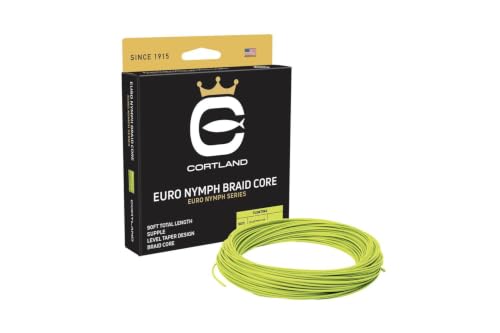
For specialist jobs, there are narrower lines. Euro nymph setups, for example, use their own lines, and our table includes the Airflo Superflo Max Euro Nymph and the Aventik Euro Nymphing Floating Level Line.
Common mistakes
The classic error is reading WF5F as a model name and buying three of them in different colors. Another is simpler: buying a line without checking the rod's rated weight. Another is overloading the reel and leaving no room for backing, or the reverse, buying so much backing that the line sits too low on the spool. A third is ignoring the leader. A line that is a good match with a mismatched leader still casts badly.
And one more: taking marketing words as specs. "Ultra-low stretch" and "memory-free" describe a feel that the maker has in mind. If a listing offers no number, the words are the maker's opinion.
Care in brief
Wipe or wash the line, let it dry, store it out of the sun and away from solvents. Our guides on how to clean fly line and how long fly line lasts cover the details. For spooling the line onto a reel, see how to spool a fly reel.
Brands in the table
The table includes lines from Airflo, Aventik, Cortland, Maxcatch, Moonlit Fly Fishing, RIO, Royal Wulff, Scientific Anglers and Snowbee, among others. Royal Wulff has a particularly large set of Triangle Taper variants. Not every brand has a page of its own, and the brand catalog lists the ones that do. If you use a line from another source with a reel, the fly reel pages show which line weights each reel lists.
Where to go next
If you want only floating lines, go to the floating fly lines page. If you are filling a reel, the backing page covers what goes under the line. And if you are still choosing a rod, start with the fly rods page.
Brands in this table
Related
Guides
Questions people ask
What fly line weight do I need?
Match the line to the weight printed on your rod. A 5-weight rod takes a 5-weight line. The number follows an industry standard that weighs the first 30 feet of the line, so a heavier number means a heavier line. Our fly line weight chart guide sets out the common pairings, and our rod pages show the weights makers list for each rod.
What does WF5F mean on a fly line?
It is a code: WF is weight forward (the taper), 5 is the line weight, and F is floating. So WF5F is a weight-forward 5-weight floating line. DT means double taper, and S, I and F mean sinking, intermediate and floating. Not every maker follows the pattern, especially on sinking and sink-tip lines, which are sometimes described by grain weight.
What is the difference between weight forward and double taper?
A weight-forward line puts most of its weight in the first part of the line and thins to a running line behind it, which helps casting distance. A double taper is symmetrical, with a level middle and a taper at each end, and many anglers like it for delicate presentations at short range. Both are common in our table. A level line has no taper at all.
Is a floating line or a sinking line better?
Neither is better in general. A floating line floats along its whole length and suits dry flies and nymphing in a wide range of water. A sinking line carries the fly down, and a sink-tip line has a floating body and a sinking tip, which is a compromise for streamers. Most of the lines in our table are floating, and the floating lines page lists the ones the maker calls full floating.
What is the best fly line for trout?
That depends on your rod and your water, and I can't rank lines by performance because we don't test them. For most trout fishing, a floating line in the weight that matches your rod is the standard starting point. Several makers in our table sell trout-specific tapers, such as the RIO Mainstream Trout and the Cortland 333 Trout All Purpose. Use the table to compare taper, length and core.
How do I clean a fly line, and what is fly line dressing?
Dirt on a line can make it float lower and shoot less well, so anglers wipe or wash it. Fly line dressing is a product some use to condition a line, and makers have their own instructions for what to use. Our guide on how to clean fly line covers the steps, and you should read the maker's advice for your specific line.
Can I use any fly line for saltwater?
Only if the maker says so. Salt, heat and big fish are hard on a line, and makers market specific saltwater lines with their own tapers and coatings. In our data we only call a line saltwater when the maker states it, and the table has no saltwater column, so a model name with flats or salt in it is a prompt to check the maker's page, not a confirmation.
How often should I replace my fly line?
There is no fixed number. A line wears with use, sun, dirt and rough handling, and it tells you when with cracks, stickiness or a loss of float. Our guide on how long fly line lasts goes through the signs.
Sources
- Wikipedia: Fly line — accessed 2026-10-15
- Sexyloops: Line ratings — accessed 2026-10-15