The short version
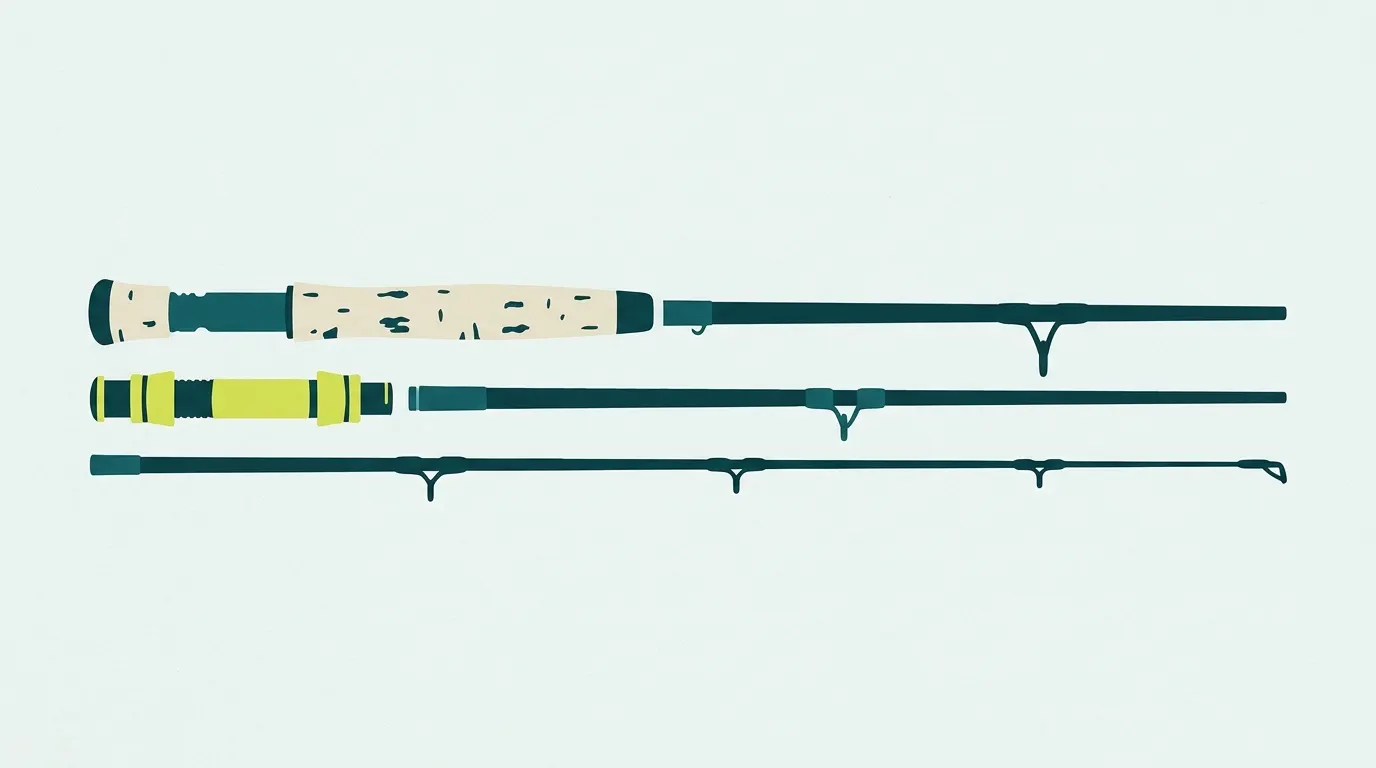
Start at the bottom and work up. A fly rod is a long tapered shaft with a handle at one end, a seat for the reel, a joint or several, and a row of guides that carry the line out to the tip. That is nearly all of it. The details matter because each part wears out, bends or fails in its own way.
If you are choosing a rod, the fly rods page lists models with line weight, length, pieces and blank material marked by source. Below is what those columns, and the parts behind them, mean.
The blank
The blank is the rod itself: the long tapered tube everything else attaches to. Okuma describes it as the actual long piece of material that is essentially the rod, thicker at the butt and thinner at the tip. It can be carbon fiber, fiberglass, bamboo or a combination. On our site those show up as the "Blank material" column, and we have separate pages for graphite rods and fiberglass rods. Our fiberglass vs graphite guide covers the choice.
The blank is also where the rod's action lives, meaning how much of it bends under load. Dummies says the tip is the last foot or so, and that how much it bends determines the rod's action and sensitivity, while the butt may bend noticeably on some rods and hardly at all on others. For the full story, see fly rod action.
Butt section and fighting butt
The butt is the bottom half or third of the shaft, according to Dummies. It is the stiffer part, so the heavy lifting in a fight happens here. The line weight is printed on this section just above the handle, FlyFisherPro says, so if a used rod arrives without a tag, look there first. If you want to know what the number means, our fly rod weight chart guide explains it.
Some rods add a fighting butt, an extension below the reel. Dummies says it is offered on many rods in 6-weight and up, and lets you brace the rod against your torso or forearm for leverage on a strong fish. It also notes that spey rods have a long lower grip that doubles as one. (The name sounds like a workplace dispute, but it is a stick of cork. Our spey rod guide shows where that long grip comes from.)
Grip and hook keeper
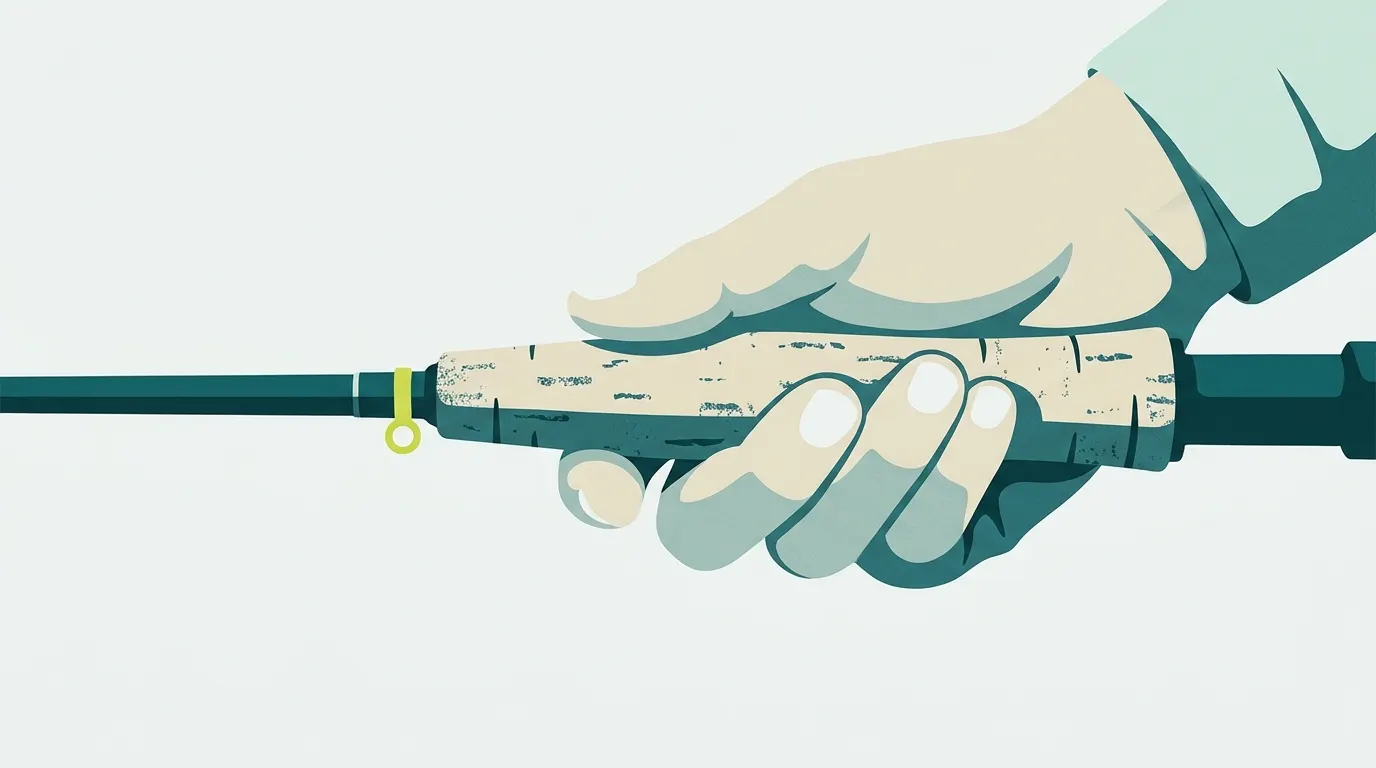
The grip is the handle, and Dummies says it is usually cork: light, well balanced and comfortable. It lists three shapes:
- Standard: contoured, with curved spaces for the hand.
- Cigar: hand-filling, and Dummies says it lets you raise your forefinger for a tighter loop on short, delicate casts.
- Full wells: a tapered front for raising your thumb, giving more casting power and force when fighting a fish.
Okuma, writing about rods in general, adds that rear grips are commonly cork, neo-cork, carbon fiber or rubberized foam such as EVA or TPE. For a fly rod, the shape is a matter of how your hand sits, so a listing photo tells you more than a spec sheet does.
The hook keeper is the small ring near the base of the blank. Dummies says it is where you hook the fly when the rod is strung up and ready to fish. It is the one part of the rod that exists for tidiness, and it is worth using, because a loose fly swinging against a rod is how you lose a tip-top. (That one is my opinion, not a fact from a source.)
Reel seat
The reel seat holds the reel to the rod. Okuma says seats secure the reel with a screw-down or screw-up design, and that they come in many configurations. Dummies gives no further detail. For a fly rod, check that the seat is the right size for your reel, and that the locking ring tightens firmly. Our parts of a fly reel guide covers the other half of the connection, and fly reels lists what is available.
Ferrules
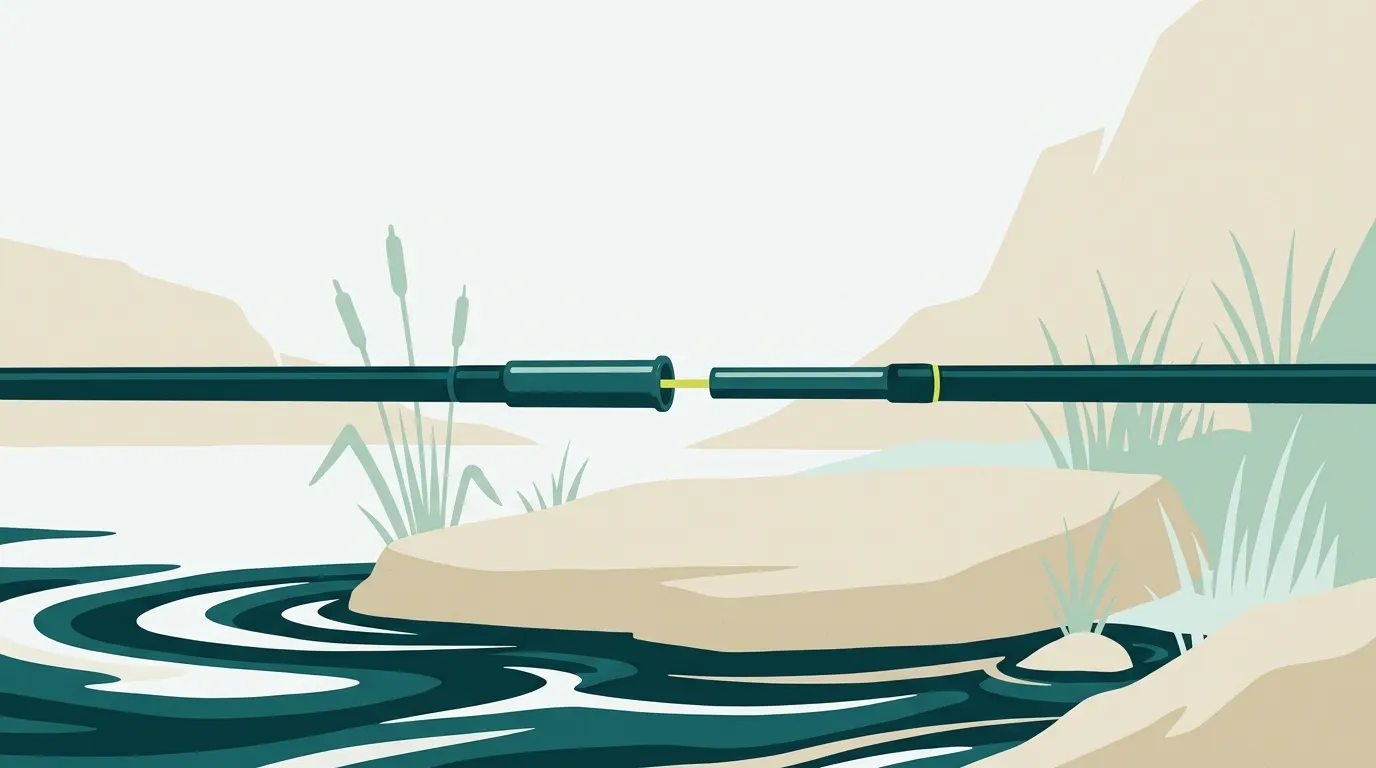
A ferrule is the joint between sections. It is what makes a four-piece rod fit in a tube. MidCurrent describes two common designs:
- Sleeve-over (tip-over-butt): the upper section slides over the lower one. MidCurrent calls it the more common type, and says it seats easily and needs less maintenance. Historically the upper section had to flare to fit, which upset the taper, but modern materials have largely removed that problem.
- Spigot (internal): a plug is bonded into one section and the other slides onto it. It keeps a more even diameter across the joint. MidCurrent says, quoting a rod designer at Scott, that it maintains a continuous taper in light line weights, and recommends cleaning and waxing internal ferrules periodically.
MidCurrent's conclusion is that neither design is clearly better, and the choice is mostly preference. The more pieces a rod has, the more joints it has, so a travel rod is a trade between a short tube and extra ferrules.
One caution from the same article: a properly seated internal ferrule leaves a gap of about 1/8 to 1/2 inch between the sections. If you push them together until they touch, you are doing it wrong.
Guides
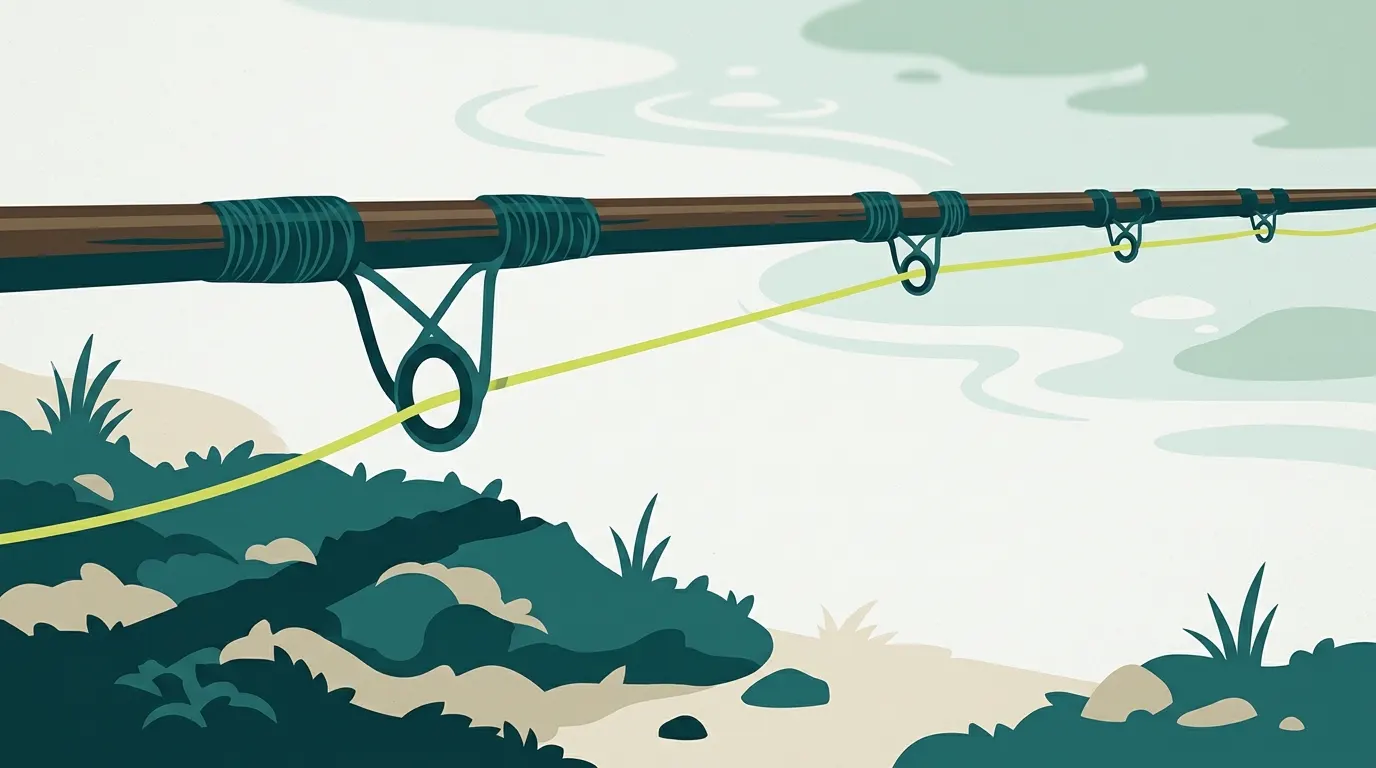
Guides carry the line from reel to tip. Okuma says they grow larger toward the butt, and the largest one nearest the reel is the stripper guide.
- Stripping guide: the first guide after the reel. Dummies says it is usually lined with ceramic to reduce friction, and that the same lining can shorten casting distance.
- Snake guides: thin wire guides that Dummies says keep the line running straight with minimal friction. They are shaped like a snake, which is how they got the name, and unlike the round guides on spinning rods they are light and flexible.
- Tip-top: the round guide at the very end, directing the line out toward the fish.
A bent snake guide or a cracked insert is the kind of damage that wears a fly line quickly. If you buy a rod used, run a finger along the guides and check for sharp edges.
Which parts to check on a listing
You cannot see most of the parts above in a product photo, but you can read what the listing and the maker say.
- Line weight, length and pieces: these tell you what the rod is for. They are columns in our rod tables, with a small mark under each value saying whether the maker, the Amazon listing or nothing confirms it.
- Blank material: carbon fiber, fiberglass or bamboo. It shapes the feel of the rod.
- Warranty: the part that does not show in any photo. If a tip breaks, a maker's warranty is how you get a replacement section. We list what the maker states.
- Everything else: grip, reel seat and guide type are worth a look in photos, but treat a listing's adjectives with care. (The Marketing Copy will tell you the cork is "select." Select from what, it never says.)
Once you have a rod, our fly rod setup guide walks through putting rod, reel and line together, and fly rod length explains the number on the spec sheet.
Fish don't read spec sheets. You should.
Questions people ask
What are the main parts of a fly rod?
The blank (the shaft), grip, reel seat, ferrules, a stripping guide, snake guides and a tip-top. Many rods also have a hook keeper, and some have a fighting butt. The sources I read describe the same set, with small differences in the names.
What is the fighting butt on a fly rod?
It is an extension below the reel that you can brace against your forearm or torso for leverage when fighting a strong fish. The Dummies guide says it is offered on many rods in 6-weight and up. Spey rods have a long lower grip that does the same job.
What is the difference between a stripping guide and a snake guide?
The stripping guide is the first guide the line passes through after the reel. Dummies says it is usually lined with ceramic to reduce friction. Snake guides are the thin wire guides further up the rod, shaped like a squiggle, that keep the line running straight.
What is a ferrule on a fly rod?
It is the joint between two sections of a rod. MidCurrent describes two common designs: sleeve-over (tip-over-butt), where the upper section slides over the lower one, and spigot (internal), where a plug is bonded into one section and the other slides onto it.
Where is the line weight marked on a fly rod?
On the butt section, above the handle, according to FlyFisherPro. The weight is printed on the rod, not on the line. A listing normally also gives length and number of pieces.
Save this guide for later
Sources
- Dummies: Anatomy of a fly rod — accessed 2026-10-15
- Okuma: Anatomy of a fishing rod — accessed 2026-10-15
- MidCurrent: Which fly rod ferrule is best? — accessed 2026-10-15
- FlyFisherPro: Fly rod weights explained — accessed 2026-10-15