The short answer
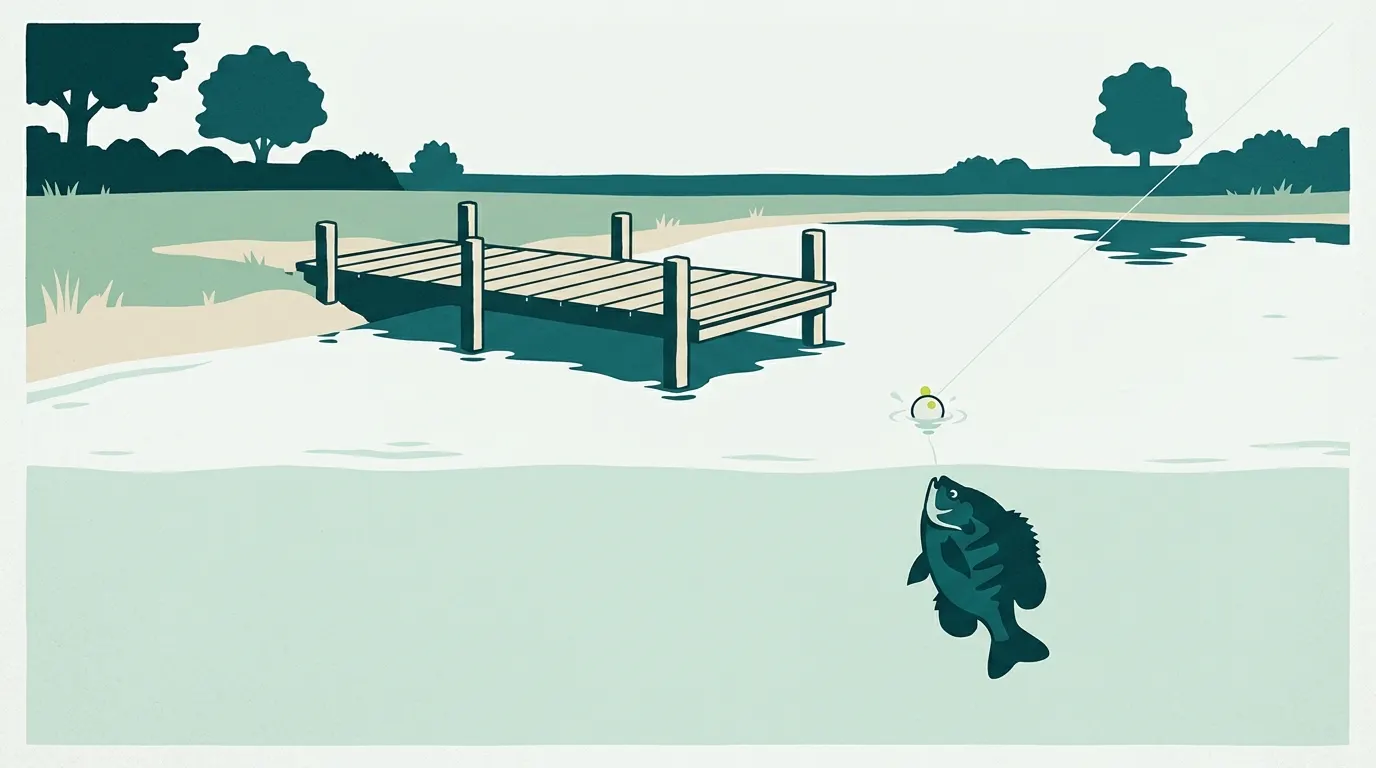
Bluegill are a small-fly, light-gear fish found in shallow, weedy water, and the two sources I opened agree on most of the setup: a rod around 9 feet, a floating line for poppers and dries, a leader long enough to land a fly quietly, and small foam bugs. They disagree about whether a 3-weight is the right rod, which is a useful disagreement to understand before you buy.
I have not fished these setups. This is a summary of ToFlyFish and Outdoor Life, and where they differ I say so.
What weight rod: 3, 4 or 5
ToFlyFish suggests a rod of about 9 feet, and a 3- to 5-weight, with a 5-weight for larger water with cover and big bluegill. A shorter rod works for close casting, it says, and a longer one makes dapping easier.
Outdoor Life takes a different view. The author says a 2- or 3-weight is tempting but less effective, and recommends a 4- or 5-weight because poppers face air resistance even when small, and a heavier line delivers them more smoothly.
Both can be right. A 3-weight is lovely for small bugs and short casts. A 4- or 5-weight handles a popper and a dropper better and copes with wind. So the choice depends on the flies:
- Small spiders, ants and tiny nymphs on calm water: a 3-weight is enough.
- Foam poppers, droppers, wind or bigger fish: a 4- or 5-weight.
- One rod for panfish and the odd bass: a 5-weight.
Our 3-weight fly rods and 5-weight fly rods pages list the options, and the fly rod weight chart explains what the numbers mean. If you want the soft feel for small fish that people associate with glass, look at the fiberglass fly rods page, where the blank material is shown for each rod. (The bluegill, for its part, has no opinion about your rod's modulus.)
Fly line and leader
ToFlyFish says two lines are enough: a floating line and a clear intermediate. The floating line is for the surface and for dries and poppers. The intermediate is for fishing deeper and slower. If you buy only one, buy the floating line, which is what most popper and dropper fishing needs. Browse floating fly lines for options.
On leaders, ToFlyFish gives a range of 6 to 10 feet, shorter for close casting and longer for open water, with nylon preferred for dries and poppers because it floats better. It suggests tippet of 4X to 3X for most situations, 2X for bigger topwater flies, and 5X for very small flies.
Outdoor Life is firmer. The author uses a 9-foot, 3X monofilament leader with 3X tippet, says the thin diameter usually won't spook fish, and says it gives some insurance if a bass strikes. He advises skipping 5X and 6X leaders. A 3X leader is a good middle ground between the two views, but if you fish tiny flies, you may need finer tippet to fit the hook eye.
Flies
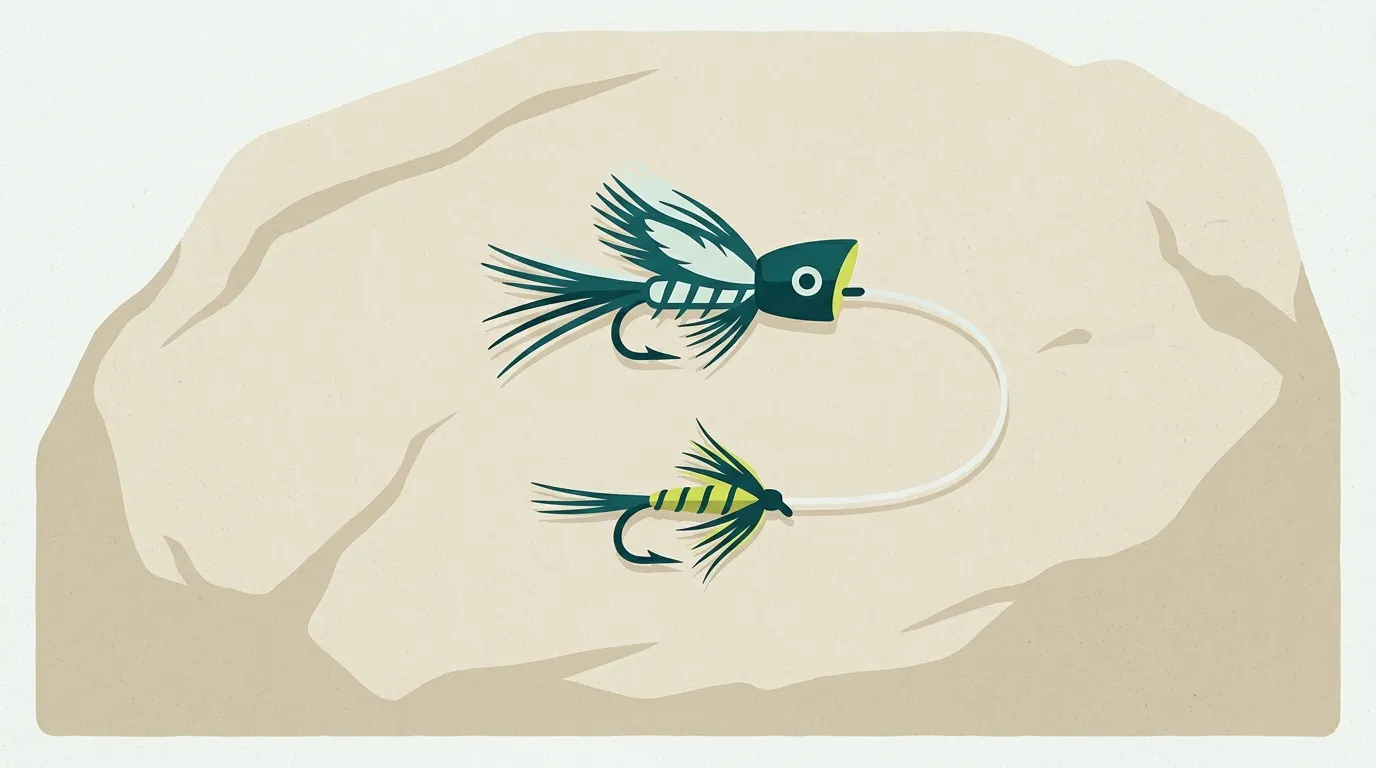
The flies are small and buggy. Outdoor Life describes small foam poppers with rubber legs and hackles, similar in profile to trout dry flies. ToFlyFish says imitative bug patterns work well, especially those with rubber legs, hackle or marabou, and names Chernobyl Ants, smaller Mr. Peanut Hoppers, Humpies and the BoogleBug popper in yellow, blue, black or white. It also lists damsel adults, mayflies and ants.
Under the popper, Outdoor Life uses zebra midges and red chironomid worms as droppers, and a classic winged wet fly as a second dropper when fish ignore a slow presentation. Neither source gives hook sizes for the poppers, so I will not invent them. Match the popper to the fish: if bluegill are bumping it and missing, go smaller.
Rigging a popper with a dropper
Outdoor Life's popper and dropper rig is simple:
- Midge dropper: about 5 to 6 inches of leader below the popper.
- Wet fly dropper: about 10 inches of 3X tippet from the popper to the wet fly.
The author says fish often eat the midge on a dead stop, pulling the popper under like a bobber. In very clear water, he works the popper more aggressively so the wet fly swims like a small baitfish and watches for the line to jolt tight.
ToFlyFish is more cautious about droppers. It says to fish a dropper only for plopping flies into small openings in weed beds, for sluggish fish, or for sight fishing to many fish.
Where bluegill are
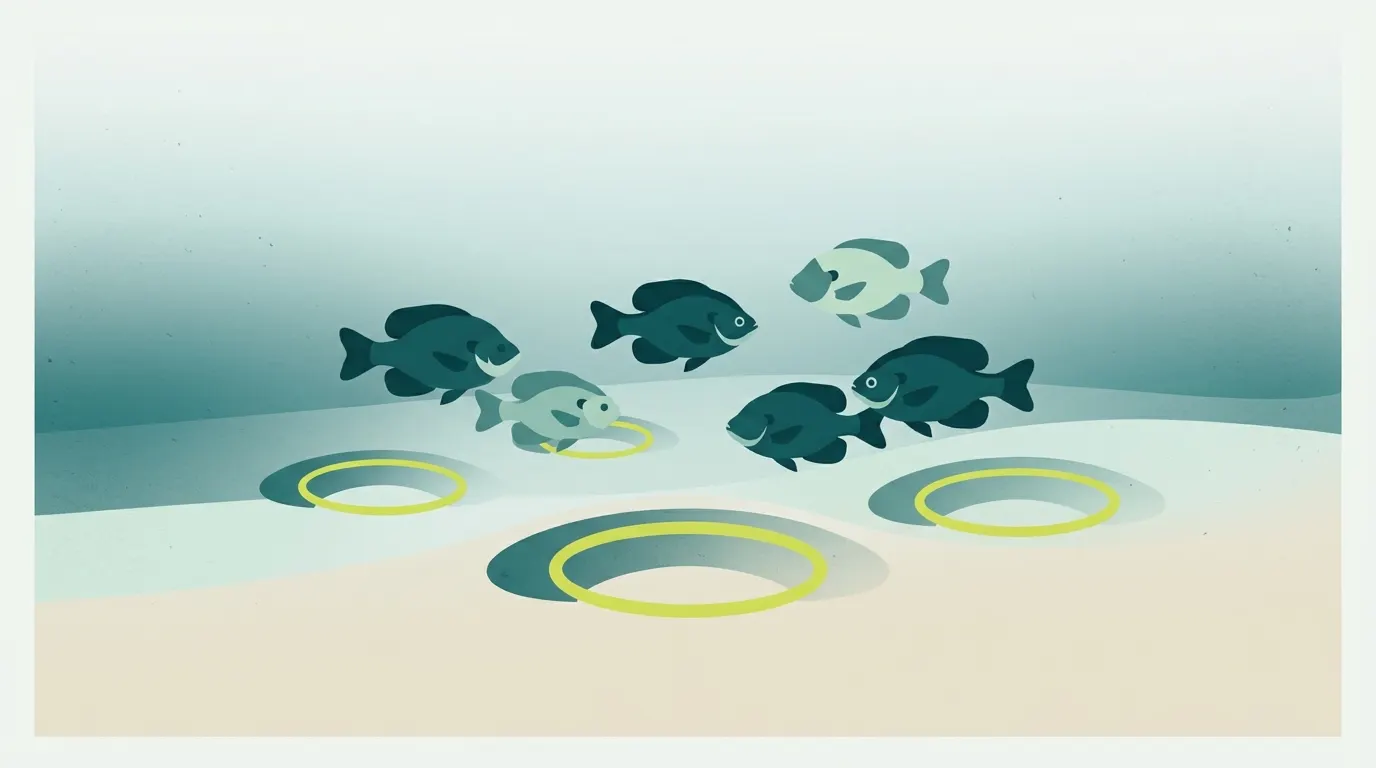
ToFlyFish describes the best waters as shallow lakes and larger ponds with reeds or cattails. From spring through fall, bluegill are mostly in vegetation and cover, though they may use open water at times. They generally avoid current, though a few may sit in slow sections of smallmouth rivers. If fish are not in the shallows within about 100 feet of shore, it suggests trying the first large weed or brush cluster next to prime shoreline spots, such as old spawning beds in early summer. When fish are sluggish, try adjacent deeper water with structure.
Outdoor Life's example is a farm pond, and the author notes that the dropper approach matters most in very clear water.
Working the fly
Both sources say the same thing about speed: slow down. Outdoor Life says not to overwork the popper, with light pops and long pauses, because fish often take it during the pause. ToFlyFish says that for sluggish fish you should use a very slow presentation, let the fly hover and use tiny strips, because pauses often produce takes. It also says to keep constant contact with the fly, since takes can be subtle and springy.
On timing, ToFlyFish says topwater action is strongest when water is above 60 degrees F. After a drop in water temperature, or when it is cold to begin with, bluegill become sluggish and need a slower presentation.
A first outfit
For a first bluegill outfit, a sensible shopping list from these sources is:
- A 9-foot 4- or 5-weight rod. Drop to a 3-weight if you know you will fish small flies on calm water.
- A floating line to match.
- A few 9-foot leaders in 3X and spare tippet.
- A handful of foam poppers and a few zebra midges.
Our fly-fishing gear for beginners guide covers the rest of the kit, and fly fishing for bass covers the heavier version of this game for the larger fish that sometimes eat your popper.
For bluegill, the spec to read is line weight, because it decides whether a small popper lands softly or like a dropped coin.
Questions people ask
What weight fly rod is best for bluegill?
ToFlyFish suggests a 3- to 5-weight and recommends a 5-weight for larger water with cover and big bluegill. Outdoor Life advises against a 2- or 3-weight and recommends a 4- or 5-weight for smoother delivery, since poppers face air resistance even when small. If you already own a 3-weight, it will catch bluegill. If you are buying a rod for panfish plus the occasional bass, a 4- or 5-weight is the more flexible choice.
What weight fly rod for panfish in general?
The same advice applies to the other sunfish, since the sources describe the same small flies and shallow, covered water. A 3- to 5-weight covers most panfish water. Go to the heavy end if wind or bigger poppers are part of the plan, and the light end for small flies on calm water.
What flies work for bluegill?
Outdoor Life describes small foam poppers with rubber legs and hackles, with a zebra midge or red chironomid worm as a dropper. ToFlyFish names Chernobyl Ants, smaller Mr. Peanut Hoppers, Humpies and the BoogleBug popper, plus damsel and mayfly imitations and ants. Rubber legs, hackle or marabou show up often in the advice.
What tippet should I use for bluegill?
ToFlyFish says 4X to 3X for most situations, 2X for bigger topwater flies, and 5X for very small flies. Outdoor Life casts a 9-foot 3X leader with 3X tippet and advises skipping 5X and 6X, partly as insurance if a big bass takes the fly. The sources split here, so pick based on how small your flies are.
How do you fish a popper for bluegill?
Do not overwork it. Outdoor Life says to use light pops with long pauses, because fish often take the fly during the pause. If you have a midge dropper, the take often comes on a dead stop as the popper pulls under like a bobber.
When is bluegill fishing best on the fly?
ToFlyFish says topwater action is strongest when water is above 60 degrees F, that bluegill spawn in spring with males guarding nests, and that after a drop in water temperature fish turn sluggish and need a slower presentation. It also says they feed through winter and are a favorite of ice anglers.
Save this guide for later
Sources
- ToFlyFish: Fly fishing for bluegill — accessed 2026-10-15
- Outdoor Life: 3 tips to fish bluegill bugs on a fly rod — accessed 2026-10-15