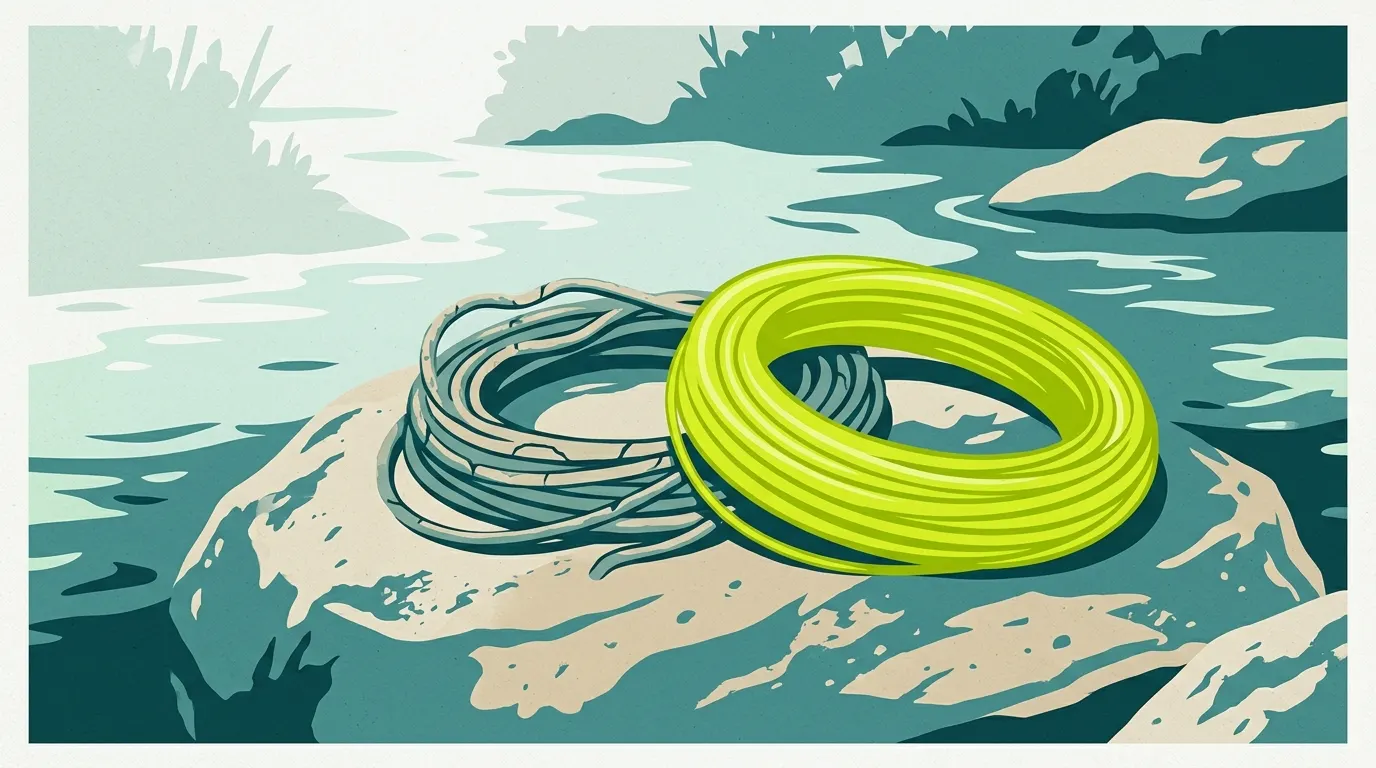
Why there is no fixed number
I went looking for the lifespan of a fly line in maker and retailer material, and found condition rules, not a number. That is honest. A line fished often in gritty water will age differently from one fished rarely and stored dry. MidCurrent's line is the closest: a well-maintained line can last several years. Everything else on this page is about how to tell yours is finished.
Signs it is time to replace it
Cracks. Orvis says replace the line if there are any cracks at all, especially in the first 40 feet. MidCurrent lists small surface cracks and a brittle feel.
It no longer floats. Orvis says a floating tip that no longer floats is a sign. Some lines can be retreated, it adds, but a line that has started to sink is near the end of its life. MidCurrent says floating lines that do not float properly in the first 10 feet are a sign too.
Cuts and abrasions. Orvis says these create weak spots that can break under stress.
Coils that stay. MidCurrent lists unusual coil memory, Cortland lists memory or coils that light stretching does not remove. Orvis notes that small-diameter spools cause coiling memory, so check the spool before blaming the line.
Rough feel. MidCurrent mentions a micro-grit feel when stripping line. That can mean dirt, which a clean fixes, or damaged coating, which it does not. Clean the line first, then see.
Visible wear. Cortland lists cuts, cracks, crushing, pinching and abrasion, and dirt, grit, algae or discolored streaks on the surface.
MidCurrent's advice for cracks or brittleness that cleaning does not fix is to plan a replacement. A line that looks worn, and is cracking at the tip you handle most, is not going to improve.
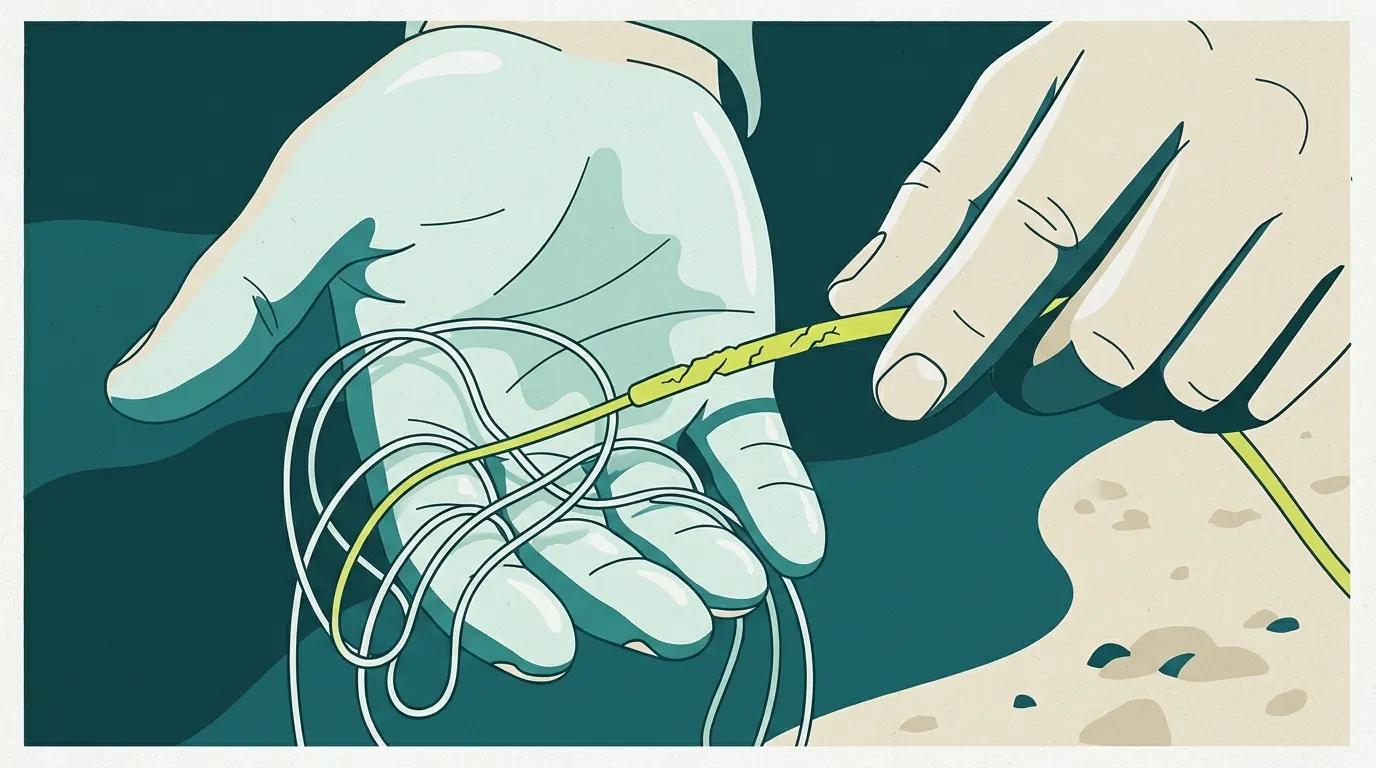
What shortens a line's life
The pages I opened agree on a short list:
- Heat and sun. Orvis says UV rays deteriorate fly lines. Cortland says to avoid dashboards, hot trunks, rear window ledges and direct high heat.
- Chemicals. Orvis says keep line away from bug spray, sunblock and other materials harmful to plastics. Cortland names DEET, fuel, aerosols and harsh cleaners. MidCurrent warns about sunscreen, insect repellent and other solvents.
- Abrasion. Orvis says not to step on the line, to keep it away from vegetation and woody debris, and to use a stripping basket in saltwater so the line stays off the sand. MidCurrent says to avoid dragging line over gravel or casting on abrasive surfaces like asphalt.
- Wind knots and tight coils. Orvis says these create weak spots.
- Small spools for long periods. Orvis says leaving line on a small-diameter reel for long periods creates coiling memory and speeds wear. For how line and backing fill a spool, see how much backing.
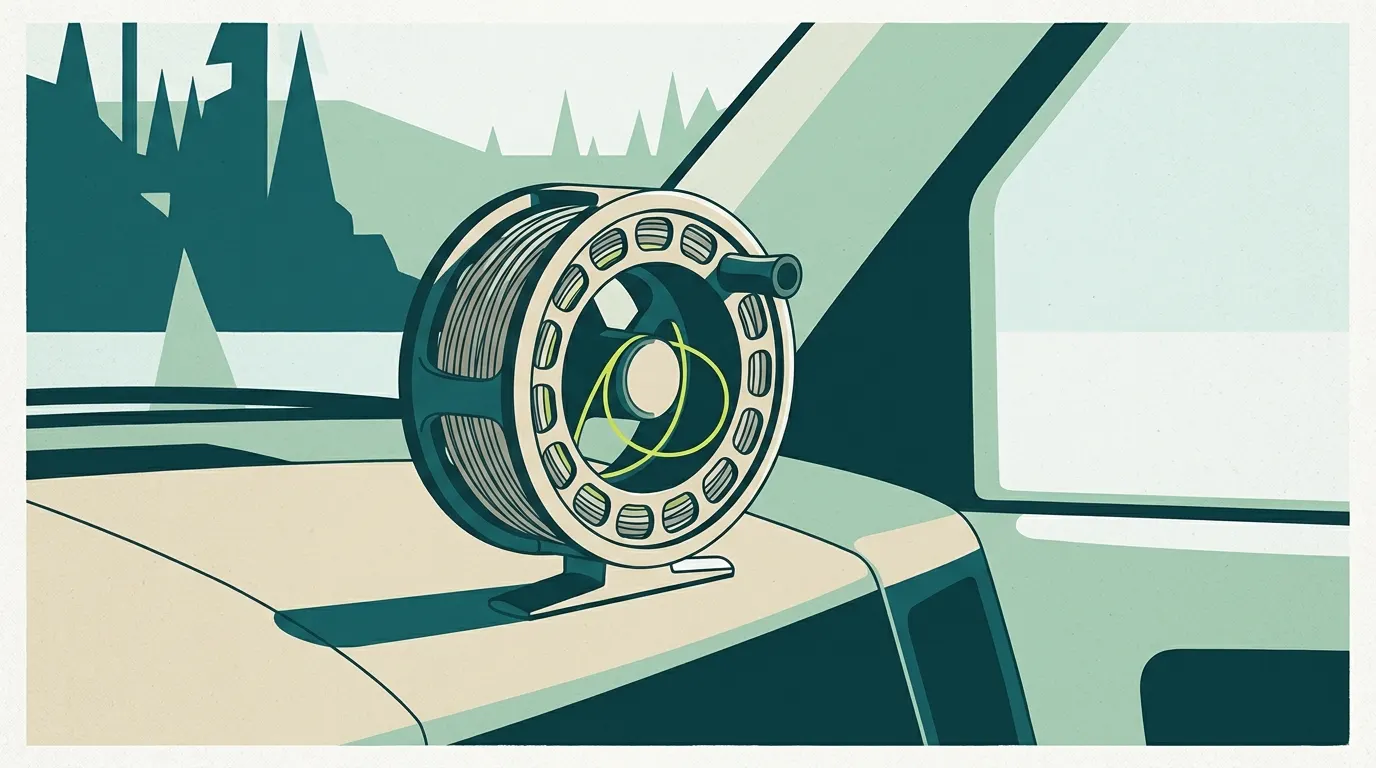
What adds seasons
- Clean it. Orvis says about every five trips, and about every three if you fish sandy beaches, saltwater or muddy, silty water. MidCurrent says every 3 to 5 uses in relatively clean water and every 2 to 3 trips in muddy or algae-rich water. Our how to clean fly line guide has the steps.
- Store it out of the sun. Orvis says on the reel in a case, out of the sun, and spare lines in a dark place or their original packaging.
- Use the maker's instructions. Not every line takes dressing; the cleaning guide goes through where the sources differ.
- Inspect while cleaning. MidCurrent calls cleaning a chance to spot abrasions, nicks or cuts.
The cost of waiting
Orvis and MidCurrent both treat cracks and a floating line that sinks as end-of-life signs. I would rather replace a worn line in the off-season than be surprised on the water. A new floating line sits on our fly lines page, and our floating fly lines selection lists floating models. If you are not sure what to buy, types of fly line covers taper and buoyancy, and the line weight has to match the rod.
Common mistakes
- Replacing by calendar. Condition matters more than age, in the sources above.
- Keeping a line that sinks. Orvis says it is near the end of its life.
- Leaving it in the car. Heat is on every list.
- Blaming the rod. MidCurrent says grit acts like sandpaper on guides and that clean lines shoot more smoothly, so check the line first.
Fish don't read spec sheets. You should, and a fly line has a "use by" date that nobody prints on the box. It is the first crack.
Questions people ask
How often should you replace a fly line?
There is no calendar rule in the pages I opened. MidCurrent says a well-maintained line can last several years, and Orvis and MidCurrent both list condition signs that mean replacement. Replace when you see cracks, cuts or abrasions, or when a floating line stops floating.
What are the signs a fly line is worn out?
Orvis lists any cracks, especially in the first 40 feet, a floating tip that no longer floats, and cuts or abrasions. MidCurrent adds a micro-grit feel when stripping line, floating lines that do not float properly in the first 10 feet, unusual coil memory, small surface cracks and a brittle feel. Cortland lists cuts, cracks, crushing, pinching, abrasion and coils that light stretching does not remove.
Can cleaning make fly line last longer?
MidCurrent says regular cleaning can help a line last several years, and Orvis ties cleaning to making the line last longer. Cleaning does not repair cracks. MidCurrent advises planning a replacement if cleaning does not help cracks or brittleness.
Does the sun damage fly line?
Orvis says UV rays deteriorate fly lines and recommends storing line on the reel in a case out of the sun. Cortland says to avoid dashboards, hot trunks and rear window ledges. MidCurrent also warns against hot cars and extreme heat.
What damages fly line fastest?
The pages I read name stepping on the line, stripping it through vegetation or woody debris, wind knots and tight coils, casting on abrasive surfaces like asphalt, and chemicals such as bug spray and sunblock. Orvis and Cortland both mention the chemical risk.
Save this guide for later
Sources
- Orvis: How do I make my fly line last longer? — accessed 2026-10-15
- MidCurrent: Why and how you should clean your fly line — accessed 2026-10-15
- Cortland: Fly line care and maintenance — accessed 2026-10-15