Why bother
MidCurrent gives four reasons. Clean lines shoot more smoothly through the guides. Cleaning restores the water-repellent quality of floating lines, which dirt and oils degrade. Grit acts like sandpaper on rod guides, so a clean line is kinder to your rod. And cleaning is a chance to spot abrasions, nicks or cuts. MidCurrent adds that regular cleaning can help a line last several years; our how long does fly line last guide covers replacement.
What you need
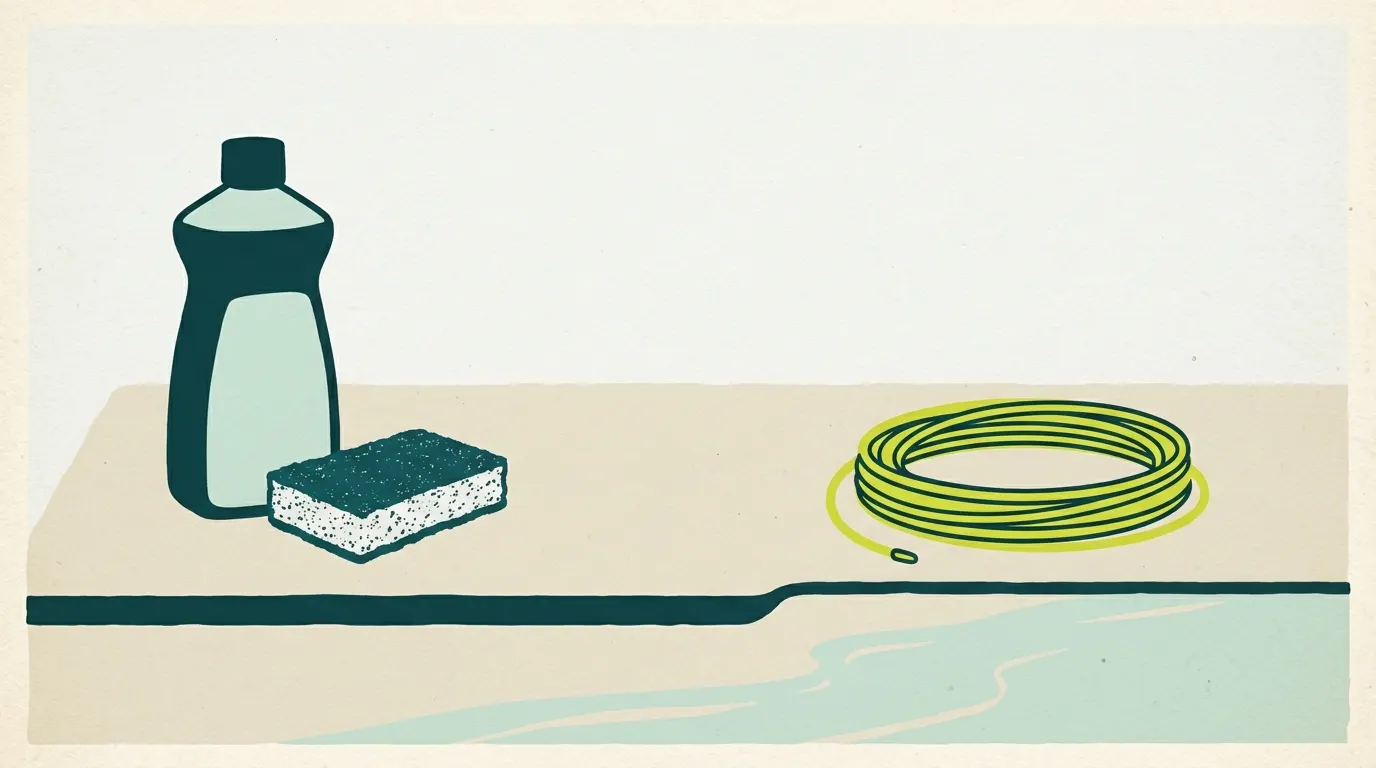
For the soap method, per MidCurrent: mild dish soap, clean rags, warm water, a sink or bucket, and optionally a line winder. For the pad method, per Cortland: the maker's line cleaner and a pad or towel, plus a clean bucket or tub of fresh water.
Method one: soap, soak and cloth
This is MidCurrent's routine, with Orvis's version noted.
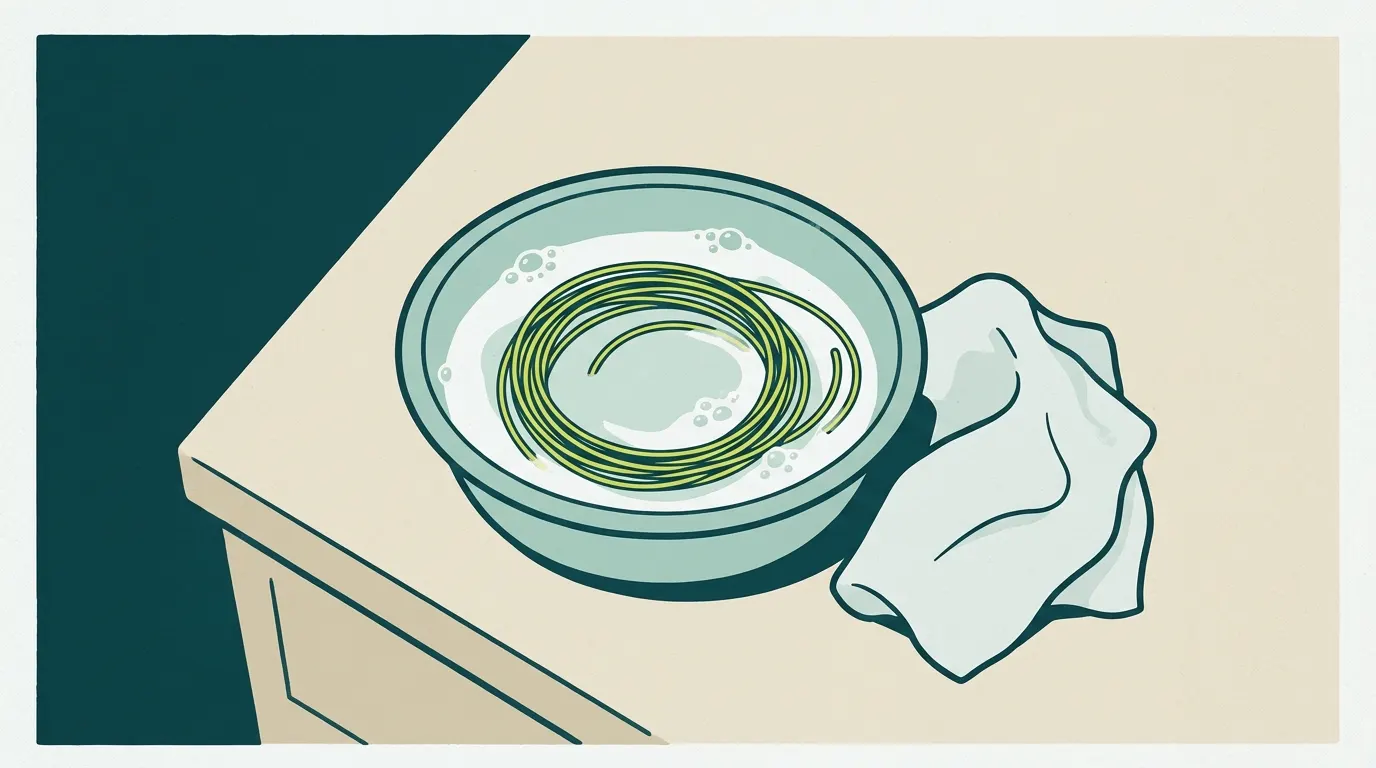
- Soak. Fill a sink or bucket with about a gallon of hot water, add a few drops of mild dish soap and soak the line in loose coils for 15 to 30 minutes, until the water is lukewarm. Orvis says pull the line off the spool in large loops, soak for 10 minutes in warm water with a couple of drops of dish soap.
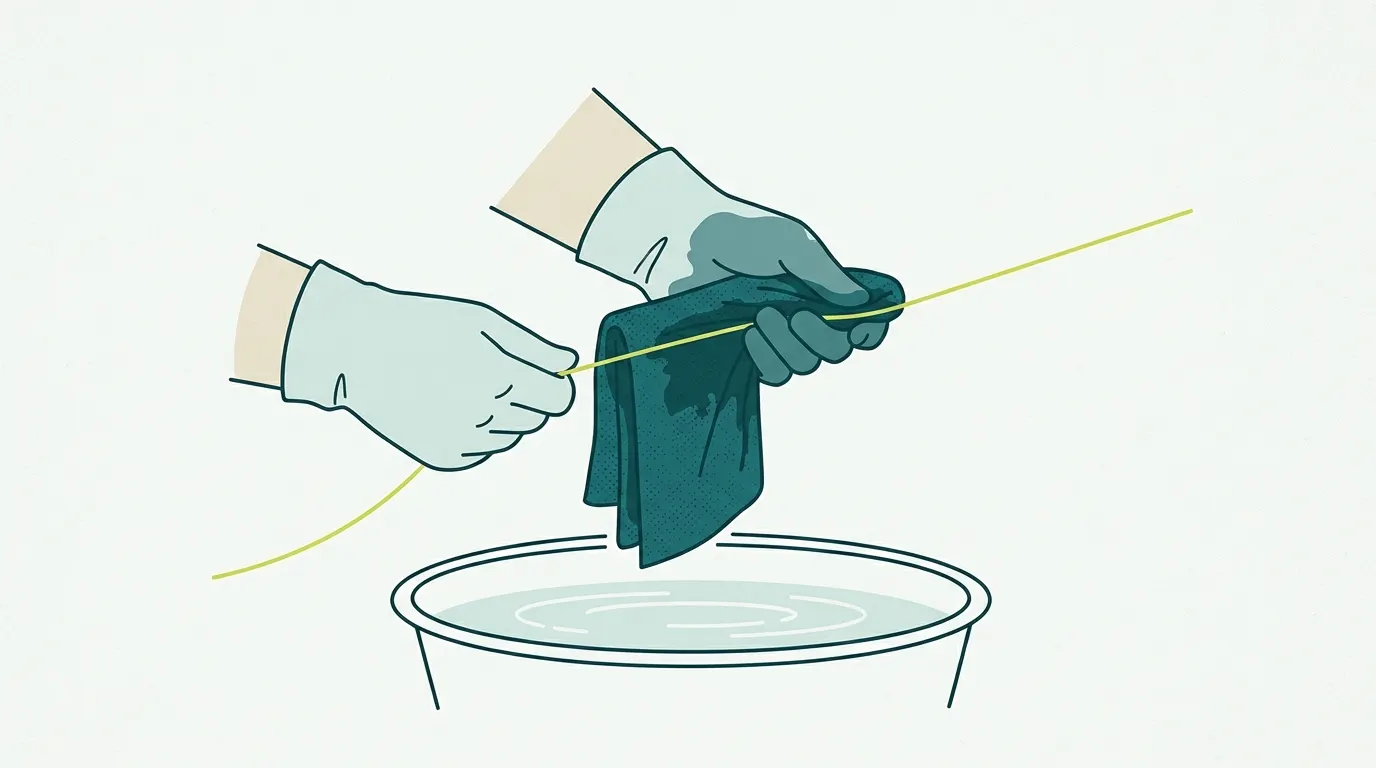
- Clean. Draw the line through a moistened rag with mild pressure. MidCurrent says a slight squeak means grime is coming off.
- Stretch. Gently stretch each section to reduce memory coils.
- Rinse thoroughly to remove soap residue.
- Dry by passing the line through paper towel or a dry cloth. Orvis says to pull it through a soft, clean, dry cloth to remove dirt and grime.
Method two: the maker's pad
Cortland describes pulling the line off the reel into a clean bucket or tub of fresh water, applying its line cleaner to a dry pad or towel, wrapping it firmly around the line, and slowly pulling the line through the full length. It suggests doing this after regular use or before extended storage. Cortland also describes a quick wipe through a pad or cloth after each trip, a light stretch, and re-spooling with light tension.
Where the sources differ
Soap or cleaner. MidCurrent and Orvis use mild dish soap, a few drops. Cortland uses its own line cleaner. Orvis, in the pages I opened, only says to use a couple of drops, and I would check the instructions that came with your line before using household soap on it.
Dressing. MidCurrent calls it debated and says critics say it attracts dirt and needs more frequent cleaning; if used, apply sparingly after cleaning and drying. Orvis says to pull the dry line through a cloth soaked in dressing, using a good amount and reapplying as you go. Cortland says to treat it sparingly because heavy application can attract grit. The word "sparingly" shows up twice, and "a good amount" once. Pick the maker's advice for your line.
Frequency. Orvis: about every five trips, or three in sand, saltwater, or muddy or silty water. MidCurrent: every 3 to 5 uses in clean water, every 2 to 3 trips in muddy, silty or algae-rich water, with some anglers cleaning after every trip and others every couple of months. Cortland: a quick wipe each trip and a full clean before storage.
What to avoid
- Chemicals. MidCurrent warns about sunscreen, insect repellent and other solvents. Orvis says keep line away from bug spray, sunblock and materials harmful to plastics. Cortland lists DEET, fuel, aerosols and harsh cleaners.
- Abrasion. MidCurrent says avoid dragging line over gravel or casting on abrasive surfaces like asphalt. Orvis says use a stripping basket in saltwater and avoid stripping line through vegetation.
- Heat. Cortland says avoid dashboards, hot trunks and rear window ledges.
How to store fly line
Orvis says store the line on the reel in a case, out of the sun, noting that UV rays deteriorate fly lines, and keep spare lines in a dark place or their original packaging. Cortland says to strip and clean the line, let it dry completely, and re-spool with light tension. MidCurrent says to store the line on the reel when it is not in use and avoid prolonged direct sunlight and hot cars. Orvis also warns that leaving line on a small-diameter reel for long periods creates coiling memory.
Spooling carefully matters, too. Our how to spool a fly reel guide covers tension and backing.

While you clean: inspect
Run your fingers along the line as it goes through the cloth. Orvis says to replace a line with any cracks, especially in the first 40 feet, or cuts and abrasions. Cortland lists cuts, cracks, crushing and pinching. If cleaning leaves a gritty or brittle line, MidCurrent advises planning a replacement. A new floating line is on our fly lines page, and floating fly lines lists the floaters.
Common mistakes
- Cleaning only when it is filthy. The sources give frequencies in trips, not in grime.
- Over-applying dressing. Two of the three sources say sparingly.
- Ignoring the maker's instructions. Orvis says to follow them.
- Not drying it. Cortland says dry completely before re-spooling.
- Storing it hot. Heat is on every list.
A fly line is an unglamorous piece of gear, and five minutes at the sink is a small cost for one that casts the way it did in the shop. (The rod gets the compliments. The line does the work.)
Questions people ask
How do you clean a fly line at home?
MidCurrent's method: soak the line in loose coils in about a gallon of hot water with a few drops of mild dish soap for 15 to 30 minutes, draw it through a moistened rag with mild pressure, gently stretch each section, rinse thoroughly and pass it through a dry cloth. Orvis soaks for 10 minutes in warm water with a couple of drops of dish soap, then pulls the line through a soft, clean, dry cloth.
Can you use dish soap on fly line?
MidCurrent and Orvis both use mild dish soap, a few drops. Cortland instead uses its own line cleaner on a pad. Orvis also says to follow the manufacturer's instructions for your line, and I would check the maker's page first.
How often should I clean my fly line?
Orvis says about every five trips, and about every three if you fish sandy beaches, saltwater or muddy, silty water. MidCurrent says every 3 to 5 uses in relatively clean water, every 2 to 3 trips in muddy, silty or algae-rich water. Cortland says a quick wipe after each trip and a full clean before storage.
Do I need line dressing?
The sources disagree. MidCurrent calls dressing debated, with supporters saying it helps lines shoot and float and critics saying it attracts dirt. Orvis says to pull a clean, dry line through a cloth soaked in dressing, using a good amount. Cortland says to treat it sparingly because heavy application can attract grit. Check whether your line's maker recommends it.
How do I store fly line?
Orvis says to store line on the reel in a case, out of the sun, and spares in a dark place or original packaging. MidCurrent says store on the reel and avoid prolonged direct sunlight and hot cars. Cortland says dry it completely and re-spool with light tension.
Save this guide for later
Sources
- MidCurrent: Why and how you should clean your fly line — accessed 2026-10-15
- Orvis: How do I make my fly line last longer? — accessed 2026-10-15
- Cortland: Fly line care and maintenance — accessed 2026-10-15