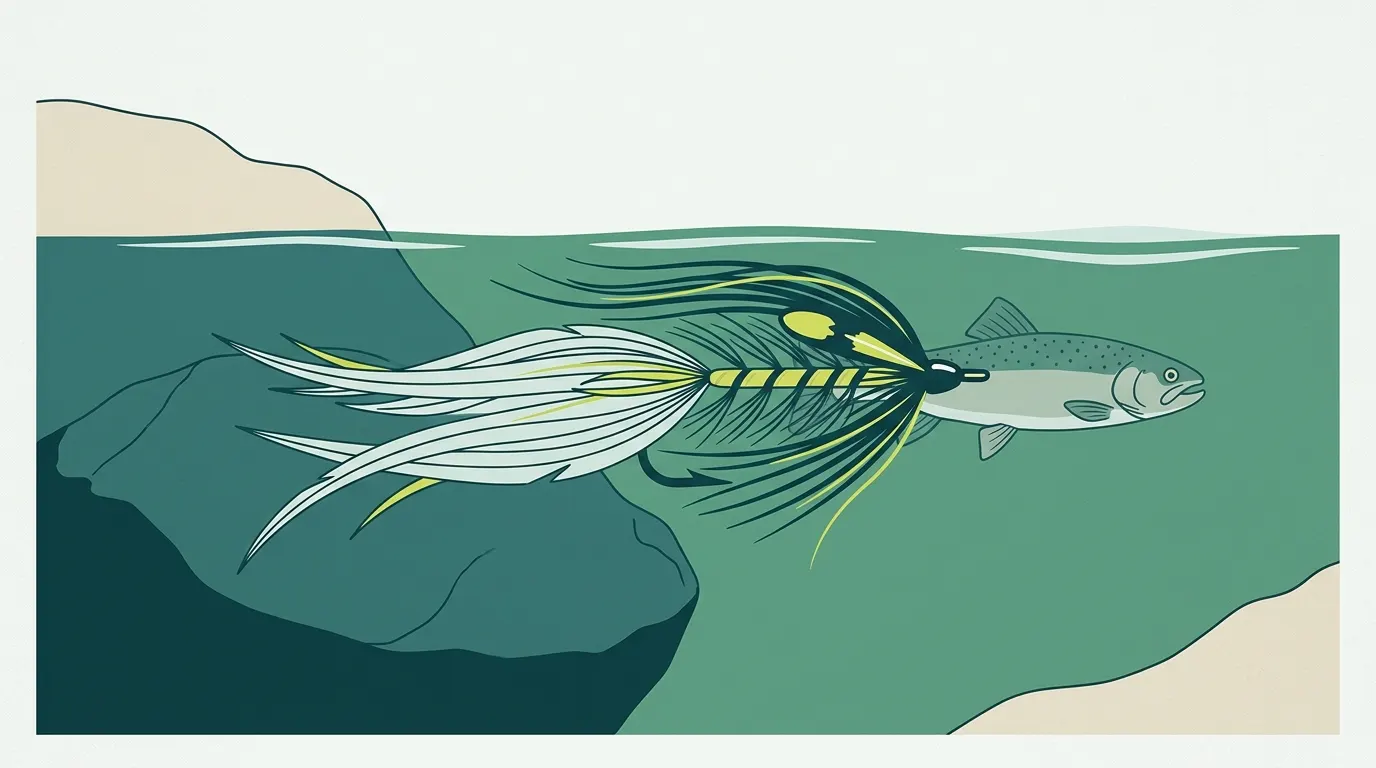
What a streamer is
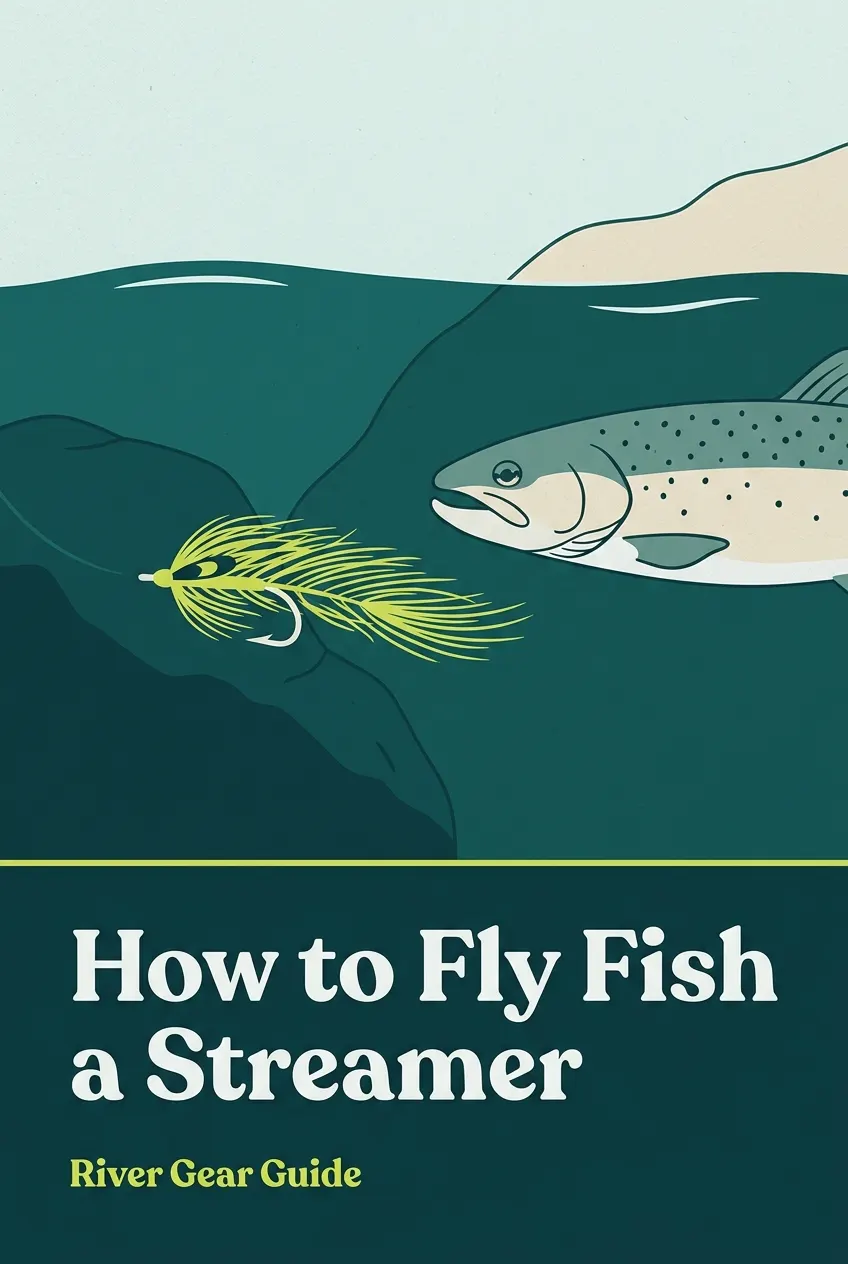
A streamer is a large fly meant to look like a small fish, a leech or a similar bite of food. Orvis describes streamers as flies you retrieve actively, rather than drifting them naturally the way you would a dry fly or a nymph. They are longer than most insect imitations, they are tied with flowing materials that move even when the fly sits still, and they are tied on bigger hooks, so they are heavier and harder to cast.
That last point drives the gear. A big, heavy, wind-resistant fly does not want a light rod and a delicate leader. It wants something that can throw it and turn it over.
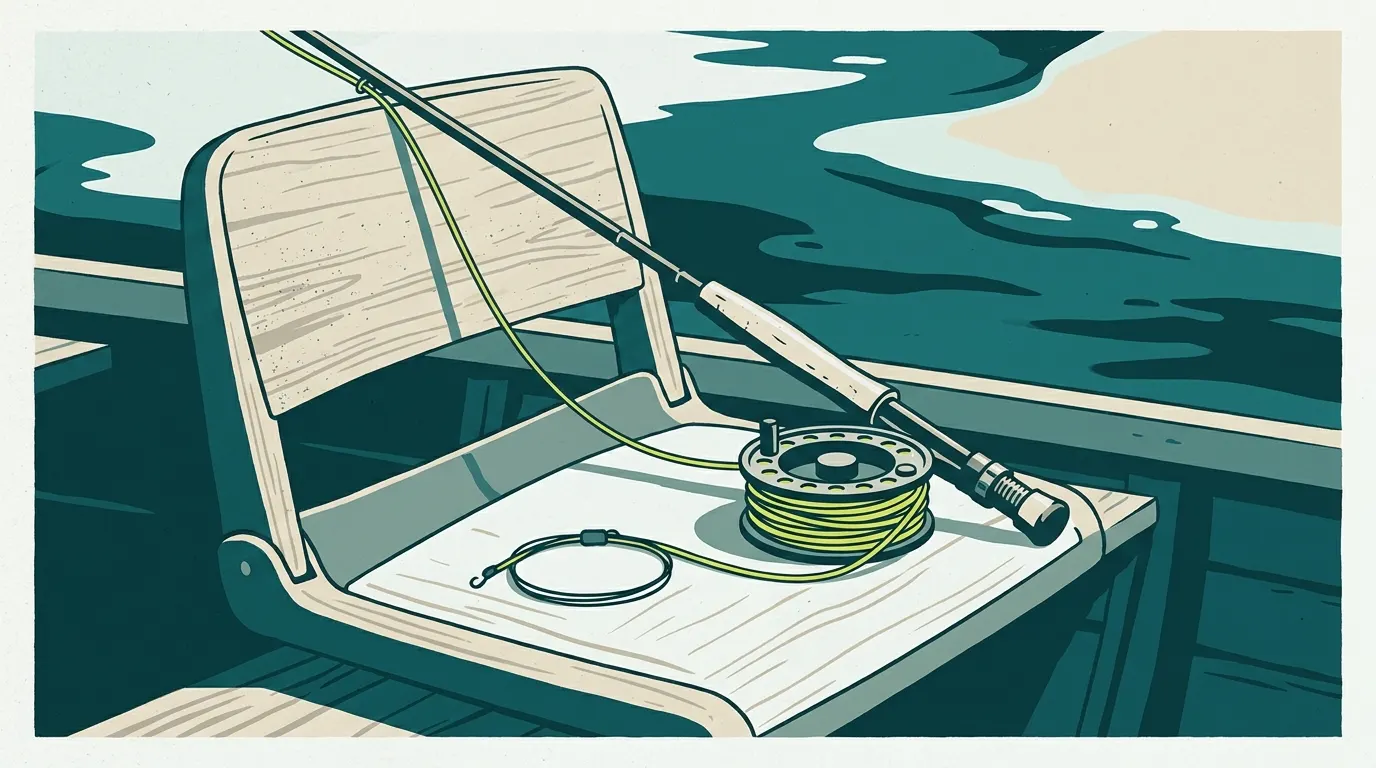
The gear: rod, line, leader
Rod. Orvis says to use a 5- to 8-weight rod for streamers, and that heavier flies call for a higher-rated rod. The five-weight end suits smaller flies on smaller water. The eight-weight end suits big flies and big water. Our 5 weight fly rods and 8 weight fly rods pages list what is on Amazon US now. If you are shopping for the first time, the fly rod weight chart helps you place these numbers.
Line. Orvis says that sinking lines or sink tips get heavier streamers down to the fish faster than a floating line, and that attachable sink tips are a practical option. This is the section where the line matters most. A full floating line fishes streamers fine in shallow water, but the moment you need depth you either add weight to the fly or change line. The fly line weight chart and the types of fly line guide cover the line codes, and the fly lines page lists current lines you can compare by weight and taper. A floating line is the one you already own; a sinking line is the one this technique usually asks you to add.
Leader. Orvis recommends a short, stout leader of about 3 to 6 feet to turn the fly over, and says fluorocarbon is a good choice because it is nearly invisible underwater. Think of the leader as a bridge rather than a presentation tool. It does not need to be delicate because the fly is not.
What not to add. Orvis says not to put split shot on a streamer leader, because it can cause tangles or injury. Use a sink tip or a weighted fly.
Where to cast
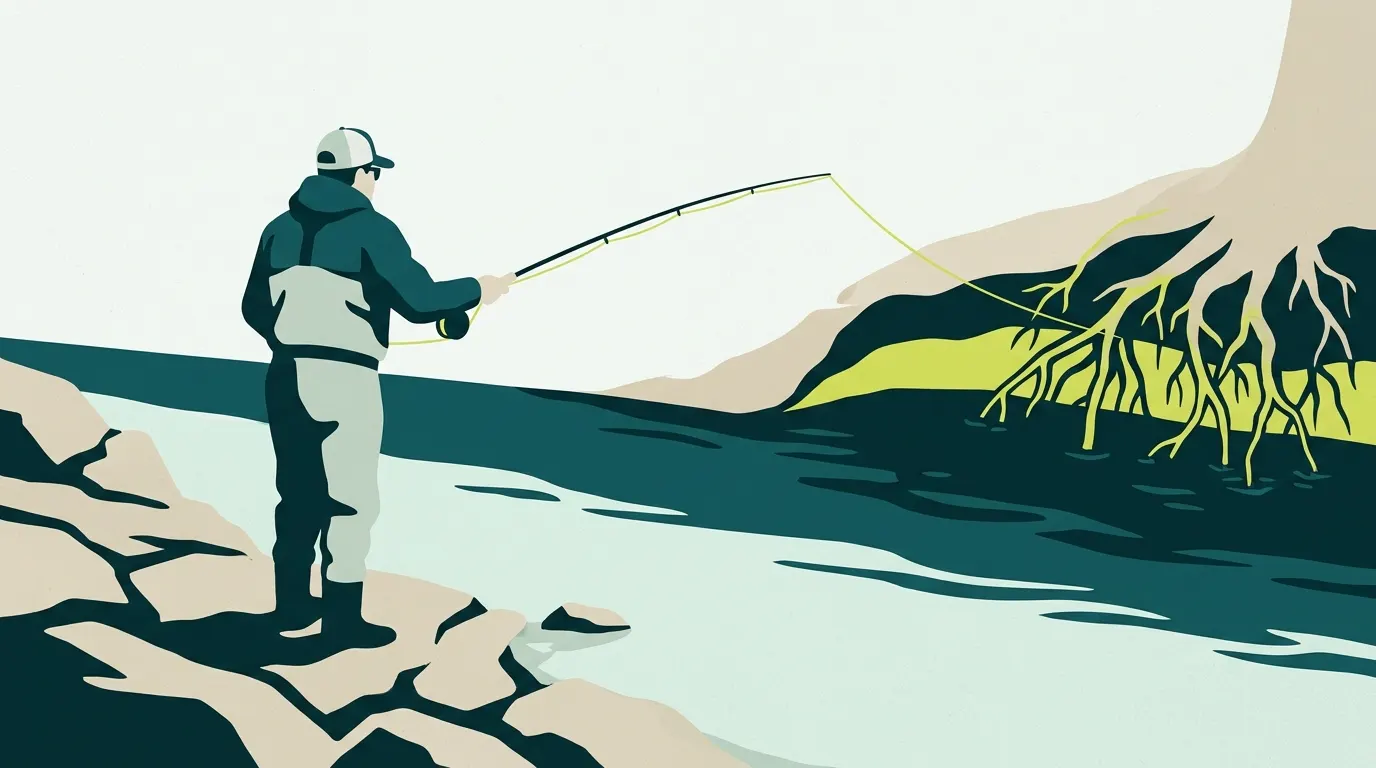
Orvis says to target structure where fish hold and ambush prey: woody debris, large boulders, deep pockets and undercut banks. That is the useful way to think about a streamer. You are not fishing a hatch, you are fishing a place where a fish could hide and wait. Cast so the fly lands near the structure and passes it, with a bit of room to spare for the fish to come out.
(A river with no structure is a river with no reason to fish a streamer in it. A fish needs somewhere to wait.)
The three basic retrieves
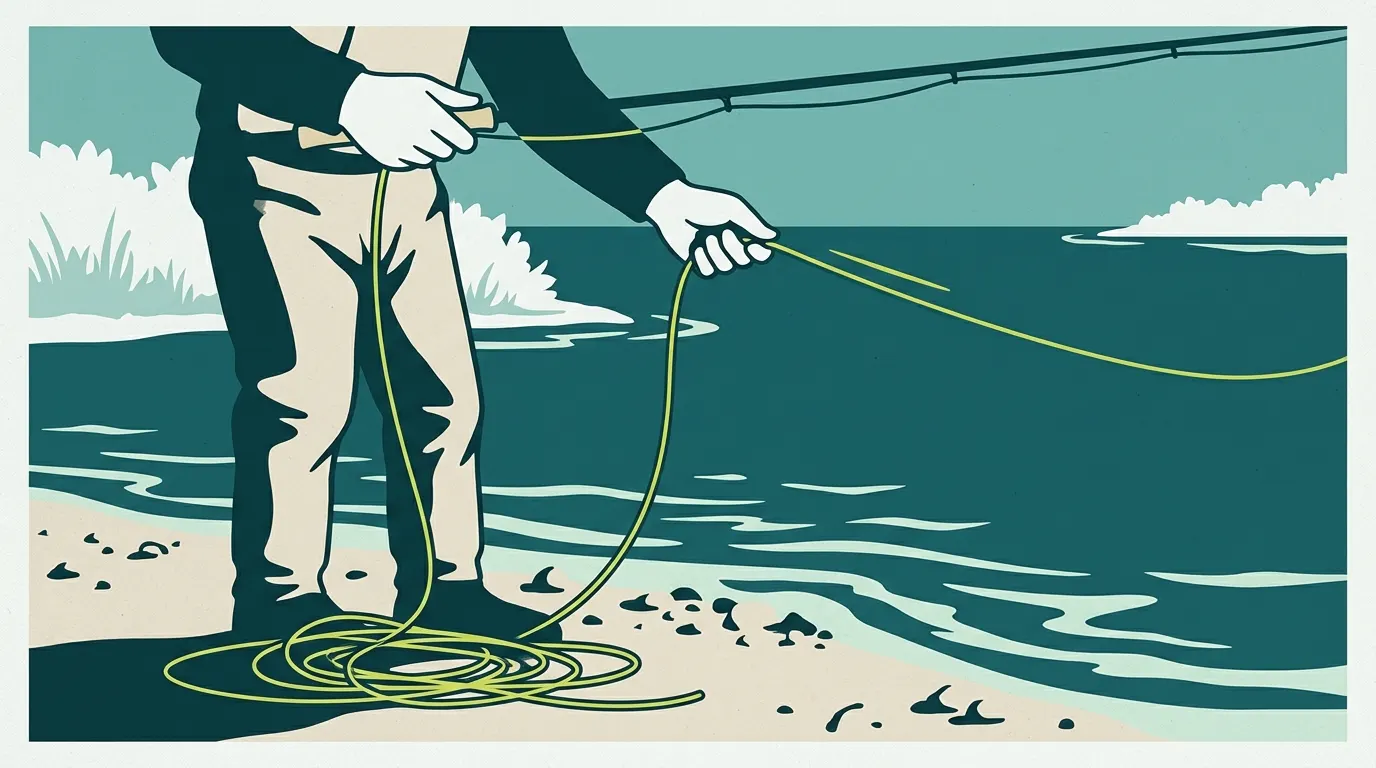
The Orvis pages I opened describe a small set of retrieves. Start with these.
The six-inch strip. Cast, let the fly sink to the depth you want, then pull the line back in roughly six-inch strips. Orvis says this imitates a fleeing baitfish. The Orvis lesson suggests casting perpendicular to the bank and stripping the fly back from cover.
The strip-pause. Strip, then pause for about five to six counts. Let the fly sink, perhaps all the way to the bottom, then jig it up off the bottom and let it sink again. Orvis says this works well in very cold water or with sculpin-style flies. The Orvis video notes that a pause is especially effective when the water is colder than about 50°F.
The swing. Cast down and across the river and let the current swing the fly. The belly of the line does most of the work, so little or no stripping is needed. Orvis calls it the best way to cover a lot of water. The lesson also describes mending the line upstream so the current tightens the line without adding action to the fly. When the fly is directly downstream of you, strip it a few more feet before you recast. A fish may be following it all the way across.
Adjusting to conditions
- Cold water. Slow the retrieve and add pauses.
- Shallow, spooky fish. The Orvis lesson suggests presenting the fly quartering downstream so it reaches the fish before the line or leader does.
- Dirty or high water. Add motion so the fly stands out from the debris, but keep the retrieve slow enough that the fish can catch it. The lesson recommends a rougher-looking fly such as a muddler minnow or a woolly bugger, because fish sense the vibrations through their lateral line.
- Getting deeper. The lesson says casting upstream gets the fly deeper, and the retrieve then flutters and pauses in a way that mimics a sculpin darting downstream when frightened.
Common mistakes
- Using a floating line for everything. It works some of the time. When it does not, the answer is usually depth.
- Stripping at one speed. Orvis's own list is a set of retrieves. If one is not working, change it.
- Too light a leader. A short, stout leader turns over a heavy fly. A long, thin one does not.
- Casting to nothing. Fish structure.
From technique to gear
If you have a five- or six-weight rod that you already enjoy, the cheapest way to try streamers is to add a sink tip or a spare spool with a sinking line, not to buy a new rod. Look at fly lines and compare weight, taper and floating or sinking behavior in one table. If you decide you want a dedicated rod, the fly rods page covers the choices. For the species you are most likely to chase with streamers, our guide to fly fishing for trout is a good next stop.
I am not a fishing guide, and this page does not claim any days on the water. It collects what Orvis publishes about streamer fishing and the specs on our gear pages. Take it to the river and adjust.
Questions people ask
What rod weight is best for streamers?
Orvis says a 5- to 8-weight rod handles the bigger flies, and that heavier flies call for a higher-rated rod. Bigger rivers and bigger flies push toward the heavy end of that range. Match the line weight to the rod and check the rod's line rating before you buy.
Do I need a sinking line for streamers?
Not always, but it helps. Orvis says sinking lines or sink tips get heavier streamers down faster than a floating line. A floating line with a weighted fly and a long leader can work in shallow water, but a sink tip gives you more control over depth.
Should I add split shot to my leader?
Orvis advises against it for streamers, saying it can cause tangles or injury, and to use a sink tip instead. A weighted fly is the other way to add depth.
What is the best retrieve for streamers?
Start with a six-inch strip: let the fly sink, then pull it back in roughly six-inch strips to imitate a fleeing baitfish. In very cold water, Orvis recommends a strip-pause, and to cover water quickly, swing the fly across the current.
Where do fish take streamers?
Orvis points to structure where fish hold and ambush prey: woody debris, large boulders, deep pockets and undercut banks. Cast to the structure and retrieve past it, not through open water with nothing in it.
Save this guide for later
Sources
- Orvis: What is streamer fishing — accessed 2026-10-15
- Orvis Fly Fishing Learning Center: Streamer retrieves — accessed 2026-10-15