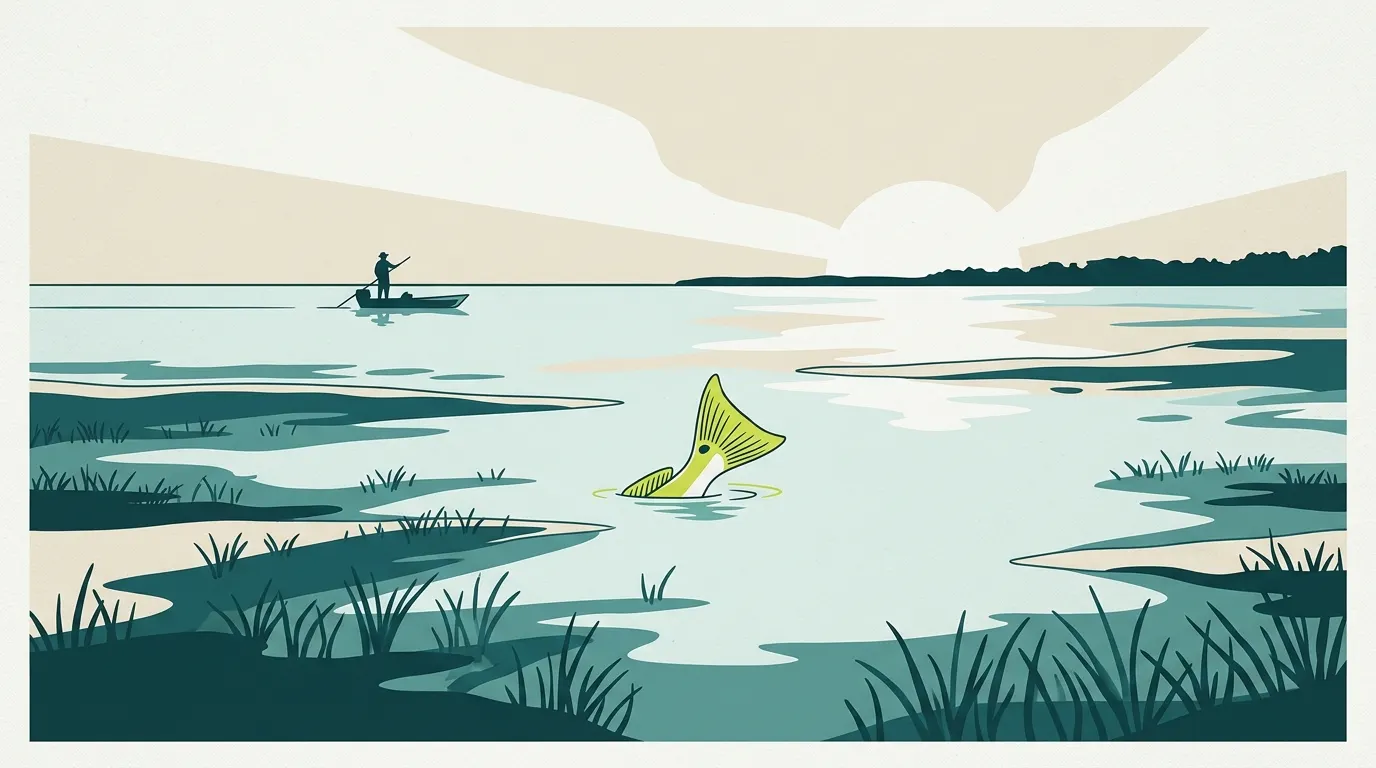
Short answer: 8- or 9-weight, floating line, 20-pound tippet
Redfish are a forgiving fish in the sense that they eat crabs, shrimp and baitfish in shallow water and are not especially fussy about gear. They are less forgiving about being seen. Both guides I read frame this as sight-fishing: find the wake, tail or body, get into range without spooking it, and put the fly where the fish will find it.
The common setup from both sources: a 9-foot rod in 8 or 9 weight, a weight-forward floating line, a fluorocarbon leader tapering to 15- or 20-pound tippet, and a reel with a decent drag. Sport Fishing says an 8-weight for smaller reds, a 9-weight when the wind is up, and a 10-weight for bulls over 20 pounds. Florida Sportsman agrees on 8 or 9 and moves to a 10 or 11 for bull reds.
The rod
Eight versus nine is mostly a wind question. Sport Fishing says wind favors the 9-weight, and it also notes that bushy flies influence the choice. Our 8-weight fly rods page lists the 8s on Amazon US. For saltwater work in general, see saltwater fly rods, which is where rods built for corrosion and heavy lines sit. If you are weighing the options in more detail, the what weight fly rod for redfish guide is the place.
A word about the claims in a listing. When an Amazon listing says a rod is for saltwater, that is a statement from the listing or the maker, not a rating from a lab. In our tables a value marked listing comes from the Amazon page and has not been confirmed by the maker. A dash means we could not confirm it anywhere.
Reel and line
A reel for redfish does not need to be an expensive big-game reel, but it does need a drag you trust. Florida Sportsman warns that a hooked 8- to 9-pound red may take the backing on its first run, so make sure there is backing on the spool and that the reel is built for salt. See saltwater fly reels for what the makers state, and backing for what to put under the line.
For the line itself, both guides recommend a weight-forward floater for shallow flats. Sport Fishing recommends a warm-water floating line. Florida Sportsman suggests a line about one size heavier than the rod's rating so the rod loads quickly. That is a common trick, and a reasonable one when your shot opportunities are short and quick. Our fly lines page lists line weight and taper data.
Sinking lines are for the exceptions. Sport Fishing mentions very fast sinking lines in the 450 to 700 grain range for offshore bull reds and 400-plus-grain sink tips for the St. Johns channel in northeast Florida. That is a niche you will know if you need.
Leader and tippet
The two sources are close here. Florida Sportsman: 8 to 9 feet, tapering from 40-pound to 20-pound fluorocarbon. Sport Fishing: 9 to 12 feet with a 40-pound butt tapering to a 15- or 20-pound tippet, and for big bulls a 9 to 10 foot leader with a 50-pound butt, a 20-pound tippet and a foot of 30-pound fluorocarbon shock tippet. Longer is stealthier and shorter turns over big flies better. Make the choice based on wind and fly size.
Flies
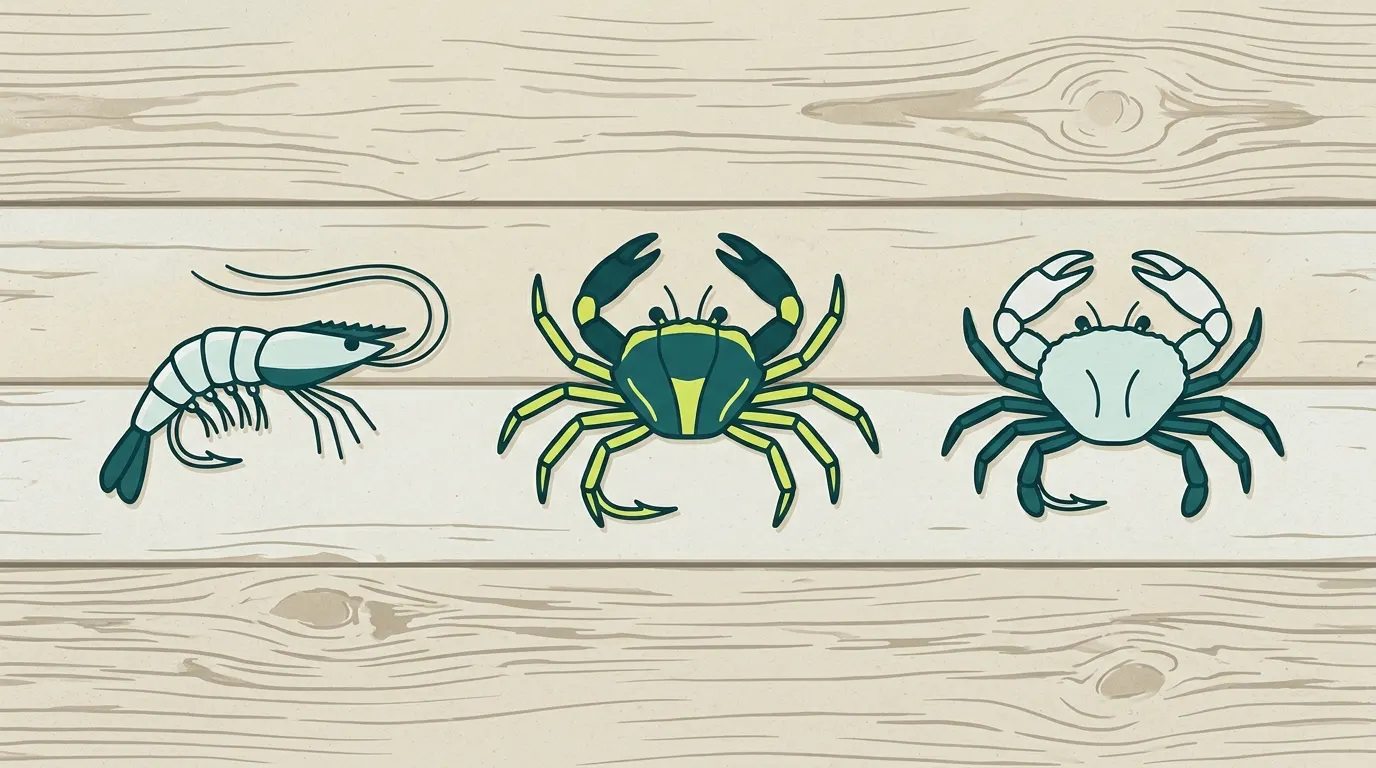
Florida Sportsman recommends carrying five basics in sizes 2 to 2/0: a topwater gurgler, a crab pattern, a Chernobyl-style shrimp, a baitfish streamer and a Seaducer or Deceiver-style streamer. For bulls, baitfish imitations about 4 to 6 inches long. Sport Fishing says most of its patterns run about 3 inches with bead eyes and weed guards on a 1/0 hook, and that murky water calls for a fly large enough for the fish to see. Lead eyes help in deeper water.
The point is not a magic fly. The point is that the fly lands softly, does not snag in the grass, and sits where the fish expects food.
Finding and approaching fish
The approach, as the sources describe it:
- Look for wakes, tails and bodies in shallow water. Sport Fishing says to scout in less than 2 feet of water.
- Wear polarized glasses and keep the sun at your back (Florida Sportsman).
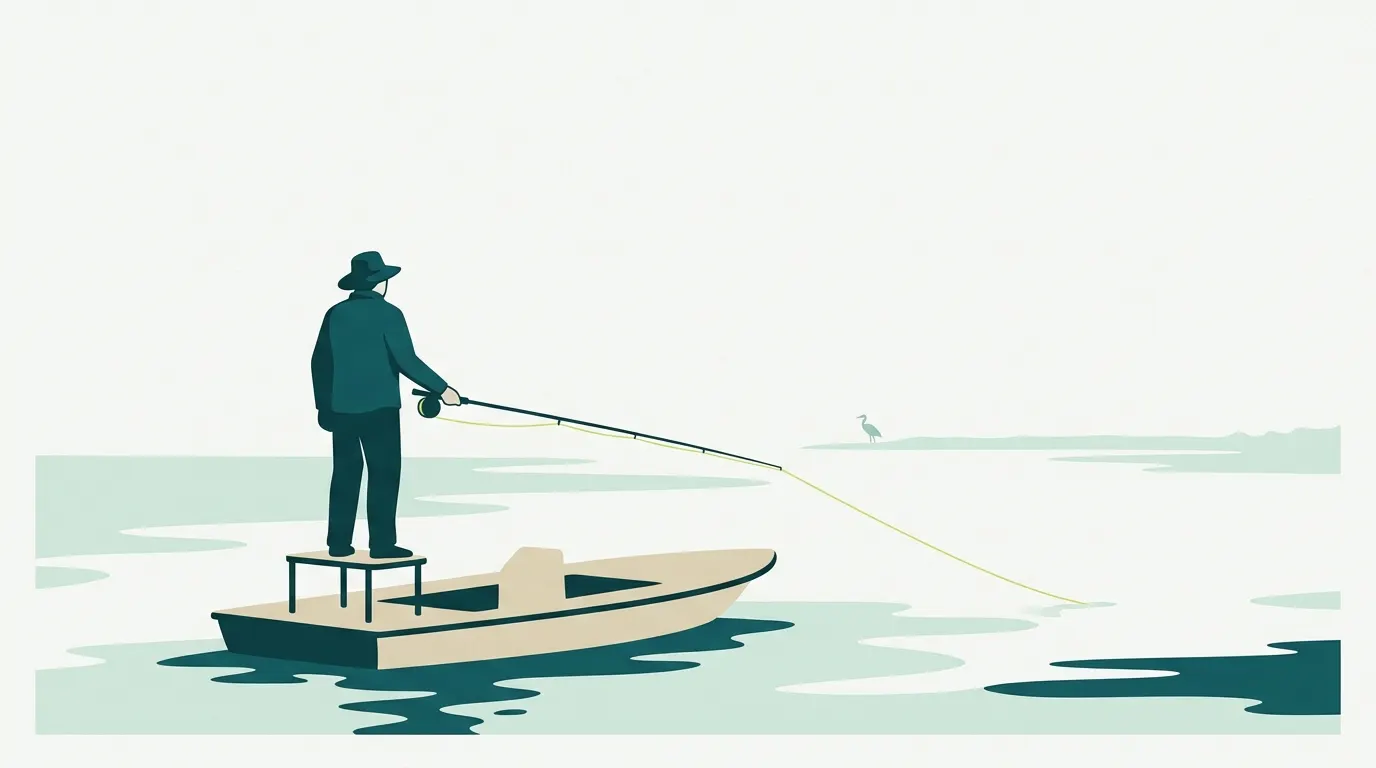
- Stalk quietly by push pole, SUP, kayak or wading. Florida Sportsman says to keep the trolling motor off at fly range, and that poling is better when fish are very shallow or the water is very clear.
- Lay the fly about 10 feet ahead of the fish's path, let it settle, and when the fish is about 3 feet away strip so the fly hops 3 to 4 inches (Florida Sportsman).
- Tides matter. On rising water, Florida Sportsman says reds feed in the shallows, creeks and around marsh grass or mangroves, then move back toward bayous and troughs as the water falls.
In surf, Sport Fishing describes wading about a foot deep with a cast's worth of line trailing and dropping the fly in front of a red as the wave crests.
Sport Fishing suggests hiring a local guide if you do not know the water or own a flats boat, which is sensible advice for a first trip.
Gear that is not the rod
If you wade the flats rather than pole them, the footwear question is real. Our wet wading guide covers fishing without waders, and wet wading shoes lists the footwear for it. Wherever you wade, check your footing and the tide before you commit.
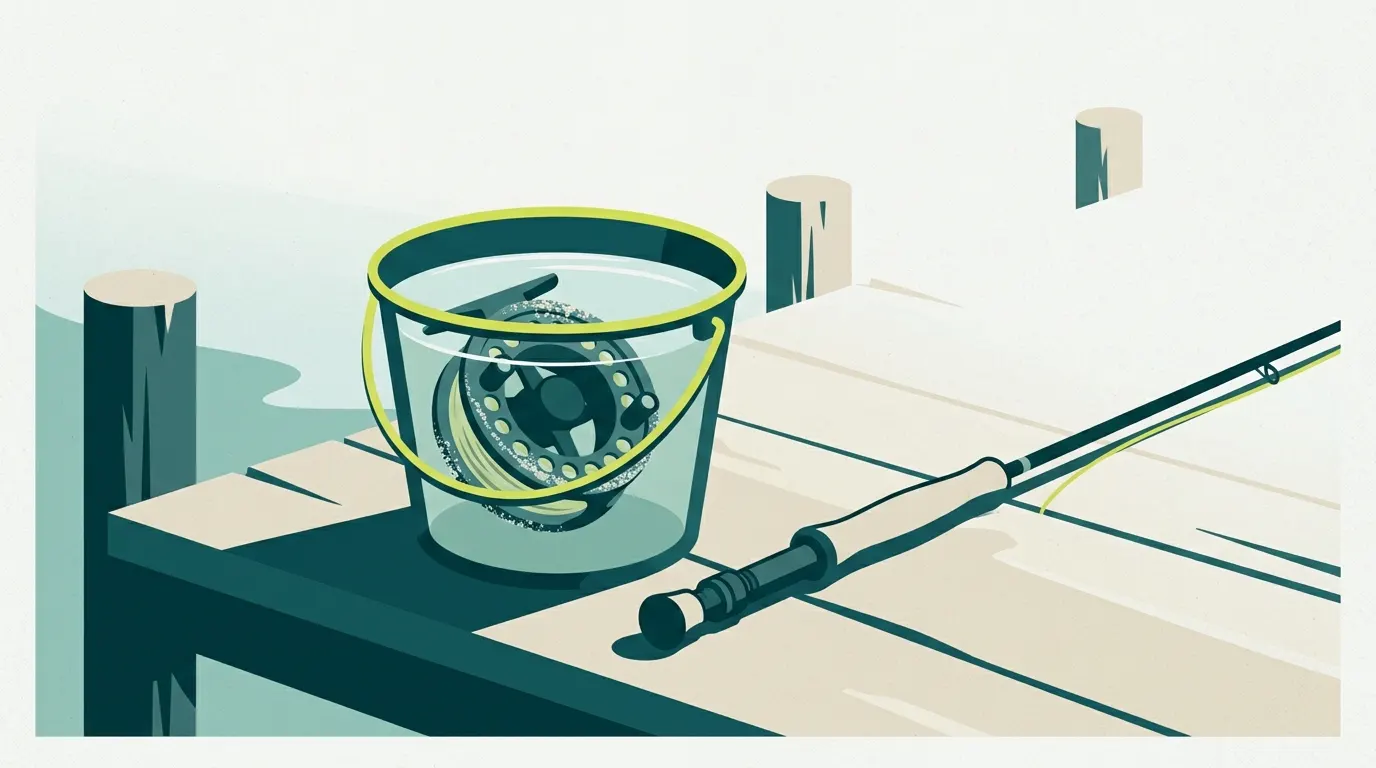
Rinse rods and reels in fresh water after a salt trip. Salt is patient, and it does not care how nice the rod was.
Questions people ask
What weight fly rod for redfish?
Sport Fishing magazine's guide calls a 9-foot 8- or 9-weight the standard: an 8-weight for smaller fish, a 9-weight if there is wind, and a 10-weight for bulls over 20 pounds. Florida Sportsman recommends an 8- or 9-weight for typical slot reds and a 10- or 11-weight for bull reds. Our what weight fly rod for redfish guide goes into the options.
What fly line is best for redfish?
Both sources point to a weight-forward floating line for shallow water. Sport Fishing recommends a warm-water floater. Florida Sportsman suggests a line about one size heavier than the rod rating so the rod loads quickly when a fish appears. Sinking tips come into it for deep water and big bull reds.
What leader do I need for redfish?
Florida Sportsman recommends 8 to 9 feet tapering from 40-pound to 20-pound fluorocarbon. Sport Fishing recommends 9 to 12 feet with a 40-pound butt tapering to a 15- or 20-pound tippet. For big bulls it adds a foot of 30-pound fluorocarbon shock tippet.
What flies work for redfish?
Shrimp, crab and baitfish patterns. Florida Sportsman lists five basics in sizes 2 to 2/0: a topwater gurgler, a crab, a Chernobyl-style shrimp, a baitfish streamer and a Seaducer or Deceiver-style streamer. Sport Fishing says most patterns run about 3 inches with bead eyes and weed guards, and that murky water calls for a fly large enough to be seen.
How far do I need to cast for redfish?
Florida Sportsman plans for casts of about 50 feet and says wading anglers often get shots at 30 feet or less. Sport Fishing also says you need to cast accurately to about 50 feet in any weather. Short, accurate and quiet beats long and loud.
Save this guide for later
Sources
- Sport Fishing: Fly fisherman's guide to redfish — accessed 2026-10-15
- Florida Sportsman: Fly fishing for Florida redfish — accessed 2026-10-15