Felt or rubber: the short answer
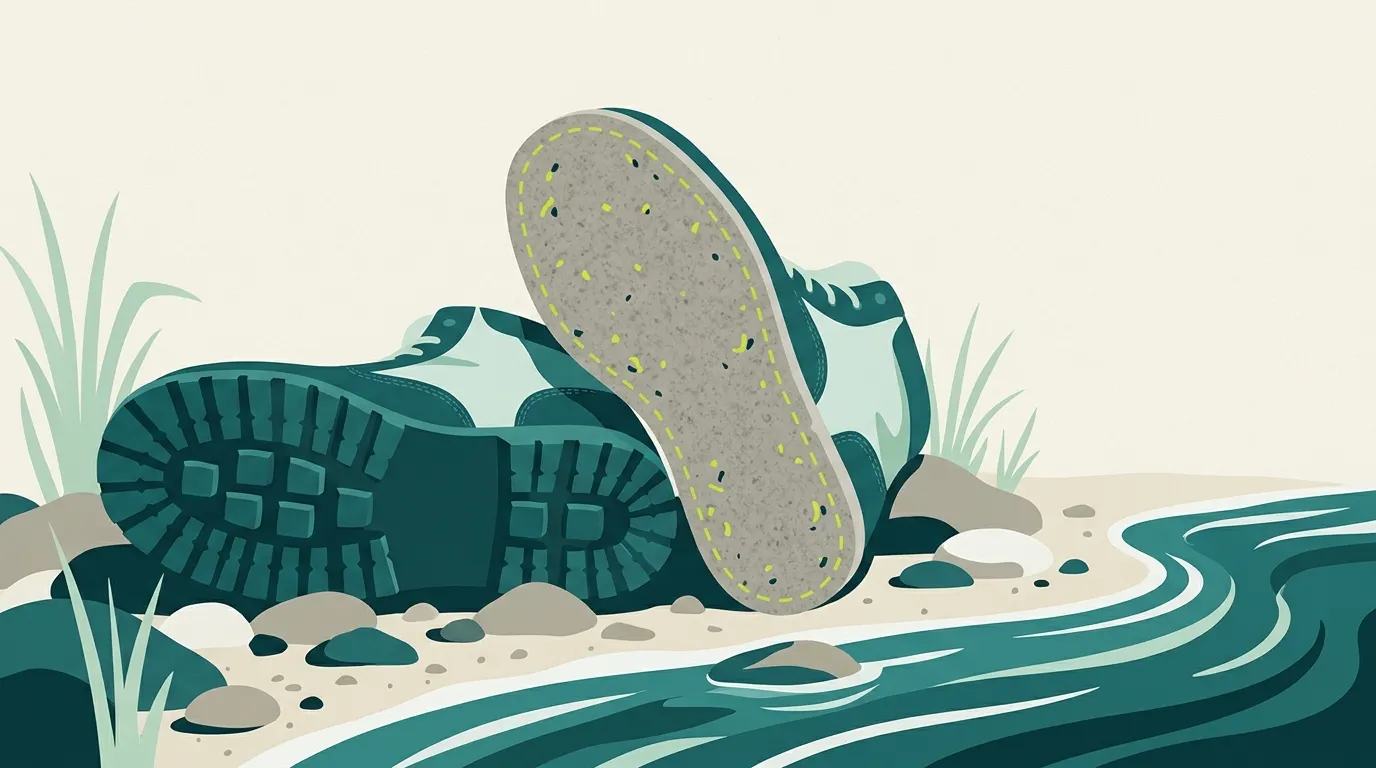
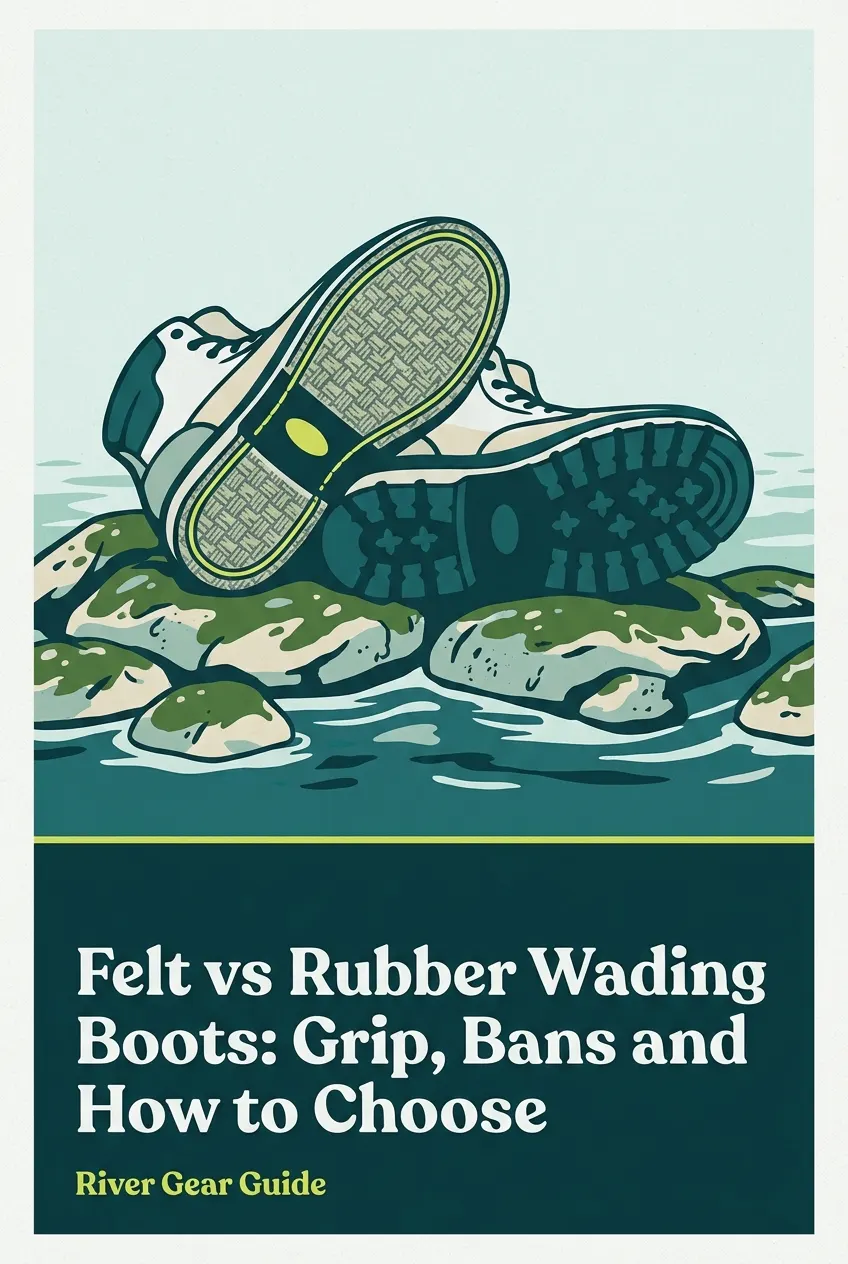
Felt grips slick, algae-covered rock better than rubber does. Rubber is easier to clean, grips better on dry ground, snow and mud, and is allowed in every place I found that restricts felt. If you fish one or two rivers where felt is legal and you want the most grip on wet stone, felt is a defensible choice. If you travel, guide a mixed itinerary or want one pair that never causes a problem, buy rubber and add studs where the rules allow.
The decision is partly about grip and partly about law, so the rest of this guide covers both. For the boots themselves, see our felt sole wading boots page and the wider wading boots section.
How they grip
Felt is a fibrous pad. On wet, algae-covered rock it bites in a way smooth rubber does not. FlyFisherPro says felt can grip well on some smooth, slippery riverbeds, and the author of Hatch Magazine's rubber-versus-felt article found that rubber slipped more in a side-by-side wading test. Felt is not good everywhere: FlyFisherPro notes that it performs poorly on many dry surfaces, and Hatch readers report felt is slippery on dry grass and that snow builds up on it. (Felt on wet river rock grips like it has something to prove. On a dry grass bank it has something else to prove.)
Rubber grip varies. FlyFisherPro says it depends on the compound, tread, rock type and conditions. Makers responded to the loss of felt by adding cleats, spikes and screws to rubber soles, and Hatch Magazine reports that rubber's market improved. Some anglers use studded felt or hybrid soles where local rules allow. Check the rules for studs on the water you fish, because some waters, including some boats and drifts, restrict metal.
The practical rule I use: if the boot is for hiking in to a freestone river with slick bottom rock, grip matters first. If the boot is for varied banks, trails, mud, snow and several states, traction on dry ground and legality matter more.
Why some states restricted felt
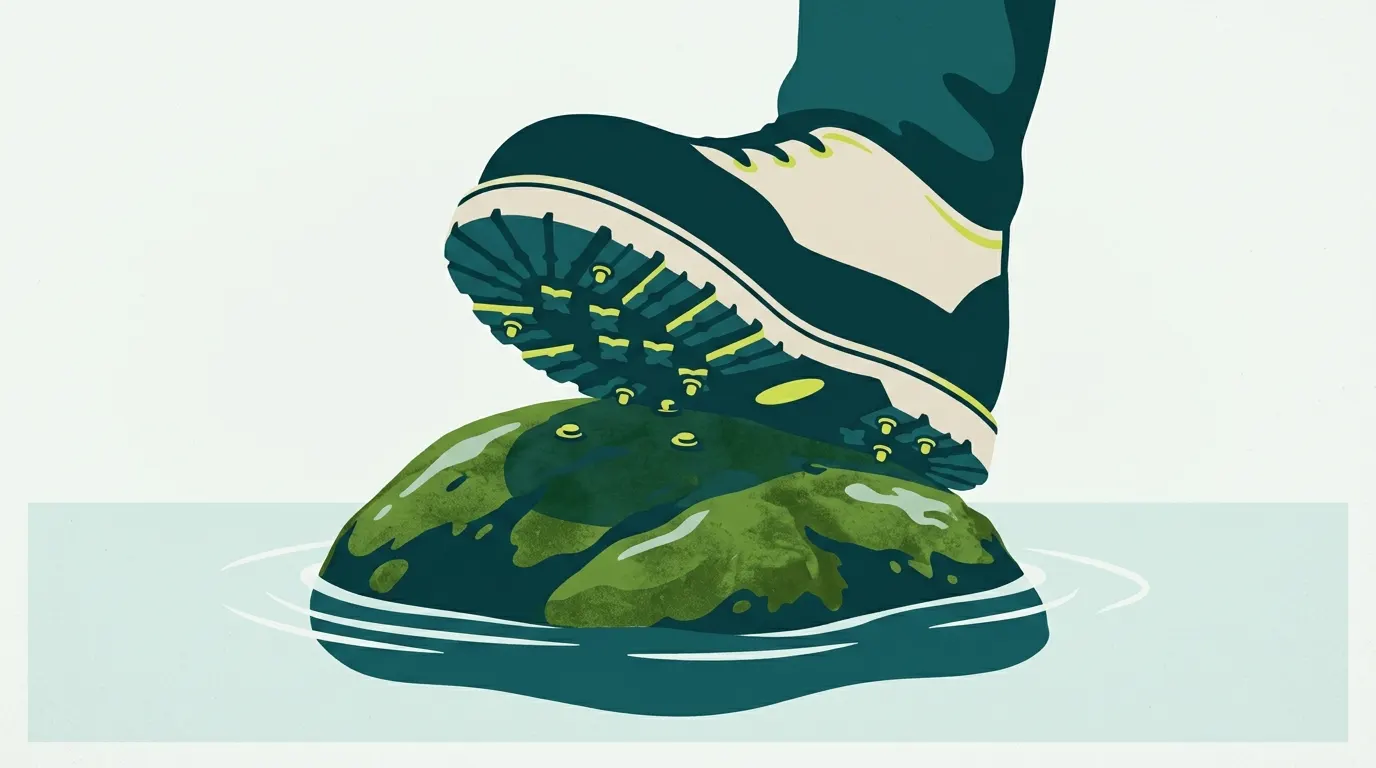
The reason is invasive species. Felt soaks up water and holds it for a long time, and fibrous soles hold mud, seeds and organisms. The Missouri Department of Conservation says the invasive alga didymo mainly spreads when contaminated gear moves between waters, that waders are the most common carrier, and that the alga can clog hooks and smother fish eggs. Its cleaning advice is practical: check your gear, soak soft items such as felt-soled waders for at least 20 minutes in an approved solution, and dry everything in sunlight for at least 48 hours. It also suggests considering replacing felt-soled waders.
Hatch Magazine adds that rubber's popularity rose around 2008 to 2010 alongside invasive-species concerns, and that a whitefish die-off on a closed section of the Yellowstone River, linked to Proliferative Kidney Disease, was the tipping point for Yellowstone's ban. It also reports that the article found no evidence that the bans reduce the spread, and that commenters dispute their value. So the bans are a precaution, and the research on how well they work is not in these sources.
Where felt is restricted
Rules differ by state and often by water, and they change. This is what the sources I opened say, so treat it as a starting point and check the agency's current regulations before you fish.
- Alaska. Bans absorbent felt soles for sport or personal-use fishing or hunting in fresh water, according to FlyFisherPro.
- Maryland. Bans footgear with external felt soles in state waters and within five feet of them, according to FlyFisherPro.
- Nebraska. Bans felt soles on Game and Parks Commission property, in any water body, but not on private water.
- Rhode Island. Bans felt and other porous-soled footwear in all fresh waters.
- South Dakota. Bans external felt-sole footwear in its waters.
- Missouri. The Missouri Department of Conservation says not to wear porous-soled waders at trout parks, trout streams, Lake Taneycomo and the buffer areas around them. The rule applies to soles of felt or matted or woven fibrous material.
- Yellowstone National Park. Prohibits footgear with absorbent felt or fibrous soles while fishing.
- Vermont. Repealed its ban on July 1, 2016, according to FlyFisherPro. Hatch Magazine also reports the reversal.
Other states, such as Colorado and Minnesota, do not have a statewide felt ban according to the same source, though Minnesota's agency advises non-felt boots and thorough cleaning. That list is a snapshot. Several of these sources are a few years old, and FlyFisherPro itself advises checking the current rule for the exact water and land manager before you travel.
Which to buy
- You fish one river where felt is legal and it is all slick rock. Felt is a reasonable choice. Clean and dry it between uses, and do not carry it to other waters unless you have decontaminated it.
- You fish several rivers or several states. Rubber, with studs where allowed. The sources advise it, and it avoids the question at every trailhead.
- You fish with a guide or on a boat. Ask what the guide or operator requires. Some require non-felt boots.
- You wade mostly in warm weather. A lightweight rubber wet-wading shoe may be all you need. See wet wading and the lightweight wading boots page.
Whatever you buy, the soles go on a boot that attaches to a wader. Felt and rubber boots are worn with stockingfoot waders, and bootfoot waders come with whatever sole the maker chose. For the list of boots we track, with sole and weight in the table, see the best wading boots page.
Cleaning, whatever the sole
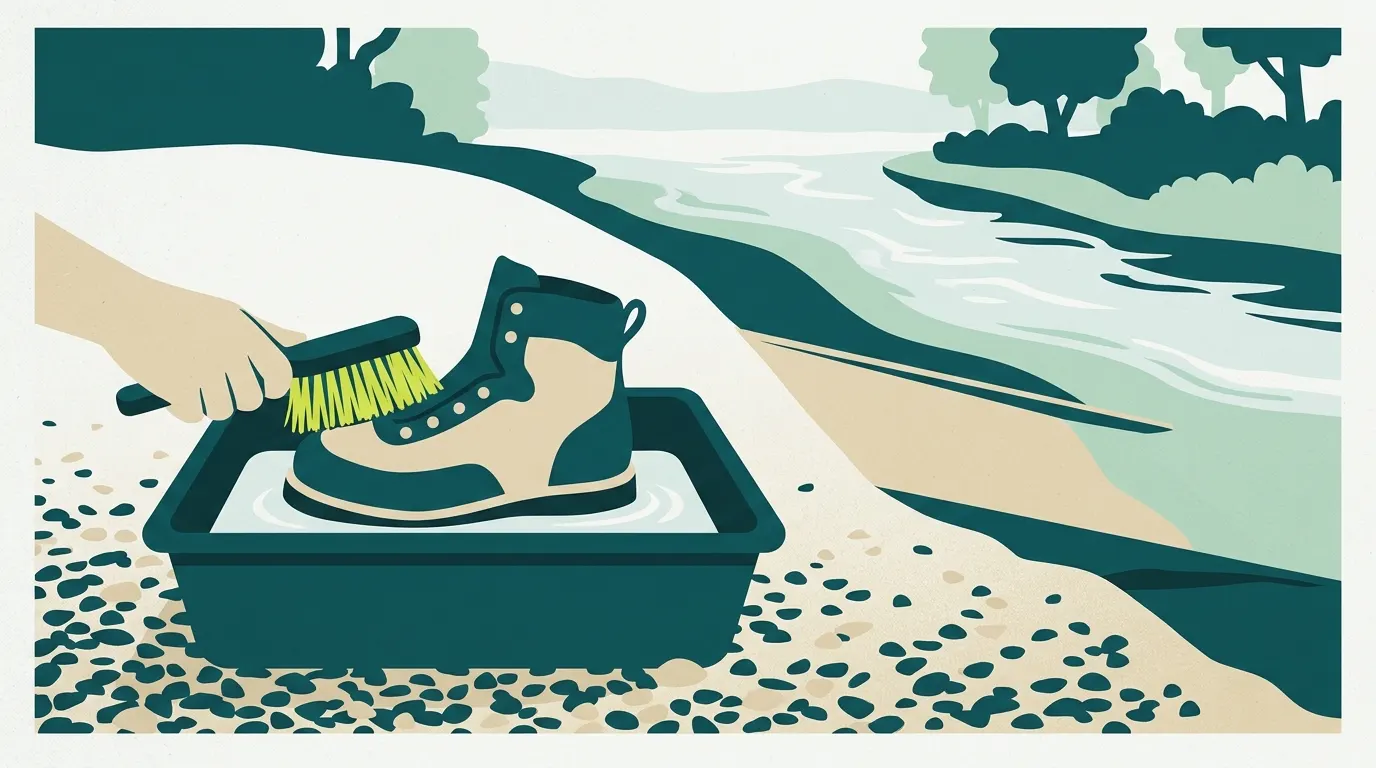
Clean every boot and wader after every outing and before you move to another water. Rinse off mud and visible plant matter, scrub the soles, and let everything dry completely. The Missouri Department of Conservation's steps are a good baseline, and our how to clean waders guide covers the fabric side. Felt takes longer to dry than rubber, which is a large part of why it is restricted.
Fish don't read spec sheets. You should.
Questions people ask
Why are felt wading boots banned?
The stated reason is invasive species. Felt soles soak up water and hold mud and plant matter, so they can carry organisms such as the alga didymo between rivers. Missouri's conservation department says didymo mainly spreads when contaminated gear moves between waters, and that waders are the most common carrier. Hatch Magazine notes that the article it published offered no evidence that the bans reduce spread, so the debate is not settled.
Which states have banned felt soles?
Sources I opened list Alaska, Maryland, Nebraska, Rhode Island and South Dakota as restricting felt, Missouri on its trout parks, trout streams and Lake Taneycomo, and Yellowstone National Park as a non-state rule. Vermont repealed its ban on July 1, 2016. The details differ, and rules change, so check the agency page for the exact water before you go.
Are felt soles banned everywhere?
No. Many states have no felt rule. Colorado's 2026 brochure, according to one source, lists no felt prohibition, and Minnesota has no statewide ban but advises non-felt boots and thorough cleaning. Even where felt is legal, a particular park or water may have its own rule.
Is rubber as good as felt?
Not always on slick rock. Hatch Magazine's author found rubber noticeably less grippy than felt side by side, and both sources I opened say felt performs well on slippery riverbeds. Rubber grip varies with the compound and tread, and studs help where the rules allow them. On dry ground, snow and mud, rubber is the safer choice.
What should I buy if I fish in several states?
Rubber, with studs if the waters allow them. Rubber soles avoid most of the legal problems, as the sources say, and a stud pattern recovers some of the grip. If you do own felt, clean, drain and dry it fully between waters.
Save this guide for later
Sources
- Hatch Magazine: Rubber vs. felt, almost 10 years later — accessed 2026-10-15
- FlyFisherPro: Which states have banned felt sole wading boots — accessed 2026-10-15
- Missouri Department of Conservation: Don't spread didymo — accessed 2026-10-15
- Missouri Conservationist: In Brief — accessed 2026-10-15