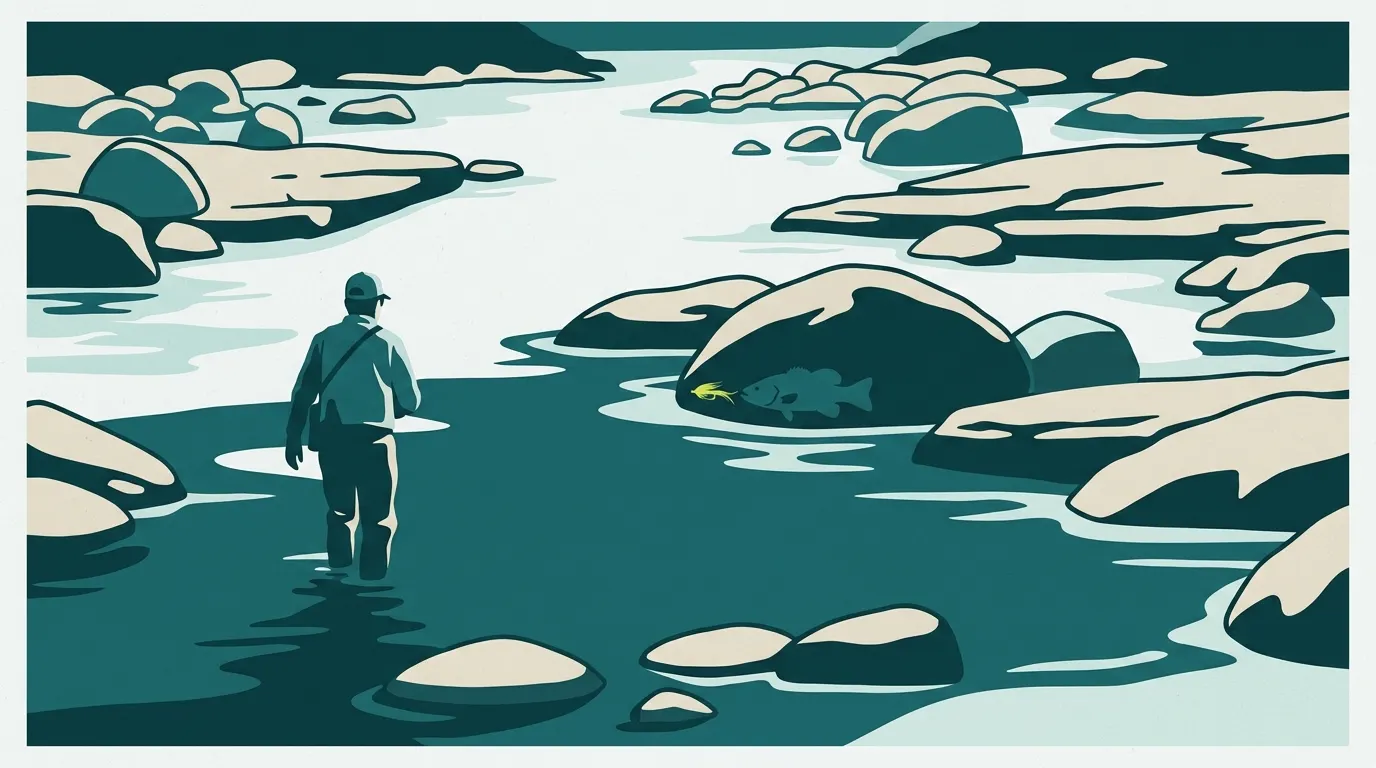
Short answer: a 6-weight to wade, a 7 or 8 for big water
The sources I opened do not agree on one rod weight, and the reason is simple: rod weight tracks the fly and the water more than the fish. Outdoor Life's guide source calls a 6-weight "perfect" for wading and says 7- and 8-weights are typically recommended for boat fishing on big water. Orvis says an 8-weight is probably the best all-around rod if you chase both largemouth and smallmouth, but for smallmouth alone a 6 or 7 will do because the flies are smaller.
So if you stand in a river and cast to rocks, a 6-weight covers most of it. If you carry big poppers or fish from a boat in wind, step up. If you already own a 5-weight, Outdoor Life's source says it works too, with a shorter leader.
The rod
Length is a separate choice, and the sources I opened do not set a rule. Our 5-weight fly rods page lists the options at the light end, and 8-weight fly rods covers the heavy end. For the middle, browse the main fly rods table and filter by line weight. In the table each value carries a mark: maker means it comes from the manufacturer's page, claimed means a manufacturer claim, listing means the Amazon listing says so, and a dash means we could not confirm it.
Fast-action rods are popular for casting big flies, but I did not find a primary source that sets a rule, so treat action as a preference. If you want to know what action means, our fly rod action guide explains it.
Line and reel
Orvis recommends a simple weight-forward taper because it helps turn over the large flies used for top-water bugs. In a forum thread of smallmouth anglers I read, floating lines with bass or bass-bug tapers were the most common choice, and several posters also carried a sink-tip or intermediate line for deeper water. That is a collection of opinions, not a standard, but it fits the Orvis advice. Our fly lines page lists line weight and taper where we could confirm them, and floating fly lines narrows it.
On the reel, Orvis is blunt: you do not need an expensive reel, because it mainly holds line, and bass seldom pull any line, so a heavy-duty drag is not needed. Save the money for the rod, the line or waders. See fly reels for your options. (Paying for a disc drag to fight a fish that rarely takes line is a bit like buying a parachute for a pedestrian bridge.)
Leader and tippet
A trout leader is long and fine. A bass leader often is shorter and heavier, because a fly with bulk does not turn over on thin material. Outdoor Life's guide source says the longer the leader the better, but on a 5-weight he swaps a 9-foot light leader for something shorter and heavier, like a 7.5-foot 1X or 2X. He says a chunk of regular 10-pound monofilament is fine for tippet. The forum posters I read used a mix, from a 9-foot 3X leader on small streams to a leader built with heavy monofilament and 2X or 3X fluorocarbon for rivers. Again, opinions, but they sit in the same neighborhood.
Flies
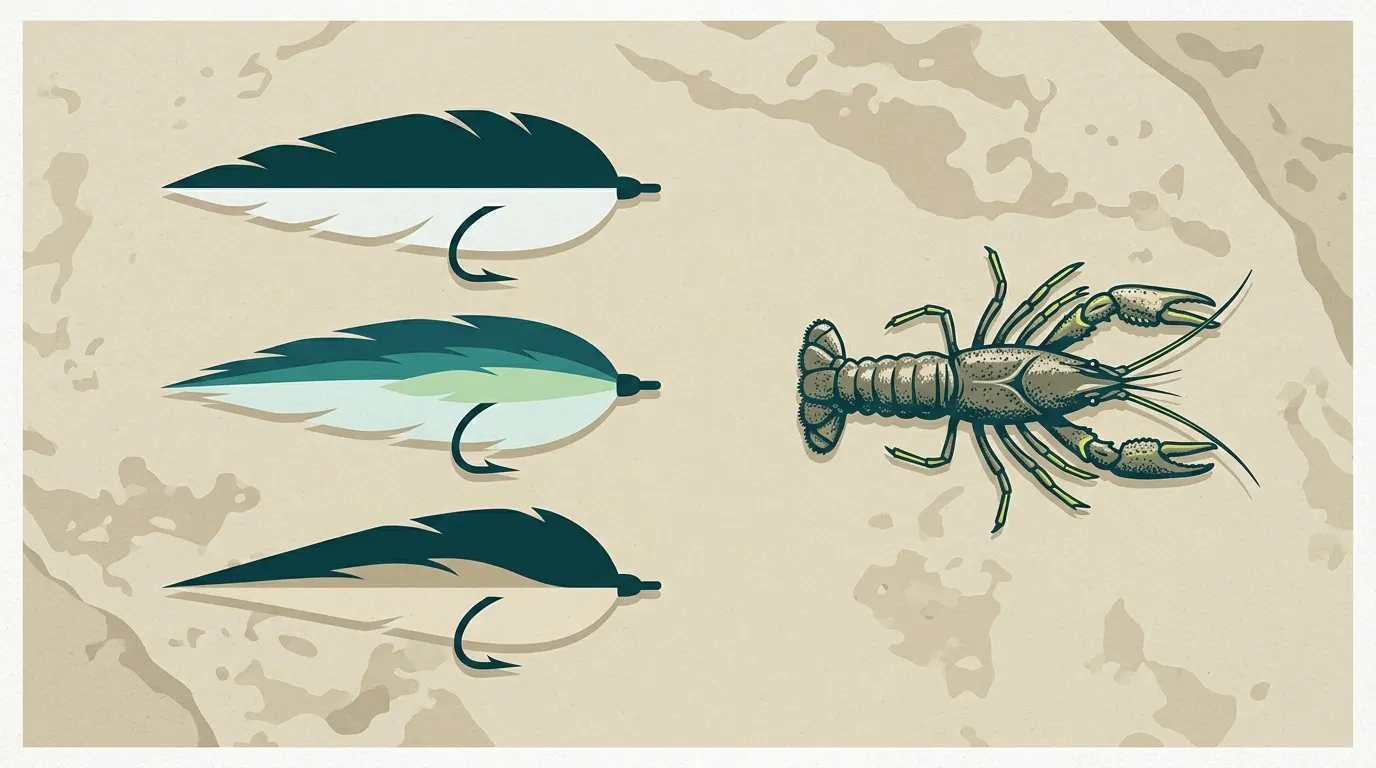
Surface flies imitate big insects. The guide in Outdoor Life names the Boogle Bug, Mr. Wigglies and Dahlberg Diver as imitations of cicadas and similar bugs, and Chubby Chernobyl and Stimulator as attractor dries that work well on a 5- or 6-weight. Below the surface, a Clouser Minnow is called essential. For crayfish, lightly weighted patterns of two inches or less work best, according to the same guide, since heavy dumbbell-eyed patterns are meant for stripping along the bottom.
Forum posters add hellgrammite imitations for rivers, and nymphs, woolly buggers and divers for lakes. Orvis's point is the useful one: for smallmouth, smaller, slimmer flies in general, while largemouth take larger, more air-resistant ones such as hair bugs, big poppers and large hairy streamers.
How to fish a river
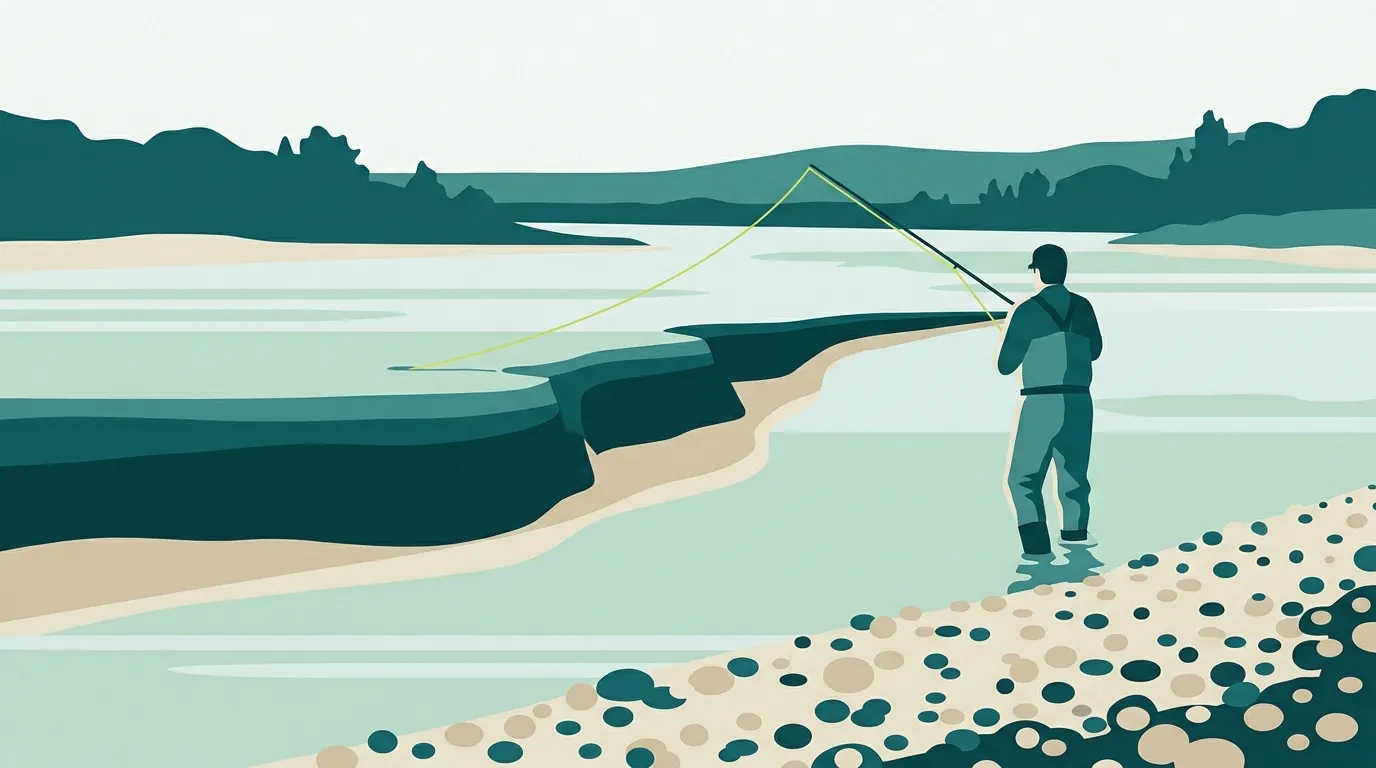
Outdoor Life's source says wading smallmouth is a lot more like trout fishing, with upstream casts and mends for a natural drift. Targets are buckets and drop-offs in the middle of the river just above a faster riffle. He stays in knee-deep water while reaching deeper troughs, and as summer goes on he focuses on faster, shallower water with riffles, which give more oxygen and food. Poppers work best early and late, and subsurface flies tend to produce more at midday. For crayfish, find a deep spot just below a riffle, cast, mend, let the line belly out and give short strips as it swings.
Gear around the rod
If you wade a river, boots matter as much as the rod. River rocks can be slick. Our wading boots page covers soles, and our felt vs rubber wading boots guide explains the choice. Check local rules on boot soles before you buy. In warm weather many anglers wet wade; see wet wading. If you carry a lot of poppers and a few boxes, pack vs vest helps with the carry.
Bass versus smallmouth
This guide is about smallmouth. For the wider bass question, including largemouth, see fly fishing for bass and what weight fly rod for bass.
Questions people ask
What weight fly rod for smallmouth?
Outdoor Life's guide source calls a 6-weight perfect for wading and says 7- and 8-weights are typically recommended for boat fishing on big water; a 5-weight also works if you adjust the leader. Orvis says the best all-around rod for largemouth and smallmouth is probably an 8-weight, and that for smallmouth alone a 6 or 7 works because the flies are smaller.
What is the best fly line for bass?
Orvis recommends a simple weight-forward taper to turn over large top-water bugs. A forum thread of smallmouth anglers I read mostly mentions floating lines with bass or bass-bug tapers, with some carrying a sink-tip or intermediate line for deeper water. That is anecdotal, not a standard.
Do I need an expensive reel for bass?
Orvis says no: the reel mainly stores line, and you do not need an expensive drag system because bass seldom pull any line. Our fly reels page lists the options with drag and arbor data where makers publish it.
What leader do I use for smallmouth?
Outdoor Life's guide source says the longer the leader the better, but on a 5-weight he swaps a 9-foot light leader for something shorter and heavier, like a 7.5-foot 1X or 2X, which helps turn over bulky surface flies. For tippet he says regular 10-pound monofilament is fine.
What flies work for smallmouth?
On the surface, Dahlberg Divers, Boogle Bugs and similar bugs that imitate big insects; below it, a Clouser Minnow, which Outdoor Life calls essential, and lightly weighted crayfish patterns. Forum posters also mention hellgrammite imitations for rivers.
Save this guide for later
Sources
- Outdoor Life: Smallmouth bass fly tips — accessed 2026-10-15
- Orvis Learning Center: Fly rod tackle for fishing bass — accessed 2026-10-15
- PA Fly Fish forum: Riggin, ideal smallmouth set up (angler opinions) — accessed 2026-10-15