We earn a commission if you buy through our links, at no cost to you. Disclosure
| Model | Material type | Insulation | Fit | Warranty | Amazon |
|---|---|---|---|---|---|
Caddis PVC Hip Wader (CA2301W)Waders More specs
| Nylon / PVClisting | — | — | — | See it on Amazon |
Dan's Hunting Gear Five Star Briar Proof Hip Wader (Frogger boot)Waders More specs
| — | — | Men'slisting | — | See it on Amazon |
Dan's Hunting Gear Snake Proof Briar Proof Hip WaderWaders More specs
| — | — | Men'slisting | — | See it on Amazon |
FISHINGSIR Bootfoot Hip Waders 2-Ply Nylon/PVCWaders More specs
| Nylon / PVClisting | — | Unisexlisting | — | See it on Amazon |
Foxelli Nylon Hip WadersWaders More specs
| Nylon / PVCmaker | — | Unisexlisting | 1-year warranty for defectsmaker | See it on Amazon |
LaCrosse Economy Hip Boot 32" STWaders More specs
| Rubberlisting | — | Men'slisting | — | See it on Amazon |
LaCrosse Grange Hip Boot 32"Waders More specs
| Rubberlisting | None | Men'slisting | — | See it on Amazon |
LaCrosse Insulated Storm Hip Boot 31" STWaders More specs
| Rubberlisting | Insulated | Men'slisting | — | See it on Amazon |
LaCrosse Premium Hip Boot 32"Waders More specs
| Rubberlisting | — | Men'slisting | — | See it on Amazon |
LaCrosse ZXT Irrigation Hip Boot 26"Waders More specs
| Rubberlisting | — | Men'slisting | — | See it on Amazon |
Paramount Outdoors Slipstream PVC Hip Boots - CleatedWaders More specs
| Nylon / PVCmaker | — | — | 1 year (defects in materials and workmanship)maker | See it on Amazon |
TIDEWE Hip Waders (WD002)Waders More specs
| Nylon / PVClisting | — | Unisexlisting | — | See it on Amazon |




What's in this tableRubber hip boots — boot and thigh-high leg in one piece.
What hip boots are, and who they suit
A hip boot is the simplest wader there is. The foot and the leg are one piece of rubber or PVC, the leg comes up to the thigh, and you are done. There is no bib, no suspenders and no separate boot to buy. That makes them cheap to understand and quick to put on.
They suit shallow water. Streams you can wade across at knee depth, ponds and shorelines, drainage ditches and muddy chores are the common jobs, and a hip boot keeps your legs dry up to the thigh. They do not suit anything deeper than the top of the boot, anything fast, or anything where you might fall and kneel. For those, you want waist waders or chest waders.
At our last check (October 2026), we tracked 12 hip boots on Amazon US. That is a small group next to the several hundred waders we cover in total, and it is mostly rubber and PVC pairs from a handful of makers. The page is short on data and I would rather say so than pad it.
Hip boots vs hip waders
The words overlap, and sellers use them loosely. For our tables, I use this split:
- Hip boots. The boot and the thigh-high leg are one piece, usually rubber or nylon-and-PVC. This page.
- Hip waders. Wader-style pairs that come up to the thigh and attach to a belt, in bootfoot or stockingfoot, breathable or PVC. See hip waders.
Frogg toggs treats the whole group as hip waders, and says they extend from just below the hips, suit shallow low-current water and are a step down from waist or chest waders. Rubber, it says, is popular for them, valued for durability and affordability, with limited breathability and some stiffness. I use the same shopping logic: pick the type by the deepest water you will stand in.
How to read the table
- Height. Every row is a hip boot. The mark under it shows whether the maker or only the listing said so. For 11 of the 12 it comes from the listing.
- Foot. Bootfoot for all of them, since the boot is attached.
- Material type. Five are rubber, five are nylon-and-PVC and two are not confirmed.
- Insulation. Stated for two pairs only: one LaCrosse model is listed as insulated and one as not. The rest show a dash.
- Fit. Men's (7 pairs), unisex (3) and two not confirmed. Sizes are under "More specs".
- Warranty. Stated for two pairs, at one year. The rest show a dash.
The marks under each value matter. maker means it is on the manufacturer's own page. claimed is a manufacturer's claim with no lab or standard named. listing means it came from the Amazon listing and is not confirmed by the maker, and most values in this table are of that kind. A dash means we did not find it. A table full of "listing" marks is a table where you should open the product page and read the maker's wording before you buy.
Rubber or PVC
Rubber. Frogg toggs describes rubber as durable and affordable, with limited breathability and some stiffness. Five of the 12 are rubber, and LaCrosse accounts for all five. Weight matters if you walk, but I can't give you one for rubber pairs: only one hip boot in the whole table, a nylon pair from Foxelli, has a weight from the maker, at 64 ounces.
Nylon and PVC. Frogg toggs calls PVC budget-friendly, waterproof and abrasion-resistant, and easy to clean. Five of the 12 are nylon-and-PVC, from Caddis, Paramount, TIDEWE, Foxelli and FISHINGSIR. I'd read the warranty row before the material row, because for these simple boots the maker's promise is most of what separates one from another.
Neither material breathes well. On a warm day, your legs will be damp from your own sweat whether the boot is rubber or PVC. That is the price of a simple waterproof boot, and it is one reason hip boots suit short jobs better than a whole day of walking.
Sizing and fit
Hip boots are sized by shoe size, not by chest and waist, which makes them simpler than chest waders. Size ranges in our data differ by model: one lists 7 to 14, one 8 to 13 and one lists sizes from 8 up to 15. Where a listing shows only a few sizes, the table shows them under "More specs".
My advice on fit:
- Start with your shoe size and add thick socks. A tight boot compresses your socks and can leave your feet colder than a loose one. If you are between sizes, go up.
- Check the height. Some model names carry a number such as 26, 31 or 32 with an inch mark. The listing or maker page should say what it measures; I would not guess. A shorter boot is easier to walk in and covers less of you.
- Check the top. How the boot stays up, with straps, a belt loop or a pull tab, differs by model, and it matters more than people think when you step over a log.
- Try them with the socks, standing and crouching. A boot that pinches at the knee on a squat will be worse after an hour.
For a fuller guide to the measurements, see the wader size chart guide and the how to wear hip waders guide.
Reading the claims
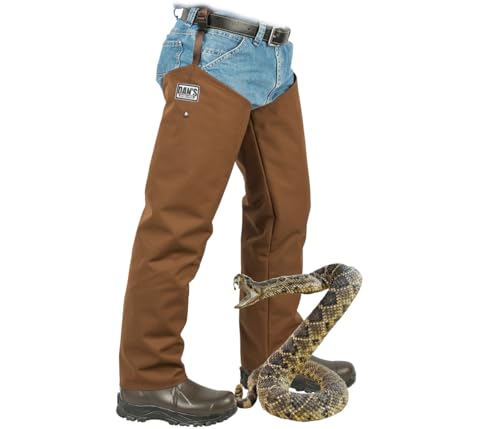
The Marketing Copy likes to put "proof" in a model name. Two hip boots in our data use "Briar Proof" in their titles, and one adds "Snake Proof". I found no spec for either in our data, and nothing in it states a material or a test behind them. A proof claim is a promise, and the useful question is what it has been proved against. Until the maker says, treat it as a name.
The same rule applies to "heavy duty", "all-day comfort" and similar phrases: a spec you can measure is worth more than an adjective you cannot.
Safety on the water
Hip boots are the least forgiving wader if the water is deeper than you thought. If water goes over the top, the leg fills, and a boot full of water is hard to walk in. Falling in fast water is the risk to plan for, and the Orvis wading guide says fast water does not have to be deep to pull your feet out from under you, and that you should avoid wading above the knees in fast water. It also says to pivot upstream when you turn and to hold a wading staff on the downstream side.
My rules, which are editorial advice and not medical advice: stay well below the top of the boot, carry a wading staff in current, test the bottom before you step, turn back if you feel uncomfortable, and wear a life jacket on a boat. If you expect deeper water, move up to a longer wader and a wading belt. Keep children in shallow, slow water with an adult within reach.
Care in brief
Rinse mud off, dry the inside and outside, and store hip boots out of the sun in a dry place. Check them after each outing for cuts and worn spots. Our guides on cleaning waders, storing waders and finding a leak cover the detail, and wader repair and repair kits cover the fix.
Why the data is thin, and what that means for you
Most of the values in this table come from Amazon listings, not from the makers, and for hip boots that is the main limit of what I can tell you. There is no layer count, no waterproof rating and no breathability figure, because none of the 12 states them. What you can compare is the material, the size range, whether the boot is insulated, the sole and the warranty, and the table shows each where it was found. Where a row shows a dash, I'd treat that as a question for the maker, not as a good or bad sign.
If you want more specs to compare, the wader-style hip waders carry more of them, and so do the waist waders one step up.
Choosing quickly
- Shallow stream or pond, short trips: a hip boot is enough.
- Walking a lot: consider stockingfoot hip waders with separate boots, or waist waders.
- Cold water: look for stated insulation. In this set, only one pair states it.
- Deeper or faster water: do not use hip boots. Go to chest waders.
- Buying on a budget: I'll leave prices out, but the warranty row is part of what you pay for, and most rows show a dash.
Brands in the table
LaCrosse has five of the 12. The rest come from Paramount, Caddis and TIDEWE, plus a few makers without a page on this site. See the brand catalog, or return to the main waders page for every type.
Brands in this table
Related
Questions people ask
What are hip boots?
Hip boots are waterproof boots that reach the thigh, made as one piece. They are worn for shallow water and wet chores, and held up with straps or a belt loop, depending on the model. Our table lists the ones we track as rubber or nylon-and-PVC pairs with an attached boot.
What is the difference between hip boots and hip waders?
In our data, hip boots are the one-piece rubber or PVC boot and thigh-high leg, while hip waders are the wader-style pairs that come up to the thigh and attach to a belt, and can be bootfoot or stockingfoot. The names overlap in listings, so a product titled hip wader can be a hip boot. Check the Foot and Height columns. Our hip waders page covers the other group.
How deep can I wade in hip boots?
As deep as the top of the boot, and no deeper. Frogg toggs says hip waders suit shallow, low-current water and that you should step up to waist or chest waders for deeper water or stronger current. If water goes over the top, the leg fills. Orvis adds that fast water does not need to be deep to pull your feet out from under you, so keep to calm water.
Are rubber hip boots better than PVC?
Neither is better in general. Frogg toggs calls rubber durable and affordable but stiff, with limited breathability, and calls PVC budget-friendly, waterproof and abrasion-resistant. In our data, five hip boots are rubber and five are nylon-and-PVC. Weight, stiffness and warranty differ by model, so read the row for your pair.
Are hip boots good for fishing?
They can be for small streams, ponds and shorelines where the water stays shallow. They give you less coverage than waist or chest waders, and you cannot wade into water deeper than the boot. Fly anglers who wade rivers usually choose chest waders. Listings for four of the hip boots in our data name fishing or fishing and hunting as the use.
How do I choose a size?
Hip boots are sized by shoe size, not body measurements. Model size ranges in our data run from about 7 to 15, with the ranges differing by model. Allow for the thick socks you will wear, and check the listing or maker page for the exact model, because some listings show only a few sizes.
Do hip boots come in snake-proof or briar-proof versions?
Some model names use those words. Two hip boots in our data are titled with "Briar Proof", one adding "Snake Proof". I could not find a maker spec that defines those terms for these listings, so treat them as marketing copy until the maker states the material and the test.
Are insulated hip boots available?
A few. One LaCrosse model, the Insulated Storm Hip Boot, is listed as insulated by its Amazon listing, and one LaCrosse model is listed as not insulated. Most hip boots in our data do not state insulation at all, so the table shows a dash.
Sources
- frogg toggs: How to buy waders — accessed 2026-10-15
- Orvis: Freshwater wading tips for moving water — accessed 2026-10-15