We earn a commission if you buy through our links, at no cost to you. Disclosure
| Model | Material type | Fit | Warranty | Amazon |
|---|---|---|---|---|
8 Fans Waist Waders, 3-Ply Breathable Stockingfoot PantsWaders More specs
| Breathablelisting | Men'slisting | — | See it on Amazon |
Bassdash FW09 Breathable Wading Pants - Stocking FootWaders More specs
| Breathablelisting | Men'slisting | — | See it on Amazon |
Caddis Deluxe Breathable Stocking Foot Waist-High Wader (CA12909W)Waders More specs
| Breathablelisting | — | — | See it on Amazon |
Frogg Toggs Hellbender Stockingfoot Guide PantWaders More specs
| — | Men'smaker | 1 yearmaker | See it on Amazon |
Kylebooker KB003Waders More specs
| Breathablemaker | — | — | See it on Amazon |
Paramount Outdoors Fast Eddy Waist High Stockingfoot Wader PantWaders More specs
| Breathablemaker | — | 1 year (defects in materials and workmanship)maker | See it on Amazon |
Paramount Outdoors Slate Waist High Guide PantWaders More specs
| Breathablemaker | — | 1 year (defects in materials and workmanship)maker | See it on Amazon |
Paramount Outdoors Slate Zippered Waist High Guide PantWaders More specs
| Breathablemaker | — | 1 year (defects in materials and workmanship)maker | See it on Amazon |
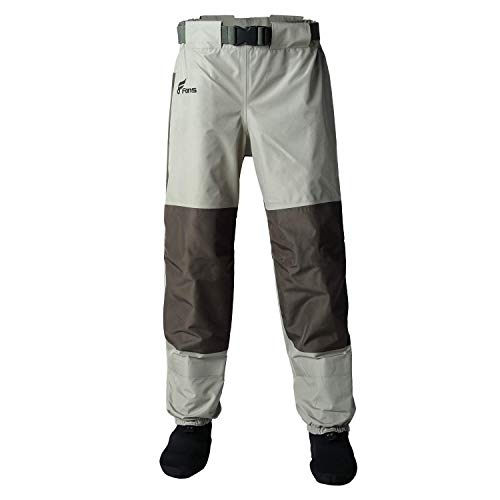


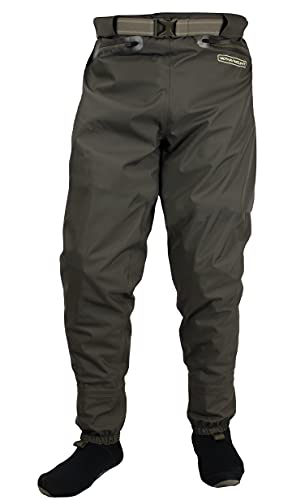


What's in this tableWaist-high wading pants (stockingfoot or bootfoot), as sold by their maker.
What wading pants are, and who they suit
Wading pants are waders cut off at the waist. You step into them like trousers, fasten the waistband, and pull wading boots over the neoprene socks at the bottom. Above the waist you wear whatever suits the weather: a fishing shirt in summer, a jacket in spring. Anglers who find a chest-high bib hot and bulky tend to like them, and so do people who wade in water that rarely tops the thigh.
At our last check (October 2026) the table holds a small set: eight wading pants from six makers, with Paramount Outdoors the largest group and 8 Fans, Bassdash, Caddis, frogg toggs and Kylebooker one each. All eight are stockingfoot, and every one of them is a men's or unspecified cut, with no women's or kids' version in this set. That is a thin range, and I'd rather say so than pad it. If you want a wider pool, the waist waders page also includes convertible pairs that fold down to the waist.
The honest pitch is this. Wading pants are the right tool for warm weather and for water you know is shallow. They are the wrong tool for a river whose depth you cannot judge, or for any day when the bank is not close. If you are unsure, chest waders give more margin. If it is a hot day and the water is ankle-to-knee, you might not need waders at all, and wet wading is a fair answer.
Wading pants vs waist waders vs chest waders
The names overlap, so here is how I use them.
- Wading pants, wader pants, pants waders: the same thing as waist-high waders, usually stockingfoot, sold for fishing.
- Waist waders: the broader category. It includes pants-style pairs and also convertible chest-and-waist designs that you can fold down.
- Chest waders: a bib with suspenders, covering the torso up to the chest. They offer the most depth and the most coverage in splashes and rain.
- Hip waders: separate legs that come up to the thigh and attach at the belt, for the shallowest water.
The frogg toggs buying guide describes waist-high waders as covering the lower body from the waist down, suited to moderate depths, with the open upper body helping you vent heat on warm days. I agree with that as a rule of thumb. What the guide cannot tell you is your river, and a map of your river is more useful than any guide.
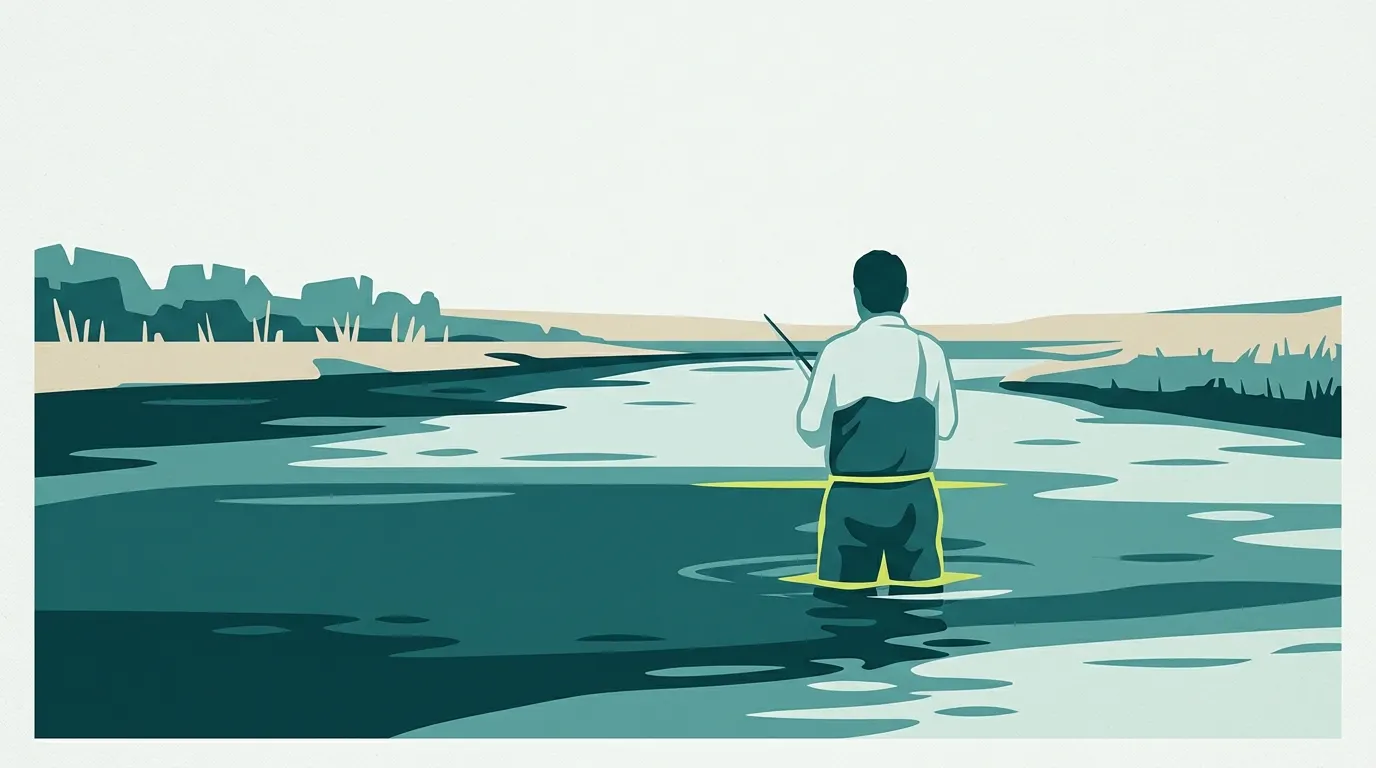
One failure mode belongs to wading pants alone. A chest wader has a margin: if you step a little deeper than planned, the bib keeps you dry. A wading pant has none. Step one stride past the waistband and the pants become, technically, a bucket. The Wet Sock Index has no rung for "water crossed the belt line", and that is not a gap I plan to fix, because the answer is to buy for the deepest water you expect to stand in.
What to look at in the table
Under each value you will see a small mark. Maker means the manufacturer's own page states it. Claimed means it is a manufacturer claim with no independent lab or standard named, as with layer counts and waterproof ratings. Listing means it comes from the Amazon listing and the maker has not confirmed it. — means we could not confirm it anywhere, and we do not guess.
The columns that matter for wading pants:
- Height will read waist for these pairs. If a pair shows convertible chest-to-waist, it belongs on the waist waders page instead.
- Foot is stockingfoot for all eight pairs at our last check. That means you need separate wading boots. Our stockingfoot waders page covers the boot side of that decision.
- Material type is breathable for most of the pairs in this set. One listing leaves the construction blank. Breathable fabric lets some vapor escape and suits a warm-weather pant. Neoprene would be too hot for most of what these are built for.
- Insulation is generally none. These are three-season garments. For cold water you add layers.
- Fit says men's, women's or unisex where the listing or maker states it. For the pairs in this set it is men's where stated.
- Warranty is the maker's stated cover. Where the page names one, in this set it is one year, with Paramount Outdoors describing it as covering defects in materials and workmanship.
Under each model name, the "More specs" toggle holds the rest: layers, the thickness of the neoprene sock, the waterproof and breathability ratings, gravel guards, reinforced knees, front zip and size range, wherever the listing or maker names them. You can sort on any column and filter by brand.
Layers and ratings
Of the pairs that list a layer count, three or four layers is the range: the 8 Fans and Kylebooker listings say three, and the frogg toggs and two of the Paramount pairs say four. A layer count describes how the fabric is built, and different makers count layers differently, so a four-layer pair from one brand is not automatically tougher than a three-layer pair from another. Treat the number as a clue.
Kylebooker lists a waterproof rating of 15,000 mm and a breathability rating of 3,000 g, and its membrane line reads "Gore-Tex Pro" in the maker's own words. I could not confirm that claim on a Gore-Tex page, and no test method is named, so I treat all three as the maker's claims. Do not shop on a membrane name alone. A rating without a named standard is a number, not a result.
How to choose
By depth. Look at the water you fish, then add a margin. A pant works when you wade to the thigh and keep the knees dry. If you will reach the belt line, step up to chest height.
By season. Pants are at their best in warm and mild weather. In cold weather the missing bib means a gap between your jacket and your pants, and you will need layers to close it. The neoprene bootie helps with the cold at your feet, and the 4 and 5 mm thicknesses in this set are stated by the listings, not confirmed by makers. If your water is cold, look at insulated waders or neoprene waders instead.
By how far you walk. All eight pairs are stockingfoot, which is the style for walking. A boot that laces to your ankle is easier on a long hike than a boot sewn into a wader.
By features. Gravel guards keep grit out of the boot, and most pairs here list them. Reinforced knees matter if you kneel to land fish or to look in a riffle. The Paramount Slate Zippered pair lists a front zip, which makes getting in and out easier without untying the waistband.
By budget. I will not talk prices. Cheap pants are fine for an occasional angler who stores them well, and a pair you walk in every week will find its weakest seam. Warranty length is part of what you are buying, so read the exact wording.
Sizing: waist, inseam and boots
With wading pants the numbers that matter are your waist and your inseam. Sitka's sizing guide says to measure your waist at the navel and your inseam from the top of the inner thigh to the floor, with a soft tape, and not to rely on your regular clothing size. It also points out that sizing varies between brands and between product lines in the same brand, so use the chart for the exact pair.
Most pairs here use S to 2XL or 3XL labels, and some also publish shoe-size ranges for the neoprene sock. The Bassdash FW09 lists labels such as "Medium Stocking Foot 8-9", so the label carries a foot size as well as a body size. Our wader size chart guide explains the measuring, the fit labels (short, tall, stout, king) and what to check when a pair arrives. The Bassdash listing links the maker's size chart, so use that rather than any chart from us.
If you buy wading pants and boots together, size the boot for the neoprene sock and a wader sock, not for your street shoe. A tight boot compresses the layers and cools your foot. Read the boot maker's chart.
Common mistakes
- Buying pants for a river you cannot read. If the water changes depth, you want the bib. Pants are for known water.
- Forgetting the upper half of the day. On a cool morning you start with a jacket, then peel it off by lunch. The pants are fine, the chest layers are the part that needs planning.
- Skipping the boot decision. Stockingfoot pants need wading boots, and a good boot matters as much as a good pant. See wading boots.
- Ignoring the waistband. A tight waistband that feels fine standing can pinch when you step up or kneel. Try them with the layers you will wear, and walk and squat in them before you commit.
- Trusting "heavy duty". If the listing shows no layer count, no thickness and no warranty, ask what the words measure.
Safety on the water
Waist-high gear does not make the water shallower. A fall in current can fill wading pants quickly, and cold water adds its own risk. Wear a snug wading belt over the waist, carry a wading staff in moving water, take short steps, face upstream when you turn and turn back if you are uncomfortable. Wear a life jacket in deep water or from a boat. This is editorial advice, not safety training.
Also check any state rules on boot soles, such as restrictions on felt, before you buy wading boots to go with the pants. The frogg toggs guide notes that felt is banned in some states.
Care in brief
Rinse after use, let the pants dry inside and out, and store them loosely folded or hung, out of direct sun. Look at the neoprene sock and the gravel guard for wear, because they get the most abuse. Our guides on cleaning waders, storing waders, finding a leak and wader repair cover the next steps.
Brands in the table
The wading pants in this set come from Paramount (Fast Eddy, Slate and Slate Zippered), 8 Fans, Bassdash, Caddis, frogg toggs (Hellbender) and Kylebooker. If you want more choice, the waist waders page adds convertible models from Orvis, Simms, Compass 360 and others, and the brand catalog lists every maker. For the overall picture of the category, start at waders.
Brands in this table
Related
Questions people ask
What are wading pants?
Wading pants are waist-high waders. They cover the legs and lower body, usually with a belt or an elastic waistband, and end in neoprene stocking feet that go inside wading boots. The frogg toggs buying guide calls them waist-high waders, also known as wader pants, and says they suit moderate water depths.
Are wader pants the same as waist waders?
They are the same garment sold under different names. Wading pants, wader pants, pants waders and waist-high waders all describe waterproof trousers that stop at the waist. We keep a separate page for waist waders because that page also covers convertible pairs that fold down from chest height.
Are wading pants warmer or cooler than chest waders?
Cooler in warm weather, because the open upper body lets air and heat escape. The frogg toggs guide says the uncovered upper body allows airflow and helps you regulate temperature on warmer days. In cold weather you give up the chest coverage, so layers matter more, and the neoprene sock still carries the cold of the water.
How deep can I wade in wading pants?
Only as deep as the waistband. Once water passes the top of the pants it fills them. Buy for the deepest water you plan to stand in, not the average, and if you expect to go deeper than your belt line, choose chest waders instead.
Do wading pants need a belt?
Check the design. Some wading pants have an integrated or elastic waist, and some are made to take a separate belt. Whatever the design, a snug wading belt over the waist is cheap insurance against water entering from above if you slip. Make sure it sits over the waterproof fabric, not under it.
Can I use wading pants for fly fishing?
Yes. Several of the pairs in the table are listed for fly fishing, and the style suits streams where you wade to the knee or thigh and hike in. Pick a pair with a gravel guard and a wading boot you like, and see our stockingfoot waders page for what to look at in the boot.
What size wading pants should I buy?
Measure your waist at the navel and your inseam with a soft tape, then use the maker's size chart for the exact pair. Sitka's sizing guide says to measure your chest and waist at their fullest points and to avoid relying on your regular clothing size. Our wader size chart guide walks through it.
Sources
- frogg toggs: How to buy waders — accessed 2026-10-15
- SITKA: What size waders do I need — accessed 2026-10-15